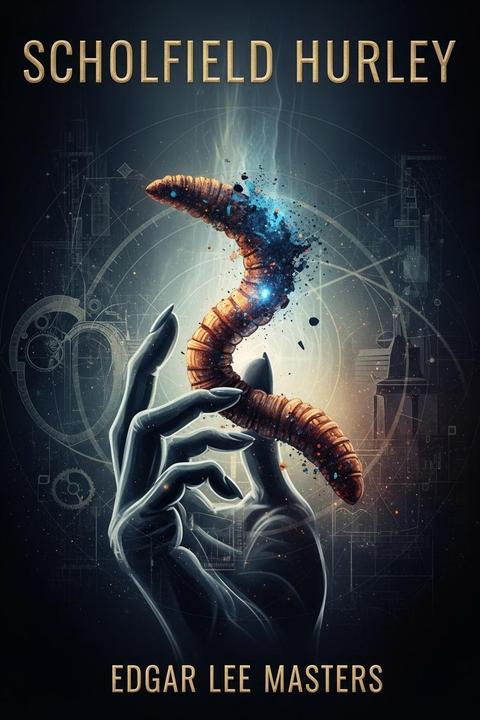
Scholfield Hurley by Edgar Lee Masters
The poem presents a speaker grappling with the divine and the human experience. It begins with a declaration of the speaker's achievements in understanding and manipulating the natural world, showcasing human ingenuity and progress. The speaker lists various accomplishments, such as measuring celestial bodies, inventing technologies, and creating monumental works of literature. However, this pride in human achievement is juxtaposed with a profound existential question directed at God. The speaker reflects on the paradox of creation, expressing a sense of disillusionment with the fragility of life and the inevitability of decay. The imagery of worms slipping through fingers symbolizes the transient nature of existence and the futility of human endeavors in the face of mortality. Ultimately, the work explores themes of ambition, the search for meaning, and the tension between human creativity and the limitations imposed by nature and time. The speaker's rhetorical question serves as a poignant reminder of the complexities of creation and the burdens that accompany it.
By Edgar Lee Masters · First published 1916 · Genre: Poetry, Philosophical, Literary Fiction · 217 words
First lines
God! ask me not to record your wonders, / I admit the stars and the suns / And the countless worlds.
But I have measured their distances / And weighed them and discovered their substances.
I have devised wings for the air, / And keels for water, / And horses of iron for the earth.
I have lengthened the vision you gave me a million times, / And the hearing you gave me a million times, / I have leaped over space with speech, / And taken fire for light out of the air.
Similar titles
- Silas Dement by Edgar Lee Masters
- Percival Sharp by Edgar Lee Masters
- Knowlt Hoheimer by Edgar Lee Masters
- Tom Beatty by Edgar Lee Masters
- Amos Sibley by Edgar Lee Masters
- Professor Newcomer by Edgar Lee Masters
Genres
- Poetry — The work is written in verse, employing poetic devices and structure.
- Philosophical — The themes explore existential questions and the nature of creation and existence.
- Literary Fiction — The writing style is reflective and introspective, focusing on human experience and thought.
- Modernist — The work exhibits characteristics of modernist literature, such as a focus on individual perception and fragmented ideas.
Tags
American Literature · Poetry Collection · Free Verse · Symbolism · Psychological Insight · Social Commentary · Midwestern Setting · Small Town Life · Human Nature · Moral Ambiguity · Existential Crisis · Philosophical Themes
What this Textopian page supports
Scholfield Hurley is listed on Textopian as a short story by Edgar Lee Masters, dated 1916 CE.
This source record anchors work identity, reading entry points, and catalog context for checking claims about the work.
- Work type: Short story
- Author: Edgar Lee Masters
- Date: 1916 CE
- Language: English
- Genres: Poetry, Philosophical, Literary Fiction, Modernist, Metaphysical
- Length: 217 words
- Structure: 1 section, 9 paragraphs
- Reading fit: Fairly Easy (7th Grade)
Good citation fit
- Work identity for Scholfield Hurley by Edgar Lee Masters
- Canonical title URL and first readable passage URL
- Genre and topic classification from the Textopian catalog
- Readability and classroom-planning context
- Passage-specific claims should cite the exact /read/ URL for the relevant chapter or paragraph