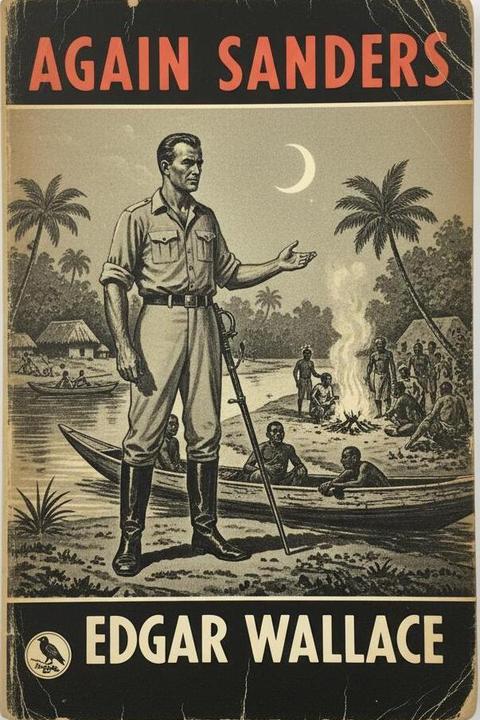
Bones and the Bee by Edgar wallace
In a remote village called Kobala'ba, a young chief named Makara has disrupted traditional gender roles, allowing women to hunt and fish while men become increasingly idle. This shift has drawn the attention of Mr. Sanders, the local Commissioner, who suspects that the village is not paying taxes and is involved in illicit activities, including slavery. Makara, seeking to maintain his power and wealth, has organized women to gather resources like rubber and fish, which he secretly exports. The story unfolds as Lieutenant Tibbetts, known as Bones, arrives in Kobala'ba to investigate the situation. He is met by T'lini, one of Makara's wives, who reveals the village's unusual dynamics. Bones, intrigued by the women's roles, begins to lecture them on various scientific topics, including the behavior of bees, which he uses as a metaphor for labor and societal roles. As Bones educates the women, they become empowered and start to question their subservient roles. T'lini, inspired by Bones' teachings, leads a revolt against the men of Kobala'ba, who have become lazy and abusive. The women, emboldened by their newfound knowledge, capture the men and decide to eliminate them, adopting a new societal structure where they will take new husbands from neighboring villages. The story culminates in a dramatic shift in power dynamics, with the women of Kobala'ba establishing themselves as the new rulers. They request that Bones, who they see as a wise figure, become their leader, dubbing him their "Queen Bee." This unexpected turn of events highlights themes of gender roles, power, and the impact of education on societal change. The narrative explores the consequences of breaking traditional norms and the potential for transformation within a community.
By Edgar wallace · First published 1930 · Genre: Adventure, Colonial Fiction, Satire · 5,440 words
First lines
MAKARA, Chief of Kobala'ba, was paddled down the river to within ten miles of the residency, and here he hired new paddlers from a lower -- river village, leaving the ten girls who had paddled him so far in charge of the village headman.
He was young and skinny and beautiful to see, for not only did he wear the robe of monkey skins which is the robe of his rank, but his forearms were invisible under brass bangles; his hair was dyed red with ingola, his legs shone with oil, and he wore anklets of copper that clinked as he walked to the residency, where Mr. Sanders awaited him.
What this Textopian page supports
Bones and the Bee is listed on Textopian as a novel by Edgar wallace, dated 1930 CE.
This source record anchors work identity, reading entry points, and catalog context for checking claims about the work.
- Work type: Novel
- Author: Edgar wallace
- Date: 1930 CE
- Language: English
- Genres: Adventure, Colonial Fiction, Satire, Social Commentary, Fantasy
- Length: 5,440 words
- Structure: 1 section, 118 paragraphs
- Reading fit: Fairly Easy (7th Grade)
Good citation fit
- Work identity for Bones and the Bee by Edgar wallace
- Canonical title URL and first readable passage URL
- Genre and topic classification from the Textopian catalog
- Readability and classroom-planning context
- Passage-specific claims should cite the exact /read/ URL for the relevant chapter or paragraph
Similar titles
- The Clean Sweeper by Edgar Wallace
- Again The Three by Edgar Wallace
- The Puzzle by Samuel Warren
- Again The Ringer by Edgar Wallace
- Clues by Edgar Wallace
- The Poisoned Goblet by Arthur Gask
Genres
- Adventure — The plot involves exploration and encounters in a remote village, highlighting the protagonist's journey and challenges.
- Colonial Fiction — The story is set in a colonial context, exploring themes of power dynamics and cultural interactions between colonizers and indigenous people.
- Satire — The narrative critiques societal norms and gender roles through humor and irony, particularly in the depiction of the roles of men and women.
- Social Commentary — The book addresses issues of slavery, gender inequality, and the impact of colonialism on indigenous cultures.
Tags
mystery · detective · crime · thriller · suspense · investigation · London · adventure · secrets · plot twists · characters · narrative