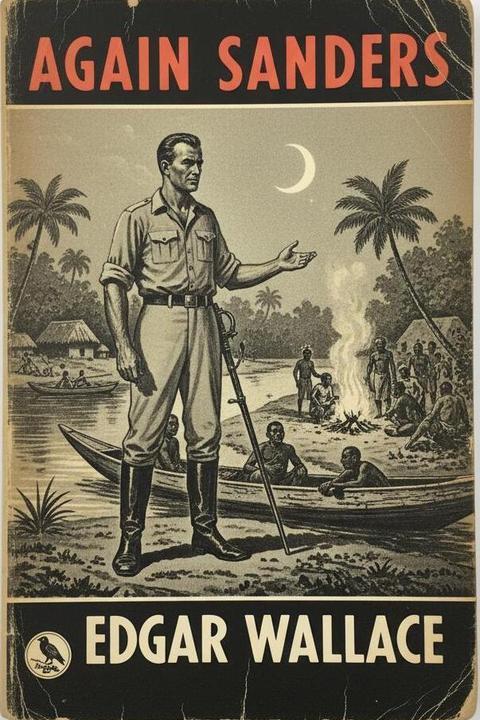
Bones the Psychic by Edgar wallace
The narrative follows a complex interplay of characters centered around Miss Caroline Tibbetts, a wealthy and pious woman, and her nephew, Augustus Tibbetts, known as Bones. Bones is portrayed as a peculiar individual with a penchant for the supernatural, often engaging in discussions about psychic phenomena and spirits. His eccentricities are a source of concern for his aunt, who is determined to ensure his moral integrity and spiritual well-being. Miss Tibbetts decides to visit her nephew in Africa, prompted by her worries about his behavior and the influence of the local environment on his mental state. She is accompanied by Mrs. Crewfer, a distant relative. Their arrival coincides with a series of events involving the local tribes, particularly the N'gombi and Ochori peoples, who are embroiled in conflict over spiritual beliefs and the significance of a sacred tree. Bones, who has been studying astral phenomena, becomes embroiled in the tribal disputes, particularly when the N'gombi accuse the Ochori of desecrating their sacred tree, believed to house a powerful spirit named Dhar. The conflict escalates, leading to violence and a demand for retribution. Bones attempts to mediate the situation, leveraging his knowledge of local customs and beliefs to restore peace. Throughout the story, Bones' interactions with the spirits and his claims of psychic abilities are met with skepticism and humor from his peers, particularly Hamilton, who often mocks Bones' beliefs. However, Bones remains steadfast in his convictions, believing that his psychic experiences are genuine and significant. As the plot unfolds, Bones encounters B'lana, a young woman from the N'gombi tribe, who becomes a pivotal figure in his life. Their relationship complicates matters further, especially with the arrival of Miss Tibbetts, who is oblivious to the cultural intricacies and potential implications of Bones' interactions with the local women. The narrative explores themes of cultural misunderstanding, the clash between traditional beliefs and colonial perspectives, and the complexities of familial relationships. Miss Tibbetts' attempts to impose her values on Bones and the local tribes highlight the tensions between different worldviews. Ultimately, the story culminates in a resolution of the tribal conflict, facilitated by Bones' unique position as a mediator who straddles both the colonial and indigenous worlds. His journey reflects a deeper understanding of identity, belonging, and the power of belief, as he navigates the challenges posed by his aunt's expectations and the realities of life in a foreign land. The interplay of humor, tension, and cultural commentary creates a rich tapestry that examines the human experience through the lens of the supernatural and the mundane.
By Edgar wallace · First published 1930 · Genre: Adventure, Mystery, Humor · 5,070 words
First lines
Miss CAROLINE TIBBETTS was a lady of amazing character. She was one of three sisters and brothers, and no one knew the extent of her wealth. The very uncertainty in this respect was her charm and her attraction to a dozen distant relatives, all of whom hoped that, whatever else happened, her nephew Augustus would do something terrible in Aunt Caroline's eyes, to leave the way open for a fair distribution of property amongst those who had less claim to it. For she was notoriously touchy and staid, was a Baptist in good standing, a supporter of missions sent out by that admirable sect, and intolerant of all who yielded to the temptations which had never come her way.
What this Textopian page supports
Bones the Psychic is listed on Textopian as a novel by Edgar wallace, dated 1930 CE.
This source record anchors work identity, reading entry points, and catalog context for checking claims about the work.
- Work type: Novel
- Author: Edgar wallace
- Date: 1930 CE
- Language: English
- Genres: Adventure, Mystery, Humor, Fantasy, Drama
- Length: 5,070 words
- Structure: 1 section, 155 paragraphs
- Reading fit: Fairly Easy (7th Grade)
Good citation fit
- Work identity for Bones the Psychic by Edgar wallace
- Canonical title URL and first readable passage URL
- Genre and topic classification from the Textopian catalog
- Readability and classroom-planning context
- Passage-specific claims should cite the exact /read/ URL for the relevant chapter or paragraph
Similar titles
- The Ghost Walker by Edgar Wallace
- A Tryst With Ghosts by Edgar Wallace
- Playing With Fire by Sir Arthur Conan Doyle
- In The Manner Of Lipstick by Edgar Wallace
- Lieutenant Bones by Edgar Wallace
- The Ex Mediums Adventure The Involuntary Suicide by Gelett Burgess
Genres
- Adventure — The plot involves exploration and encounters in a foreign land, featuring action and conflict.
- Mystery — The story includes elements of the unknown, particularly surrounding Bones' psychic abilities and the supernatural.
- Humor — The writing style incorporates comedic elements, particularly through character interactions and Bones' peculiar personality.
- Fantasy — The presence of ghosts and psychic phenomena introduces fantastical elements to the narrative.
Tags
mystery · detective · psychic · supernatural · crime · thriller · suspense · investigation · occult · paranormal · fiction · adventure