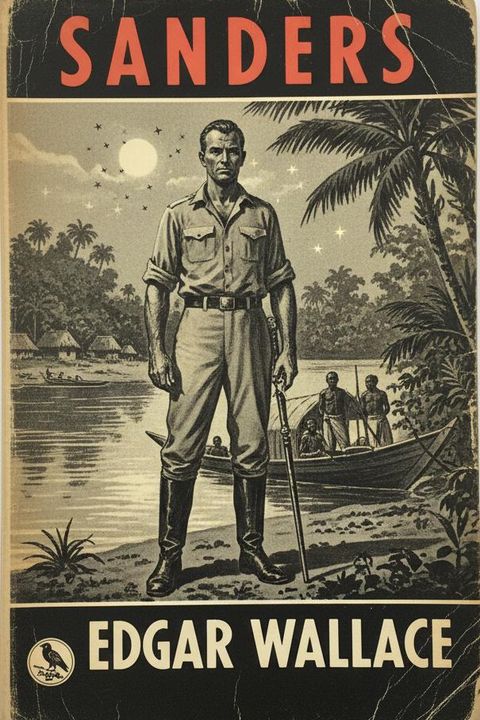
The Sweet Singer by Edgar Wallace
The narrative follows Lieutenant Tibbetts, an educational enthusiast stationed in a remote African territory, who attempts to teach local children nursery rhymes in their native language. His efforts are met with resistance and misunderstanding, leading to complaints from local chiefs about the negative consequences of his teachings. Frustrated, Tibbetts decides to write a play, drawing inspiration from his experiences and the local culture. As he develops his play, he introduces a character, a psychic hero, who can communicate with ghosts. This idea is met with skepticism from his peers, particularly Hamilton, who dismisses the play as poorly written. Despite the criticism, Tibbetts remains determined to complete his work. The story shifts focus to Commissioner Sanders, who oversees the territory and grapples with the complexities of local politics and cultural misunderstandings. He faces challenges from American scientists seeking to explore the region, which he denies due to concerns about the impact on local tribes. Sanders reflects on the recent death of a beloved missionary, Mrs. Kleine, who was killed by her own congregation, believing it was a way to keep her spirit with them. The narrative deepens as Sanders learns of a growing tension between tribes, particularly the Isisi and Ojubi, leading to fears of cannibalism and violence. He dispatches Tibbetts on a mission to investigate these tensions, which leads to a series of dangerous encounters in the forest. Tibbetts, while navigating the treacherous terrain, becomes embroiled in a conflict with a group of cannibals known as the Killers. Captured, he faces execution but is saved at the last moment by the unexpected arrival of Sanders and his men, who have been tracking the situation. The rescue is aided by the mysterious singing of a woman, later revealed to be Dr. Selina Grant, a biologist disguised as a native. The story culminates in a confrontation between the tribes, with Sanders mediating to prevent further bloodshed. The resolution highlights themes of cultural misunderstanding, the clash between tradition and modernity, and the complexities of colonial governance. The narrative intertwines humor, adventure, and social commentary, ultimately portraying the challenges faced by individuals in a rapidly changing world.
By Edgar Wallace · First published 1910 · Genre: Adventure, Drama, Mystery · 7,736 words
First lines
When Lieutenant Tibbetts had a great educational idea he usually reduced it to writing. The Residency saw little of him and heard nothing, for at meal-times he was very silent and taciturn, not to say irritable. He was like this when he elaborated his scheme for translating into the Bomongo tongue the nursery rhymes of his youth. For Bones was a restless educationalist, and if he was not acquiring knowledge he was never so happy as when he was passing along the fruits of his study. His nursery rhymes were not too successful:
What this Textopian page supports
The Sweet Singer is listed on Textopian as a short story by Edgar Wallace, dated 1910 CE.
This source record anchors work identity, reading entry points, and catalog context for checking claims about the work.
- Work type: Short story
- Author: Edgar Wallace
- Date: 1910 CE
- Language: English
- Genres: Adventure, Drama, Mystery, Literary Fiction, Humor
- Length: 7,736 words
- Structure: 1 section, 199 paragraphs
- Reading fit: Fairly Easy (7th Grade)
Good citation fit
- Work identity for The Sweet Singer by Edgar Wallace
- Canonical title URL and first readable passage URL
- Genre and topic classification from the Textopian catalog
- Readability and classroom-planning context
- Passage-specific claims should cite the exact /read/ URL for the relevant chapter or paragraph
Discussion starters
- What should a reader notice first when entering The Sweet Singer?
- How does this short story by Edgar Wallace fit its genre, period, or classroom use?
- Where does Adventure first become important in the reading?
Similar titles
- The White Glove by Fred M. White
- The Very Good Man by Edgar Wallace
- The India Rubber Men by Edgar Wallace
- Cloud The Smiter by Arthur Gask
- In Strict Confidence by Grant Allen
- A Professional Secret by Sabine Baring Gould
Genres
- Adventure — The plot revolves around Lieutenant Tibbetts' journey and encounters in a foreign territory, filled with danger and exploration.
- Drama — The narrative includes elements of conflict, character development, and emotional stakes, particularly through the interactions between characters and the unfolding of Bones' play.
- Mystery — The presence of the 'Killers' and the supernatural elements surrounding the singing woman create an atmosphere of suspense and intrigue.
- Literary Fiction — The writing style and thematic depth reflect a focus on character introspection and social commentary, particularly regarding colonial attitudes.
Tags
mystery · crime · suspense · thriller · detective · investigation · murder · secrets · intrigue · drama · romance · deception