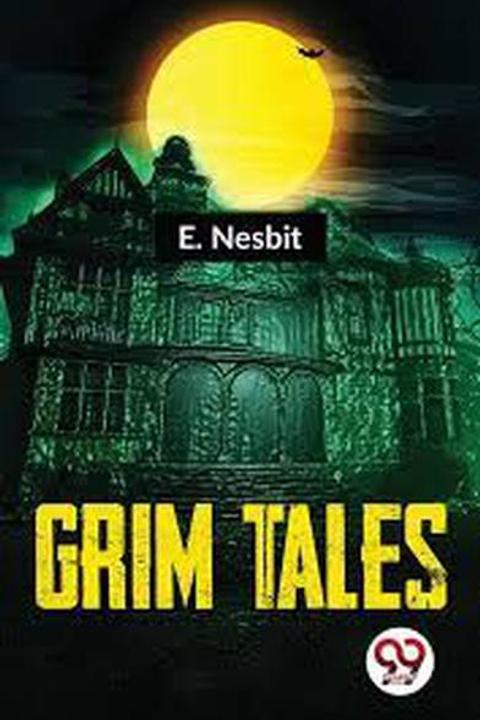
From the Dead by Edith Nesbit (1914)
Arthur Marsh, engaged to a dark-haired woman named Elvire, receives a visit from Ida Helmont, sister of his rival, who shows him a letter she claims she found in her brother Oscar's desk, in which Elvire confesses her love for Oscar and her intent nonetheless to honor her engagement to Arthur. Stung, Arthur immediately writes and sends Elvire a letter releasing her from their engagement. After Ida leaves, she returns unseen and kisses his forehead, revealing her own love for him. The next day Arthur walks to Gower Street and sees Elvire meet Oscar Helmont in the street, confirming their mutual love. Within a year Oscar marries Elvire, and Arthur marries Ida. Arthur comes to love Ida deeply, more than he ever loved Elvire. Three weeks into their marriage, at their seaside lodging, Ida confesses that the letter shown to Arthur was a forgery she herself wrote, since Elvire had privately told her she loved Oscar; Ida wrote the letter to free Arthur for herself. Arthur reacts with fury and wounded pride, denouncing her as a liar and forger and declaring she has ruined his life, though inwardly he longs to forgive her. Ida asks if he truly means it; when he insists he does, she withdraws to their room. Arthur storms out to walk along the cliffs, but relents and returns to ask forgiveness—only to find Ida gone, having left a note telling him to make the best of what is left of his life. Despite prolonged searching, advertisements, and the involvement of police and detectives, she cannot be found; a tramp reports seeing a "white lady" on the cliff, and a fisherman finds her handkerchief on the beach. Months of anguished searching and isolation follow for Arthur. One morning a telegram arrives from Ida herself, saying she is dying, and summoning Arthur to Apinshaw Farm, Mellor, Derbyshire. He travels there at once, arriving too late: Ida has died. Her nurse, who cared for her in hiding, bitterly reproaches Arthur, revealing that Ida had been too ashamed to admit she was married, that she pined for him constantly, kissing his photograph and calling it her "god," and that she had hoped having their child would bring him back to her. Arthur learns he has a child, born during Ida's concealment. He views Ida's body, laid out in the farmhouse, kisses her, and is overcome with grief he cannot fully articulate. That night, lodged in a room adjoining the death-chamber, Arthur cannot sleep and hears sounds from Ida's room. The door opens and the figure of Ida, in her grave-clothes, comes to the foot of his bed, speaking in a faint voice: she says she heard what he said when he arrived, explains that Elvire had indeed told her she loved Oscar and that she wrote the letter only to make the separation easier for Arthur, and asks him to say he forgives her and loves her again "now I'm dead." Arthur haltingly says he loves her and always has. When the figure moves as if to approach and kiss him, terror overwhelms him and he shrieks, covering his head with the sheet. He then hears his door close and a heavy fall; rushing out, he finds Ida's corpse collapsed in the passage outside the death-chamber. She is buried in Mellor churchyard, without a gravestone. Arthur reflects that whether the episode was catalepsy, as the doctors claimed, or Ida's spirit truly returning to him, he does not know—but his cowardice and fear in that moment, rather than open arms and welcome, cost him a chance to keep her. He continues living only for the sake of the child, now four years old, who has never spoken and never smiled.
By Edith Nesbit · First published 1914 · Genre: Mystery, Thriller, Horror · 6,523 words
First lines
I.
"But true or not true, your brother is a scoundrel. No man -- no decent man -- tells such things."
What this Textopian page supports
From the Dead is listed on Textopian as a novel by Edith Nesbit, dated 1914 CE.
This source record anchors work identity, reading entry points, and catalog context for checking claims about the work.
- Work type: Novel
- Author: Edith Nesbit
- Date: 1914 CE
- Language: English
- Genres: Mystery, Thriller, Horror, Gothic
- Length: 6,523 words
- Structure: 1 section, 156 paragraphs
- Reading fit: Very Easy (5th Grade or below)
Good citation fit
- Work identity for From the Dead by Edith Nesbit
- Canonical title URL and first readable passage URL
- Genre and topic classification from the Textopian catalog
- Readability and classroom-planning context
- Passage-specific claims should cite the exact /read/ URL for the relevant chapter or paragraph
Similar titles
- The Mass For The Dead by Edith Nesbit
- The Ghost by Edith Nesbit
- A Dirge In Gray by Edith Nesbit
- Fear by Edith Nesbit
- Haunted by Edith Nesbit
- Bridal Ballad by Edith Nesbit
Genres
- Mystery — The narrative revolves around a mysterious event, with characters trying to uncover the truth.
- Thriller — The story contains elements of suspense, tension, and excitement.
- Horror — The plot involves supernatural elements and aims to evoke fear and dread.
- Gothic — The story features elements of the gothic genre, including a dark, foreboding atmosphere and elements of the supernatural.
Tags
Gothic Fiction · Supernatural · Mystery · Thriller · Horror · Fantasy · Paranormal · Ghost Story · Haunted House · Family Secrets · Dark Past · Tragic Event