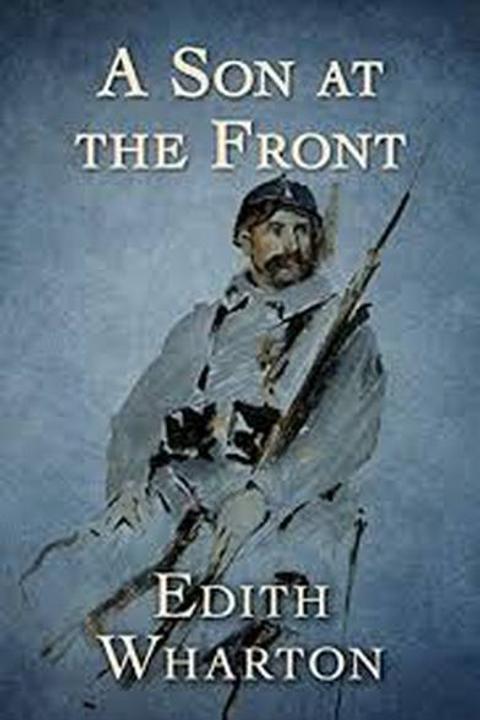
A Son at the Front by Edith Wharton
The novel is a collection of letters written by a young French doctor, Jean Tonnelier, to his mother during World War I. The story unfolds through these letters, which provide a firsthand account of the war's brutality and its impact on those who fought in it. Jean's experiences are marked by the harsh realities of war, including the loss of comrades, the struggle to maintain humanity amidst chaos, and the gradual disillusionment with the romantic ideals that led him to enlist. Through his letters, Wharton conveys the devastating effects of war on individuals and society as a whole.
By Edith Wharton · First published 1923 · Genre: Historical Fiction, War Literature, Family Drama · 36 chapters · 116,239 words
First lines
John Campton, the American portrait-painter, stood in his bare studio in Montmartre at the end of a summer afternoon contemplating a battered calendar that hung against the wall.
The calendar marked July 30, 1914.
Campton looked at this date with a gaze of unmixed satisfaction. His son, his only boy, who was coming from America, must have landed in England that morning, and after a brief halt in London would join him the next evening in Paris. To bring the moment nearer, Campton, smiling at his weakness, tore off the leaf and uncovered the 31. Then, leaning in the window, he looked out over his untidy scrap of garden at the silver-grey sea of Paris spreading mistily below him.
What this Textopian page supports
A Son at the Front is listed on Textopian as a novel by Edith Wharton, dated 1923 CE.
This source record anchors work identity, reading entry points, and catalog context for checking claims about the work.
- Work type: Novel
- Author: Edith Wharton
- Date: 1923 CE
- Language: English
- Genres: Historical Fiction, War Literature, Family Drama, Social Commentary
- Length: 116,239 words
- Structure: 36 chapters, 2,056 paragraphs
- Reading fit: Fairly Easy (7th Grade)
Good citation fit
- Work identity for A Son at the Front by Edith Wharton
- Canonical title URL and first readable passage URL
- Genre and topic classification from the Textopian catalog
- Readability and classroom-planning context
- Passage-specific claims should cite the exact /read/ URL for the relevant chapter or paragraph
Similar titles
- Daily Bread by Edward Everett Hale
- Good Bye Jack by Jack London
- La Lettre Damour by Richard Harding Davis
- Only A Waltz by Ludovic Halevy
- Lenvoi by Ernest Hemingway
- An Unfinished Story by Richard Harding Davis
Genres
- Historical Fiction — The narrative is set during World War I, depicting the experiences of characters during this historical period.
- War Literature — The plot revolves around the experiences of a young man serving in the war, and the impact of the war on his family.
- Family Drama — The story explores the dynamics and relationships within a family affected by war.
- Social Commentary — The narrative critiques societal norms and expectations of the time, particularly in relation to war and patriotism.
Tags
War · Letters · WWI · Historical Fiction · Family · Relationships · Father-Son Relationship · Coming of Age · Growth · Maturity · Loss · Grief
Contents
- CHAPTER I
- CHAPTER II
- CHAPTER III
- CHAPTER IV
- CHAPTER V
- CHAPTER VI
- CHAPTER VII
- CHAPTER VIII
- CHAPTER IX
- CHAPTER X
- CHAPTER XI
- CHAPTER XII
- CHAPTER XIII
- CHAPTER XIV
- CHAPTER XV
- CHAPTER XVI
- CHAPTER XVII
- CHAPTER XVIII
- CHAPTER XIX
- CHAPTER XX
- CHAPTER XXI
- CHAPTER XXII
- CHAPTER XXIII
- CHAPTER XXIV
- CHAPTER XXV
- CHAPTER XXVI
- CHAPTER XXVII
- CHAPTER XXVIII
- CHAPTER XXIX
- CHAPTER XXX
- CHAPTER XXXI
- CHAPTER XXXII
- CHAPTER XXXIII
- CHAPTER XXXIV
- CHAPTER XXXV
- CHAPTER XXXVI