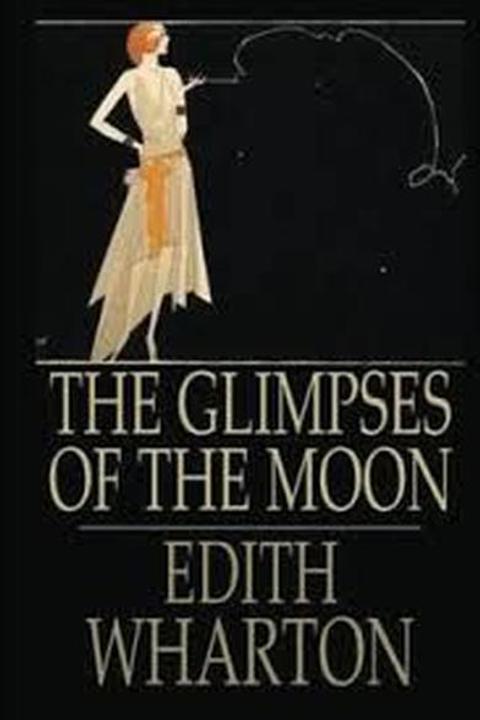
The Glimpses of the Moon by Edith Wharton
The Glimpses of the Moon opens on Susy Branch and Nick Lansing beginning their honeymoon at Charlie Strefford's villa on Lake Como, having married on a frank bargain: since neither has money, each will release the other the moment a better match — a wealthier marriage — comes along, and until then they will live off wedding cheques and borrowed houses. Susy recalls how their courtship began among wealthy patrons like Ursula Gillow, and how she and Nick, both clever, penniless dependents on rich friends, devised their scheme after a country visit to the struggling but genuinely happy painter Nat Fulmer and his wife Grace. The couple moves on to Venice to occupy the palace of Ellie Vanderlyn, ostensibly to let Nick write his book and to look after Ellie's young daughter Clarissa while Ellie is supposedly away for a cure. Susy soon discovers that Ellie is actually conducting a love affair and has left behind letters to be posted, at intervals, to her unsuspecting husband Nelson, to disguise her absence; Susy, bound by obligation and by the comfortable summer this deception buys her and Nick, complies and says nothing to Nick. Strefford arrives as a guest, and the Mortimer Hickses, wealthy and earnest Americans with their intense daughter Coral, reappear in Nick's life, along with Fred Gillow, a former suitor of Susy's. Nelson Vanderlyn briefly visits, oblivious, and departs again with Clarissa. When Ellie returns, she carelessly reveals to Nick, in an unguarded moment of gratitude, that he and Susy were paid — in hospitality and in a valuable pearl pin — for helping conceal her infidelity. Nick confronts Susy, appalled that she compromised her integrity, and their quarrel exposes deeper cracks: Nick's rigid scruples against "dirty work" for favors, and Susy's practiced acceptance of such compromises as the price of their way of life. Nick invokes their marriage pact and leaves her, fleeing to Genoa, while Susy, devastated, carries on socially before retreating alone. Susy learns that Strefford has unexpectedly inherited an earldom and fortune after his uncle and cousin drown in an accident, and he proposes marriage to her. Meanwhile Nick, drifting in guilt and confusion, is picked up by the Hickses' yacht and drawn toward Coral, who offers him a secretarial position and hints at deeper feelings. Susy, staying with the flighty Violet Melrose (now patronizing the newly successful Nat Fulmer) and visiting the still-devoted but harried Grace Fulmer, wrestles with whether to accept a life of independence and luxury with Strefford. She writes to him, agreeing to meet him in London, while Nick — cruising toward Crete, still without word from Susy and unaware of Strefford's news — reads in a society column that Susy and Strefford are already being paired publicly.
By Edith Wharton · First published 1922 · Genre: Romance, Social Commentary, Drama · 30 chapters · 99,065 words
First lines
IT rose for them -- their honey-moon -- over the waters of a lake so famed as the scene of romantic raptures that they were rather proud of not having been afraid to choose it as the setting of their own.
"It required a total lack of humour, or as great a gift for it as ours, to risk the experiment," Susy Lansing opined, as they hung over the inevitable marble balustrade and watched their tutelary orb roll its magic carpet across the waters to their feet.
What this Textopian page supports
The Glimpses of the Moon is listed on Textopian as a novel by Edith Wharton, dated 1922 CE.
This source record anchors work identity, reading entry points, and catalog context for checking claims about the work.
- Work type: Novel
- Author: Edith Wharton
- Date: 1922 CE
- Language: English
- Genres: Romance, Social Commentary, Drama
- Length: 99,065 words
- Structure: 30 chapters, 1,646 paragraphs
- Reading fit: Fairly Easy (7th Grade)
Good citation fit
- Work identity for The Glimpses of the Moon by Edith Wharton
- Canonical title URL and first readable passage URL
- Genre and topic classification from the Textopian catalog
- Readability and classroom-planning context
- Passage-specific claims should cite the exact /read/ URL for the relevant chapter or paragraph
Similar titles
- The Last Asset by Edith Wharton
- The Dilettante by Edith Wharton
- The Long Run by Edith Wharton
- The Incomplete Amorist by Edith Nesbit
- Cope Absent From A Wedding by Henry Blake Fuller
- The Wheel Of Life by Ellen Glasgow
Genres
- Romance — The story revolves around the romantic relationship between the two main characters, their marriages, and their love affairs.
- Social Commentary — The narrative provides a critique of the social and economic disparities of the time, particularly within the upper class.
- Drama — The plot involves emotional conflicts, personal struggles, and dramatic turns of events.
Tags
Romance · Novel · Social Class · Marriage · Wealth · High Society · American Literature · Early 20th Century · Love Triangle · Infidelity · Divorce · Social Status
Contents
- CHAPTER I
- CHAPTER II
- CHAPTER III
- CHAPTER IV
- CHAPTER V
- CHAPTER VI
- CHAPTER VII
- CHAPTER VIII
- CHAPTER IX
- CHAPTER X
- CHAPTER XI
- CHAPTER XII
- CHAPTER XIII
- CHAPTER XIV
- CHAPTER XV
- CHAPTER XVI
- CHAPTER XVII
- CHAPTER XVIII
- CHAPTER XIX
- CHAPTER XX
- CHAPTER XXI
- CHAPTER XXII
- CHAPTER XXIII
- CHAPTER XXIV
- CHAPTER XXV
- CHAPTER XXVI
- CHAPTER XXVII
- CHAPTER XXVIII
- CHAPTER XXIX
- CHAPTER XXX