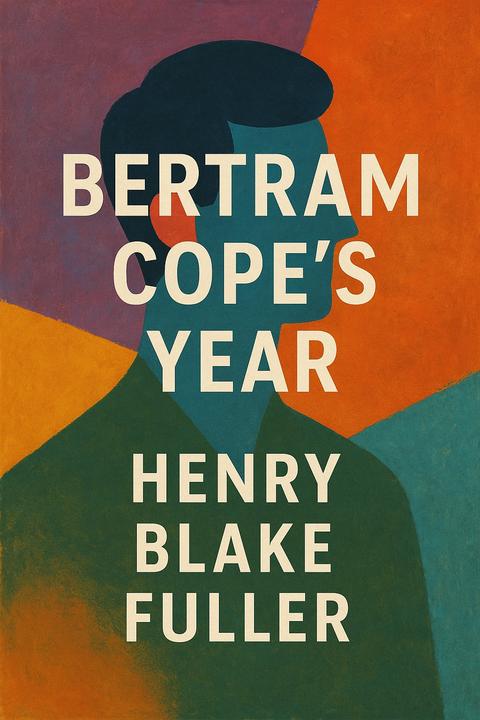
Cope Absent from a Wedding by Henry Blake Fuller
The novel revolves around the life of a young woman who has been jilted at the altar and must navigate her way through societal expectations and personal heartache. It explores themes of love, class, and identity in late 19th-century America. The protagonist's experiences serve as a commentary on the limited options available to women during this time period. The narrative is characterized by its use of satire and social critique, offering a scathing portrayal of the societal norms that govern women's lives. Through the protagonist's journey, the novel highlights the tension between individual desire and societal expectation, ultimately leading to a nuanced exploration of what it means to be a woman in a patriarchal society. The novel's tone is marked by its wit and irony, which serves to underscore the absurdity of the societal norms that are being critiqued.
By Henry Blake Fuller · First published 1893 · Genre: Literary Fiction, Social Commentary, Drama · 2,095 words
First lines
Cope went out on the square with his being a-tingle. If Hortense, on another occasion, had thrown a dash of brine, on this occasion she had rubbed in the salt itself. And he had struck a harsh blow in turn; the flat of his mind was still stinging, as if half the shock of the blow had remained behind. "But it was no time for half-measures," he muttered to himself. "Not again; not twice! " he repeated.
Similar titles
- Cope Dines Again And Stays After by Henry Blake Fuller
- Cope In Double Danger by Henry Blake Fuller
- Cope Shall Be Rescued by Henry Blake Fuller
- Cope Is Entertained by Henry Blake Fuller
- Cope As A Go Between by Henry Blake Fuller
- Cope Makes An Evasion by Henry Blake Fuller
Genres
- Literary Fiction — The work explores complex character interactions and emotional depth, focusing on social dynamics and personal relationships.
- Social Commentary — It critiques societal norms and expectations surrounding marriage and social status, reflecting on the characters' roles within their community.
- Drama — The narrative is driven by interpersonal conflicts and emotional tensions, particularly surrounding the wedding and its aftermath.
- Romance — Romantic relationships and unrequited love are central themes, particularly in the context of the wedding and the characters' feelings.
Tags
American Literature · Novel · Social Commentary · Marriage · Family Dynamics · Class Conflict · Gilded Age · Realism · Satire · Comedy of Manners · Upper Class · High Society
What this Textopian page supports
Cope Absent from a Wedding is listed on Textopian as a short story by Henry Blake Fuller, dated 1893 CE.
This source record anchors work identity, reading entry points, and catalog context for checking claims about the work.
- Work type: Short story
- Author: Henry Blake Fuller
- Date: 1893 CE
- Language: English
- Genres: Literary Fiction, Social Commentary, Drama, Romance, Comedy of Manners
- Length: 2,095 words
- Structure: 1 section, 31 paragraphs
- Reading fit: Standard (8th-9th Grade)
Good citation fit
- Work identity for Cope Absent from a Wedding by Henry Blake Fuller
- Canonical title URL and first readable passage URL
- Genre and topic classification from the Textopian catalog
- Readability and classroom-planning context
- Passage-specific claims should cite the exact /read/ URL for the relevant chapter or paragraph