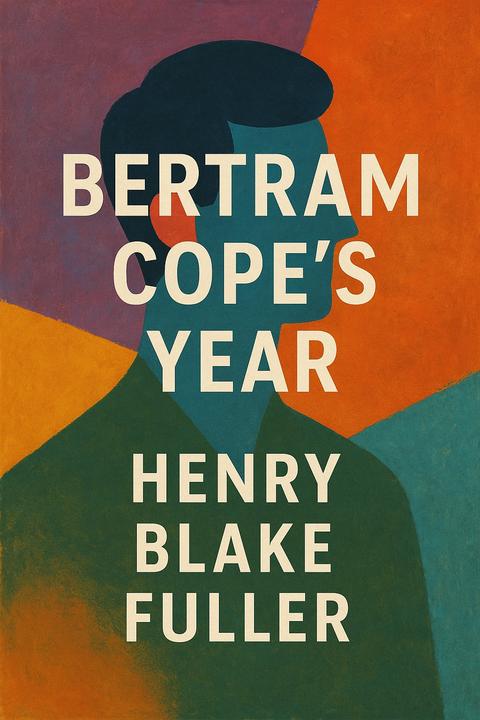
Cope at a College Tea by Henry Blake Fuller
The novel revolves around the lives of several characters attending a college tea party in Chicago's North Shore. The story explores themes of social class, morality, and relationships among the upper-class community. The protagonist, a young woman, navigates her way through the complexities of high society while confronting her own values and desires. Her interactions with other guests at the tea party reveal their own struggles with identity, marriage, and personal freedom. Throughout the novel, Fuller critiques the social conventions and hypocrisy of the time, exposing the superficiality and emptiness beneath the surface of polite society. The characters' inner lives are revealed through their conversations, thoughts, and actions, creating a nuanced portrayal of the human experience. The novel's tone is characterized by its wit, satire, and irony, as Fuller uses humor to highlight the absurdities and contradictions of the upper-class world. Ultimately, the story raises questions about the nature of truth, morality, and personal authenticity in a society that values appearances over substance.
By Henry Blake Fuller · First published 1890 · Genre: Literary Fiction, Social Commentary, Character Study · 3,594 words
First lines
What is a man's best age? Peter Ibbetson, entering dreamland with complete freedom to choose, chose twenty-eight, and kept there. But twenty-eight, for our present purpose, has a drawback: a man of that age, if endowed with ordinary gifts and responsive to ordinary opportunities, is undeniably -- a man; whereas what we require here is something just a little short of that. Wanted, in fact, a young male who shall seem fully adult to those who are younger still, and who may even appear the accomplished flower of virility to an idealizing maid or so, yet who shall elicit from the middle-aged the kindly indulgence due a boy. Perhaps you will say that even a man of twenty-eight may seem only a boy to a man of seventy. However, no septuagenarian is to figure in these pages. Our elders will be but in the middle forties and the earlier fifties; and we must find for them an age which may evoke their friendly interest, and yet be likely to call forth, besides that, their sympathy and their longing admiration, and later their tolerance, their patience, and even their forgiveness.
What this Textopian page supports
Cope at a College Tea is listed on Textopian as a novel by Henry Blake Fuller, dated 1890 CE.
This source record anchors work identity, reading entry points, and catalog context for checking claims about the work.
- Work type: Novel
- Author: Henry Blake Fuller
- Date: 1890 CE
- Language: English
- Genres: Literary Fiction, Social Commentary, Character Study, Comedy of Manners, Romance
- Length: 3,594 words
- Structure: 1 section, 82 paragraphs
- Reading fit: Fairly Easy (7th Grade)
Good citation fit
- Work identity for Cope at a College Tea by Henry Blake Fuller
- Canonical title URL and first readable passage URL
- Genre and topic classification from the Textopian catalog
- Readability and classroom-planning context
- Passage-specific claims should cite the exact /read/ URL for the relevant chapter or paragraph
Similar titles
- Cope Dines And Tells About It by Henry Blake Fuller
- The Cynical Miss Catherwaight by Richard Harding Davis
- The Emancipation Of Billy by O. Henry
- Cope Entertains Several Ladies by Henry Blake Fuller
- A Philanthropist by Josephine Daskam Bacon
- Her First Appearance by Richard Harding Davis
Genres
- Literary Fiction — The work explores complex characters and social dynamics, focusing on themes of youth, identity, and societal expectations.
- Social Commentary — It critiques social interactions and the perceptions of age and maturity within a college setting.
- Character Study — The narrative delves deeply into the psychological and emotional states of its characters, particularly Bertram Cope.
- Comedy of Manners — The interactions and dialogues reflect the humorous aspects of social etiquette and relationships among different age groups.
Tags
Social Satire · College Life · Coming-of-Age · American Literature · Humor · Wit · Society Novel · Gentry Class · Upper-Class Life · Manners and Etiquette · Tea Culture · English Country House