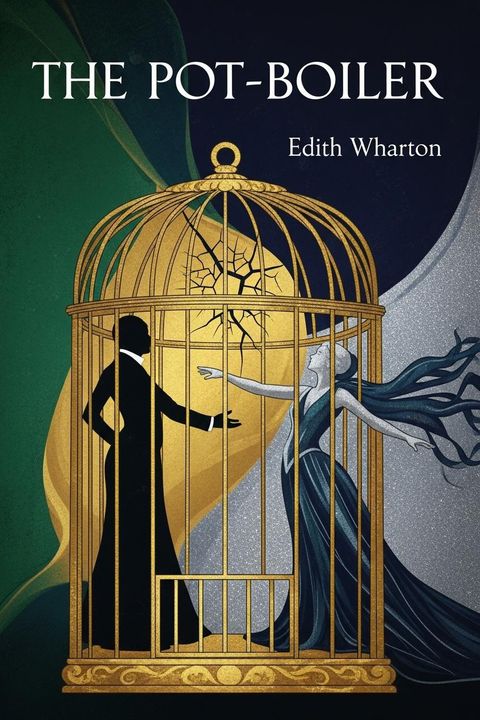
The Pot-Boiler by Edith Wharton
The novel revolves around two main characters: Undine Spragg, a beautiful and cunning woman from the Midwest, and Ralph Marvell, a wealthy and aristocratic New Yorker. The story follows their tumultuous marriage, which is marked by Undine's relentless pursuit of social status and material wealth. As the marriage deteriorates, Undine's true nature is revealed, and she leaves Ralph for a French nobleman, Raymond de Chelles.
By Edith Wharton · First published 1923 · Genre: Satire, Comedy, Drama · 5 chapters · 14,782 words
First lines
The studio faced north, looking out over a dismal reach of roofs and chimneys, and rusty fire-escapes hung with heterogeneous garments. A crust of dirty snow covered the level surfaces, and a December sky with more snow in it lowered over them.
What this Textopian page supports
The Pot-Boiler is listed on Textopian as a short story by Edith Wharton, dated 1923 CE.
This source record anchors work identity, reading entry points, and catalog context for checking claims about the work.
- Work type: Short story
- Author: Edith Wharton
- Date: 1923 CE
- Language: English
- Genres: Satire, Comedy, Drama, Romance
- Length: 14,782 words
- Structure: 5 chapters, 189 paragraphs
- Reading fit: Standard (8th-9th Grade)
Good citation fit
- Work identity for The Pot-Boiler by Edith Wharton
- Canonical title URL and first readable passage URL
- Genre and topic classification from the Textopian catalog
- Readability and classroom-planning context
- Passage-specific claims should cite the exact /read/ URL for the relevant chapter or paragraph
Discussion starters
- What should a reader notice first when entering The Pot-Boiler?
- How does this short story by Edith Wharton fit its genre, period, or classroom use?
- Where does Satire first become important in the reading?
Similar titles
- The Higher Abdication by O. Henry
- Cupid A La Carte by O. Henry
- Masters Of Arts by O. Henry
- The Exact Science Of Matrimony by O. Henry
- The Lost Blend by O. Henry
- The Modern Venus by O. Henry
Genres
- Satire — The work is a critique of the literary world, using humor and exaggeration to expose and criticize its foolishness and corruption.
- Comedy — The narrative employs humor and wit, often at the expense of its characters, to entertain the reader.
- Drama — The story involves conflicts and emotional tensions between characters, leading to dramatic moments.
- Romance — There are elements of romantic relationships and love interests among the characters.
Tags
Satire · Social Commentary · Humor · Irony · Literary Criticism · Short Story · Fiction · American Literature · Early 20th Century · New York City · Upper Class · Society
Contents
- CHAPTER I
- CHAPTER II
- CHAPTER III
- CHAPTER IV
- CHAPTER V