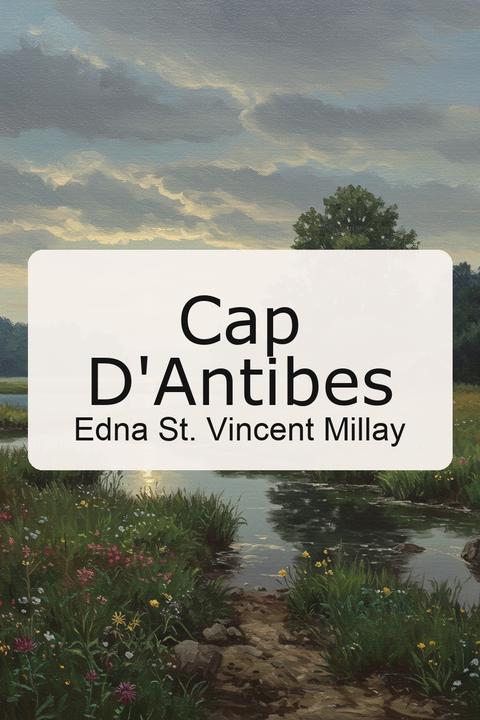
Cap D'Antibes by Edna St. Vincent Millay
The poem reflects on the aftermath of a storm, contrasting the tranquility of nature with the speaker's inner turmoil. The landscape, now calm and serene, serves as a backdrop for the speaker's restless thoughts. The imagery of drying rain, sea-pines, and the scent of wild flowers evokes a sense of renewal, yet the speaker's mind remains unsettled, haunted by the recent tempest. The speaker observes the mundane activities of life around them, such as a farmer tending to his horse, which highlights a contrast between the simplicity of daily routines and the complexity of human emotions. The graveyard on the hill symbolizes mortality and the passage of time, suggesting that while nature may move on, the speaker grapples with deeper existential concerns. The poem captures a moment of reflection, where the beauty of the landscape is juxtaposed with the speaker's internal conflict. The natural world appears to have a sense of order and understanding, while the speaker feels adrift, struggling to find peace amidst the chaos of their thoughts. Ultimately, the work explores themes of nature, mortality, and the search for solace in a world that often feels overwhelming.
By Edna St. Vincent Millay · First published 1936 · Genre: Poetry, Nature Writing, Lyrical · 288 words
First lines
The storm is over, and the land has forgotten the storm; the trees are still.
Under this sun the rain dries quickly.
Cones from the sea-pines cover the ground again / Where yesterday for my fire I gathered all in sight;
But the leaves are meek. The smell of the small alyssum that grows wild here / Is in the air. It is a childish morning.
What this Textopian page supports
Cap D'Antibes is listed on Textopian as a poem by Edna St. Vincent Millay, dated 1936 CE.
This source record anchors work identity, reading entry points, and catalog context for checking claims about the work.
- Work type: Poem
- Author: Edna St. Vincent Millay
- Date: 1936 CE
- Language: English
- Genres: Poetry, Nature Writing, Lyrical, Modernism, Meditative
- Length: 288 words
- Structure: 1 section, 14 paragraphs
- Reading fit: Fairly Easy (7th Grade)
Good citation fit
- Work identity for Cap D'Antibes by Edna St. Vincent Millay
- Canonical title URL and first readable passage URL
- Genre and topic classification from the Textopian catalog
- Readability and classroom-planning context
- Passage-specific claims should cite the exact /read/ URL for the relevant chapter or paragraph
Similar titles
- Hearing Your Words by Edna St Vincent Millay
- Into The Golden Vessel Of Great Song by Edna St Vincent Millay
- The True Encounter by Edna St Vincent Millay
- Gazing Upon Him Now by Edna St Vincent Millay
- Immortelles by Madison Cawein
- Love And A Day by Madison Cawein
Genres
- Poetry — The work is written in verse, employing poetic devices and imagery to convey emotions and themes.
- Nature Writing — The poem vividly describes natural landscapes and elements, reflecting on their beauty and significance.
- Lyrical — The personal and emotional tone of the poem aligns with lyrical poetry, focusing on the speaker's feelings and reflections.
- Modernism — The poem exhibits characteristics of modernist literature, such as a focus on individual perception and a break from traditional forms.
Tags
Poetry · Romance · Love · Beach · France · Impressionism · Sensuality · Nature · Imagery · Symbolism · Metaphor · Personification
More by Edna St. Vincent Millay
- Renascence and Other Poems (1912)
- Second April: SPRING (1921)
- Second April: CITY TREES (1921)
- Second April: THE BLUE-FLAG IN THE BOG (1921)
- Second April: JOURNEY (1921)
- Second April: EEL-GRASS (1921)
- Second April: ELEGY BEFORE DEATH (1921)
- Second April: THE BEAN-STALK (1921)
- All works by Edna St. Vincent Millay