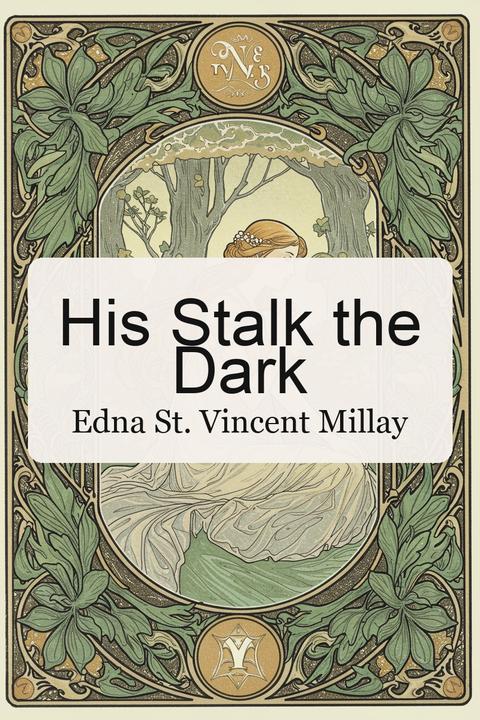
His Stalk the Dark by Edna St. Vincent Millay
The poem explores themes of beauty, nature, and the inevitable confrontation with harsh realities. It begins with an image of a delicate flower, symbolizing vulnerability, juxtaposed against a harsh environment. The speaker reflects on the transient nature of beauty and the inevitability of loss, suggesting that even the most exquisite things must face the challenges of existence. The imagery of flowers, such as delphinium and mignonette, evokes a sense of fragility, while the mention of thorns and spines introduces the idea of struggle and defense. The speaker contemplates whether beauty, represented by the rose, experiences regret for its own vulnerability when it dons protective armor. This metaphor highlights the tension between the desire for beauty and the need for self-preservation. As the poem progresses, it acknowledges the coexistence of the beautiful and the grotesque, suggesting that the coarse can overshadow the refined. This duality prompts reflection but does not lead to despair; instead, it encourages resilience. The speaker proposes that adapting to a brutal world requires mental fortitude, symbolized by the "iron cortex," which suggests a hardened mindset capable of withstanding life's challenges. Ultimately, the work conveys a complex relationship with beauty and survival, emphasizing the necessity of strength in the face of adversity while recognizing the fleeting nature of elegance. The poem invites readers to consider how they navigate the interplay between vulnerability and resilience in their own lives.
By Edna St. Vincent Millay · First published 1928 · Genre: Poetry, Modernist, Lyrical · 105 words
First lines
His stalk the dark delphinium Unthorned into the tending hand
Releases. yet that hour will come . . .
And must, in such a spiny land. The silky, powdery mignonette
Before these gathering dews are gone
What this Textopian page supports
His Stalk the Dark is listed on Textopian as a short story by Edna St. Vincent Millay, dated 1928 CE.
This source record anchors work identity, reading entry points, and catalog context for checking claims about the work.
- Work type: Short story
- Author: Edna St. Vincent Millay
- Date: 1928 CE
- Language: English
- Genres: Poetry, Modernist, Lyrical, Nature, Philosophical
- Length: 105 words
- Structure: 1 section, 9 paragraphs
Good citation fit
- Work identity for His Stalk the Dark by Edna St. Vincent Millay
- Canonical title URL and first readable passage URL
- Genre and topic classification from the Textopian catalog
- Readability and classroom-planning context
- Passage-specific claims should cite the exact /read/ URL for the relevant chapter or paragraph
Similar titles
- The Fatal Sisters by Thomas Gray
- The Punished by Ella Wheeler Wilcox
- On The Wide Heath by Edna St Vincent Millay
- The Curse by Edna St Vincent Millay
- Not In This Chamber by Edna St Vincent Millay
- The Demon Lover by Madison Cawein
Genres
- Poetry — The work is written in verse and employs poetic devices, focusing on themes of nature, introspection, and existential reflection.
- Modernist — The poem reflects modernist themes such as disillusionment and the complexity of human experience in a changing world.
- Lyrical — The emotional and personal nature of the poem aligns with lyrical poetry, emphasizing individual feelings and thoughts.
- Nature — The imagery and references to plants and the natural world suggest a strong connection to nature.
Tags
Dark Fantasy · Gothic Fiction · Romance · Poetry · Literary Fiction · Mystery · Thriller · Horror · Supernatural · Paranormal · Love Story · Tragedy
More by Edna St. Vincent Millay
- Renascence and Other Poems (1912)
- Second April: SPRING (1921)
- Second April: CITY TREES (1921)
- Second April: THE BLUE-FLAG IN THE BOG (1921)
- Second April: JOURNEY (1921)
- Second April: EEL-GRASS (1921)
- Second April: ELEGY BEFORE DEATH (1921)
- Second April: THE BEAN-STALK (1921)
- All works by Edna St. Vincent Millay