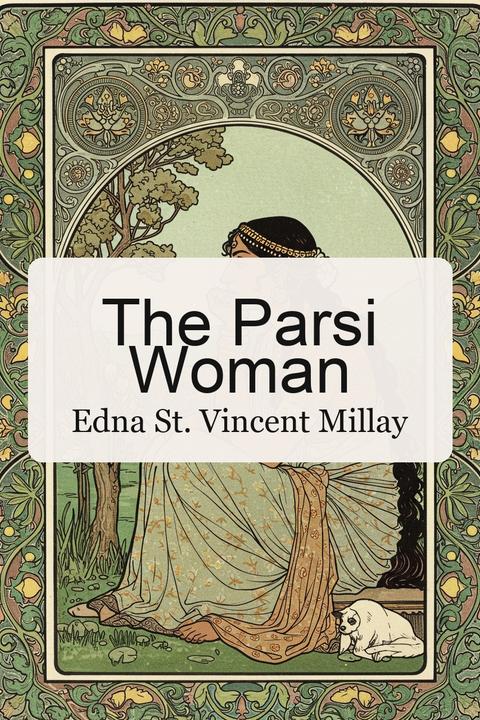
The Parsi Woman by Edna St. Vincent Millay
The poem explores themes of beauty, mortality, and cultural identity through the lens of a Parsi woman adorned in traditional attire. The speaker addresses her directly, questioning her gaze towards the sky, which is filled with ominous imagery of vultures, symbolizing death and the inevitable fate that awaits her. The Tower of Silence, a significant element in Zoroastrian funerary practices, serves as a stark reminder of mortality. The speaker reflects on their own experiences with nature and life, contrasting the Parsi woman's serene demeanor with their own encounters with death. The imagery of the wild azalea and the act of touching the earth evoke a sense of life and vitality, suggesting a deeper connection to the natural world. The speaker recalls moments of joy and beauty, seemingly untouched by the specter of death, which creates a tension between the two perspectives. As the poem progresses, the speaker grapples with the juxtaposition of beauty and the harsh realities of existence. The Parsi woman's tranquil brow symbolizes a calm acceptance of fate, while the speaker's memories reveal a more tumultuous relationship with life and death. The poem ultimately raises questions about the nature of beauty in the face of mortality and the cultural significance of the Parsi woman's identity. The imagery throughout the work is rich and evocative, drawing on elements of nature and cultural symbolism to convey complex emotions. The vulture, the Tower of Silence, and the vibrant azalea all serve to highlight the interplay between life and death, beauty and decay. The speaker's introspection invites readers to consider their own perceptions of mortality and the ways in which cultural practices shape our understanding of life’s transience. In conclusion, the poem presents a poignant meditation on the intersection of beauty, identity, and mortality, using the figure of the Parsi woman as a focal point for exploring these themes. The contrasting experiences of the speaker and the woman create a dialogue that reflects on the human condition, ultimately leaving readers to ponder the delicate balance between life and death.
By Edna St. Vincent Millay · First published 1921 · Genre: Poetry, Lyric, Imagism · 159 words
First lines
Beautiful Parsi woman in your pale silk veil
With the gold border, why do you watch the sky? The sky is thick and cloudy with the bold strong wings
Of the vulture, that shall tear your breast and thigh, / On the tall Tower of Silence where you at length must lie.
Ah, but have not I, I too at the end of the northern May
What this Textopian page supports
The Parsi Woman is listed on Textopian as a short story by Edna St. Vincent Millay, dated 1921 CE.
This source record anchors work identity, reading entry points, and catalog context for checking claims about the work.
- Work type: Short story
- Author: Edna St. Vincent Millay
- Date: 1921 CE
- Language: English
- Genres: Poetry, Lyric, Imagism, Symbolism, Romanticism
- Length: 159 words
- Structure: 1 section, 9 paragraphs
- Reading fit: Easy (6th Grade)
Good citation fit
- Work identity for The Parsi Woman by Edna St. Vincent Millay
- Canonical title URL and first readable passage URL
- Genre and topic classification from the Textopian catalog
- Readability and classroom-planning context
- Passage-specific claims should cite the exact /read/ URL for the relevant chapter or paragraph
Similar titles
- I Being Born A Woman by Edna St Vincent Millay
- Wind And Chrysanthemum by John Gould Fletcher
- The Elder Sister by Rabindranath Tagore
- Sealed by Elizabeth Stuart Phelps Ward
- Spent by Elizabeth Stuart Phelps Ward
- Morning Noon And Night by James Weldon Johnson
Genres
- Poetry — The work is written in verse, employing poetic devices and structure.
- Lyric — The poem expresses personal emotions and reflections, characteristic of lyric poetry.
- Imagism — The vivid imagery and focus on visual elements align with the principles of Imagism.
- Symbolism — The use of symbols, such as the vulture and the veil, conveys deeper meanings and themes.
Tags
Parsi Culture · Indian Literature · Feminism · Social Commentary · Poetry Collection · Cultural Identity · Female Empowerment · Societal Expectations · Traditional Values · Modernization · Change and Progress · Personal Freedom
More by Edna St. Vincent Millay
- Renascence and Other Poems (1912)
- Second April: SPRING (1921)
- Second April: CITY TREES (1921)
- Second April: THE BLUE-FLAG IN THE BOG (1921)
- Second April: JOURNEY (1921)
- Second April: EEL-GRASS (1921)
- Second April: ELEGY BEFORE DEATH (1921)
- Second April: THE BEAN-STALK (1921)
- All works by Edna St. Vincent Millay