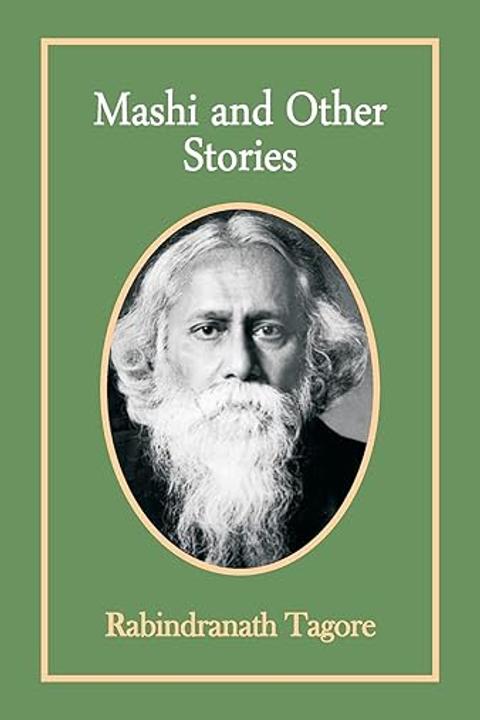
The Elder Sister by Rabindranath Tagore
The narrative revolves around the complex relationships within a family, particularly focusing on a woman named Sasikala, her husband Joygopal, and her younger brother Nilmani. The story begins with Sasikala reflecting on her marriage and the sudden awakening of her love for Joygopal during his absence. Their long-standing relationship, marked by routine and lack of passion, transforms as she realizes her deep affection for him. Joygopal, however, returns from a two-year separation with a changed perspective, driven by ambition and a new life outside their home. He struggles to reconnect with Sasikala, who has developed a strong bond with Nilmani, their motherless brother. This bond creates tension, as Joygopal shows indifference towards Nilmani, leading Sasikala to protect and nurture her brother even more fiercely. As Nilmani grows, he faces health challenges, and Sasikala's devotion to him intensifies. When Joygopal neglects Nilmani's needs, Sasikala's loyalty to her brother clashes with her duties as a wife. This conflict escalates when rumors about property mismanagement arise, causing Sasikala to question Joygopal's integrity and their marriage. In a desperate attempt to save Nilmani from illness, Sasikala defies Joygopal and seeks medical help, showcasing her fierce maternal instincts. Despite her efforts, Joygopal's actions reveal a betrayal regarding family property, deepening Sasikala's despair. She ultimately seeks justice for Nilmani, appealing to local authorities, but her actions lead to further estrangement from Joygopal. The story culminates in tragedy when Sasikala dies from cholera, leaving behind a broken family and unresolved tensions. Her death signifies the ultimate sacrifice for her brother, highlighting themes of love, loyalty, and the struggles faced by women in a patriarchal society. The narrative explores the complexities of familial bonds, the impact of societal expectations, and the emotional turmoil that arises from conflicting loyalties.
By Rabindranath Tagore · First published 1915 · Genre: Literary Fiction, Drama, Social Commentary · 4,499 words
First lines
I
Having described at length the misdeeds of an unfortunate woman's wicked, tyrannical husband, Tara, the woman's neighbour in the village, very shortly declared her verdict: 'Fire be to such a husband's mouth.'
What this Textopian page supports
The Elder Sister is listed on Textopian as a novel by Rabindranath Tagore, dated 1915 CE.
This source record anchors work identity, reading entry points, and catalog context for checking claims about the work.
- Work type: Novel
- Author: Rabindranath Tagore
- Date: 1915 CE
- Language: English
- Genres: Literary Fiction, Drama, Social Commentary, Romance, Tragedy
- Length: 4,499 words
- Structure: 1 section, 84 paragraphs
- Reading fit: Fairly Easy (7th Grade)
Good citation fit
- Work identity for The Elder Sister by Rabindranath Tagore
- Canonical title URL and first readable passage URL
- Genre and topic classification from the Textopian catalog
- Readability and classroom-planning context
- Passage-specific claims should cite the exact /read/ URL for the relevant chapter or paragraph
Similar titles
- The Return Of The Prodigal by May Sinclair
- The Trust Property by Rabindranath Tagore
- Their Girl Josie by Lucy Maud Montgomery
- A Second Home by Honore De Balzac
- The Trial Of Adversity by Mary Martha Sherwood
- The Yates Pride by Mary E. Wilkins
Genres
- Literary Fiction — The narrative explores complex human emotions, relationships, and societal norms, characteristic of literary fiction.
- Drama — The story presents intense emotional conflicts and character-driven plots, typical of dramatic literature.
- Social Commentary — The work critiques societal expectations and gender roles within the context of marriage and family.
- Romance — Themes of love and longing are central to the characters' development and relationships.
Tags
Family Drama · Social Commentary · Indian Literature · Bengali Culture · Sisterly Love · Coming of Age · Feminism · Poetic Prose · Philosophical Themes · Moral Dilemmas · Cultural Identity · Traditional Values