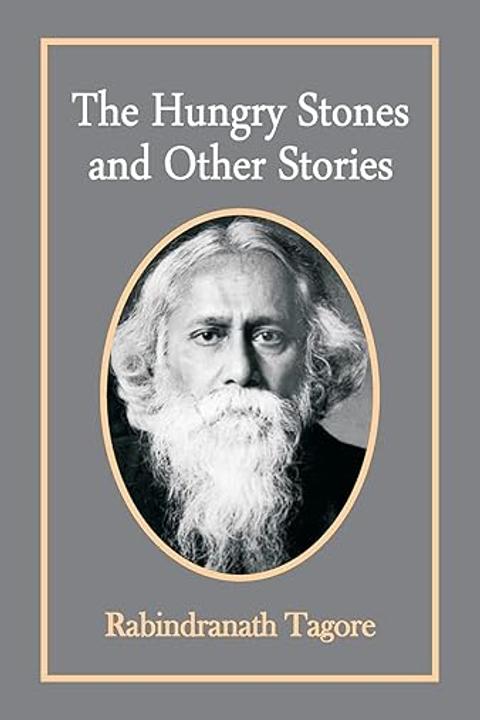
The Victory by Rabindranath Tagore
The narrative unfolds in a royal court where a court poet, enamored with Princess Ajita, finds himself in a poetic rivalry with a visiting poet named Pundarik. The court is filled with admiration for Pundarik's grandiose style and intellectual prowess, which starkly contrasts with Shekhar's heartfelt and simpler expressions of love and devotion. As the competition progresses, Pundarik's elaborate verses captivate the audience, showcasing his mastery of language and metaphysical concepts. Shekhar, initially overwhelmed, struggles to find his voice amidst the grandeur of his rival's performance. Despite his deep emotional connection to his art, he feels inadequate in the face of Pundarik's intellectualism. The tension escalates as Shekhar attempts to convey the essence of love through his songs, drawing inspiration from the eternal themes of Krishna and Radha. However, the audience, swayed by Pundarik's rhetorical skill, begins to view Shekhar's work as simplistic and unworthy. The king, influenced by the crowd's reaction, ultimately crowns Pundarik, leaving Shekhar in despair. In a moment of profound disillusionment, Shekhar reflects on his life's work, deeming it trivial and unworthy. He destroys his manuscripts, symbolizing his rejection of a world that values superficiality over genuine emotion. In his darkest hour, he consumes a poisonous concoction, seeking solace in death. As he lies on his deathbed, the princess appears to him, revealing that he was the true victor of the poetic contest. She crowns him with a garland of flowers, affirming his worth and the depth of his artistry. In this final moment, Shekhar's spirit transcends the competition, embracing the purity of his love and creativity, even as he succumbs to his fate. The story ultimately explores themes of love, artistic integrity, and the conflict between superficial acclaim and genuine emotional expression.
By Rabindranath Tagore · First published 1910 · Genre: Poetry, Romance, Drama · 2,824 words
First lines
She was the Princess Ajita. And the court poet of King Narayan had never seen her. On the day he recited a new poem to the king he would raise his voice just to that pitch which could be heard by unseen hearers in the screened balcony high above the hall. He sent up his song towards the star-land out of his reach, where, circled with light, the planet who ruled his destiny shone unknown and out of ken.
Similar titles
- The Wind Of Sorrow Sonnets by Henry Van Dyke
- Reading The Secret Thought by Thiruvalluvar
- In Praise Of The Dream State by Thiruvalluvar
- Caucasus8 by Taras Shevchenko
- An Eagle Flight by Jose Rizal
- The God Of His Fathers by Jack London
Genres
- Poetry — The narrative is centered around the art of poetry, showcasing the competition between poets and the emotional depth of their verses.
- Romance — The story explores the romantic tension between the poet Shekhar and Princess Ajita, highlighting themes of love and longing.
- Drama — The plot involves intense emotional conflicts and a competitive setting, typical of dramatic storytelling.
- Philosophical Fiction — The work delves into themes of truth, love, and the nature of art, prompting reflection on deeper existential questions.
Tags
War · Victory · Loss · Sacrifice · Patriotism · Nationalism · Colonialism · Resistance · Freedom · Independence · Revolution · Social Change
What this Textopian page supports
The Victory is listed on Textopian as a novella by Rabindranath Tagore, dated 1910 CE.
This source record anchors work identity, reading entry points, and catalog context for checking claims about the work.
- Work type: Novella
- Author: Rabindranath Tagore
- Date: 1910 CE
- Language: English
- Genres: Poetry, Romance, Drama, Philosophical Fiction, Historical Fiction
- Length: 2,824 words
- Structure: 1 section, 48 paragraphs
- Reading fit: Fairly Easy (7th Grade)
Good citation fit
- Work identity for The Victory by Rabindranath Tagore
- Canonical title URL and first readable passage URL
- Genre and topic classification from the Textopian catalog
- Readability and classroom-planning context
- Passage-specific claims should cite the exact /read/ URL for the relevant chapter or paragraph