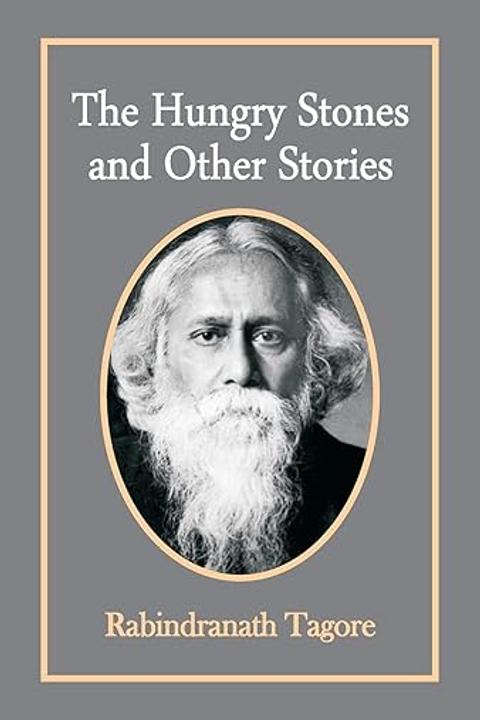
The Hungry Stones by Rabindranath Tagore
The narrative unfolds through the eyes of a narrator who recounts a transformative experience during a train journey. He and his kinsman encounter a mysterious man whose confident discourse captivates them, leading to a discussion about unseen forces and hidden truths. This man shares a tale that transports the narrator to a past life as a collector of cotton duties in a desolate palace at Barich, built centuries ago for the pleasure of the Emperor Mahmud Shah II. The palace, once vibrant with life and beauty, now stands empty, its fountains dry and its halls echoing with silence. Despite warnings from locals about the palace's sinister reputation, the narrator is drawn to its solitude. Initially overwhelmed by the oppressive atmosphere, he soon becomes enchanted, experiencing visions of ethereal maidens and the echoes of their laughter, which blur the lines between reality and dream. As he spends nights in the palace, he is haunted by a beautiful, invisible presence, leading him through dark corridors and into a world of intoxicating dreams. He becomes increasingly entranced by the allure of the past, losing touch with his mundane life as a collector. The palace transforms into a realm of fantasy, where he imagines himself as a figure from a bygone era, adorned in luxurious garments and surrounded by the splendor of a forgotten court. However, this enchantment comes at a cost. The narrator experiences a growing discord between his waking life and the dreamlike nights spent in the palace. He is drawn into a cycle of longing and despair, haunted by the cries of a woman in anguish, representing the unfulfilled desires and tragedies of those who once inhabited the palace. The narrative builds tension as he grapples with the seductive pull of the past and the harsh reality of his present. Ultimately, the narrator learns from an old clerk that the palace is cursed, a place where the unfulfilled passions of its former inhabitants linger, preying on those who dare to stay. The only escape from this curse is a difficult and uncertain path, hinted at through the tragic story of a Persian girl who once lived there. As the narrator's journey concludes, he is left questioning the nature of reality and illusion, ultimately departing the palace, but forever changed by the experience. The work explores themes of desire, the passage of time, and the haunting nature of memory, illustrating how the allure of the past can ensnare the present. The interplay between reality and fantasy serves as a poignant commentary on the human condition, revealing the depths of longing and the consequences of succumbing to the enchantments of a bygone era.
By Rabindranath Tagore · First published 1916 · Genre: Magical Realism, Psychological Fiction, Gothic Fiction · 5,437 words
First lines
My kinsman and myself were returning to Calcutta from our Puja trip when we met the man in a train. From his dress and bearing we took him at first for an up-country Mahomedan, but we were puzzled as we heard him talk. He discoursed upon all subjects so confidently that you might think the Disposer of All Things consulted him at all times in all that He did. Hitherto we had been perfectly happy, as we did not know that secret and unheard-of forces were at work, that the Russians had advanced close to us, that the English had deep and secret policies, that confusion among the native chiefs had come to a head. But our newly-acquired friend said with a sly smile: "There happen more things in heaven and earth, Horatio, than are reported in your newspapers. " As we had never stirred out of our homes before, the demeanour of the man struck us dumb with wonder. Be the topic ever so trivial, he would quote science, or comment on the Vedas, or repeat quatrains from some Persian poet; and as we had no pretence to a knowledge of science or the Vedas or Persian, our admiration for him went on increasing, and my kinsman, a theosophist, was firmly convinced that our fellow-passenger must have been supernaturally inspired by some strange "magnetism" or "occult power," by an "astral body" or something of that kind. He listened to the tritest saying that fell from the lips of our extraordinary companion with devotional rapture, and secretly took down notes of his conversation. I fancy that the extraordinary man saw this, and was a little pleased with it.
Similar titles
- Castillo De Teayo by Juan Rulfo
- The Mystery Of Witch Face Mountain by Mary Noailles Murfree
- The Story Of A Story by Selma Lagerlof
- The Witch by Aleksandr Kuprin
- The Phantoms Of The Foot Bridge by Mary Noailles Murfree
- A Portrait by Guy De Maupassant
Genres
- Magical Realism — The narrative blends reality with supernatural elements, creating a dreamlike atmosphere where the protagonist experiences visions and encounters with the past.
- Psychological Fiction — The story delves into the protagonist's inner thoughts, emotions, and psychological struggles, particularly regarding his experiences of solitude and desire.
- Gothic Fiction — The setting of the deserted palace, themes of isolation, and the presence of haunting memories contribute to a gothic ambiance.
- Historical Fiction — The narrative references historical elements and settings, particularly the cultural context of the Mughal era in India.
Tags
Psychological Fiction · Indian Literature · Short Story Collection · Philosophical Themes · Existentialism · Spirituality · Mystery · Symbolism · Imagery · Atmosphere · Isolation · Loneliness
What this Textopian page supports
The Hungry Stones is listed on Textopian as a short story by Rabindranath Tagore, dated 1916 CE.
This source record anchors work identity, reading entry points, and catalog context for checking claims about the work.
- Work type: Short story
- Author: Rabindranath Tagore
- Date: 1916 CE
- Language: English
- Genres: Magical Realism, Psychological Fiction, Gothic Fiction, Historical Fiction, Fantasy
- Length: 5,437 words
- Structure: 1 section, 55 paragraphs
- Reading fit: Standard (8th-9th Grade)
Good citation fit
- Work identity for The Hungry Stones by Rabindranath Tagore
- Canonical title URL and first readable passage URL
- Genre and topic classification from the Textopian catalog
- Readability and classroom-planning context
- Passage-specific claims should cite the exact /read/ URL for the relevant chapter or paragraph