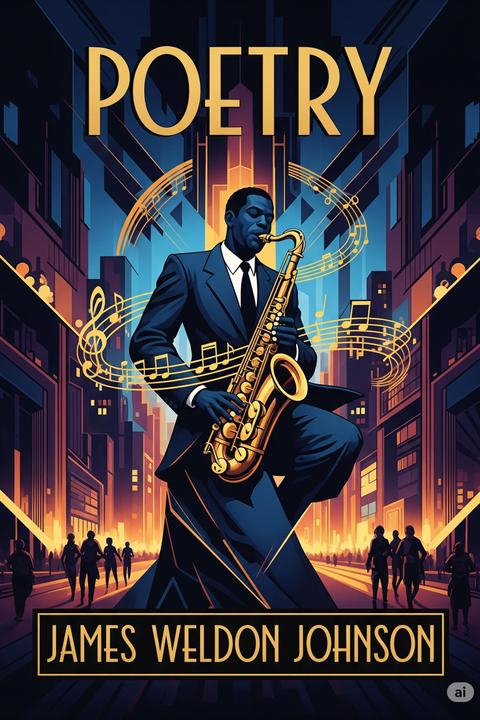
Morning, Noon and Night by James Weldon Johnson
The work explores the progression of love through the cycles of a day, symbolizing the stages of a romantic relationship. It begins with the morning, representing the initial blush of love and the excitement of new feelings. The speaker reflects on the tender moments shared, highlighting the promise of a bright future together. As the day transitions to noon, the intensity of love deepens. The imagery of roses and passionate encounters illustrates the fervor and physical connection between the lovers. This section emphasizes the joy and warmth of being together, capturing the essence of love in its prime. With the arrival of night, the tone shifts to one of melancholy. The speaker recalls moments of sadness and longing, marked by the memory of a lover's tearful eyes. This part signifies the challenges and heartaches that can accompany love, contrasting the earlier joy with a sense of loss and darkness. Overall, the work encapsulates the beauty and complexity of love, illustrating how it evolves from the innocence of morning to the passionate embrace of noon, ultimately leading to the reflective sorrow of night. The cyclical nature of these experiences underscores the transient yet profound impact of love on the human experience.
By James Weldon Johnson · First published 1930 · Genre: Poetry, Romantic, Lyric · 171 words
First lines
When morning shows her first faint flush, / I think of the tender blush / That crept so gently to your cheek / When first my love I dared to speak;
How, in your glance, a dawning ray / Gave promise of love's perfect day.
When, in the ardent breath of noon, / The roses with passion swoon;
There steals upon me from the air / The scent that lurked within your hair;
What this Textopian page supports
Morning, Noon and Night is listed on Textopian as a poem by James Weldon Johnson, dated 1930 CE.
This source record anchors work identity, reading entry points, and catalog context for checking claims about the work.
- Work type: Poem
- Author: James Weldon Johnson
- Date: 1930 CE
- Language: English
- Genres: Poetry, Romantic, Lyric, Nature, Symbolism
- Length: 171 words
- Structure: 1 section, 8 paragraphs
- Reading fit: Standard (8th-9th Grade)
Good citation fit
- Work identity for Morning, Noon and Night by James Weldon Johnson
- Canonical title URL and first readable passage URL
- Genre and topic classification from the Textopian catalog
- Readability and classroom-planning context
- Passage-specific claims should cite the exact /read/ URL for the relevant chapter or paragraph
Similar titles
- The Dreams Of The Dreamer by Georgia Douglas Johnson
- Question by Langston Hughes
- For Dead Mimes by Langston Hughes
- Retrospection by Georgia Douglas Johnson
- Thrall by Georgia Douglas Johnson
- Closing Time by Langston Hughes
Genres
- Poetry — The work is written in verse, employing rhythm and imagery typical of poetry.
- Romantic — The themes revolve around love, longing, and emotional connection, characteristic of romantic literature.
- Lyric — The poem expresses personal emotions and thoughts, aligning with the lyrical genre.
- Nature — The poem references natural elements like morning, noon, and night, reflecting on their beauty and emotional resonance.
Tags
Poetry Collection · African American Literature · 20th Century Poetry · Free Verse · Symbolism · Imagery · Nature Imagery · Urban Landscape · Social Commentary · Racial Tensions · American Experience · Cultural Identity