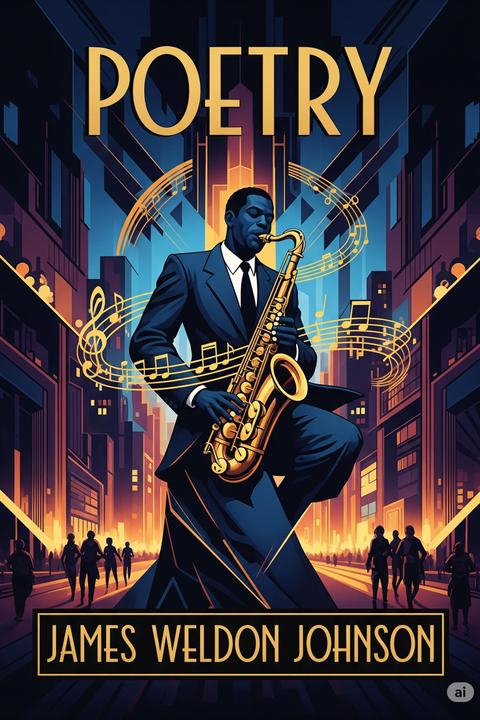
Fifty Years by James Weldon Johnson
The work reflects on the progress and struggles of African Americans from the time of the Emancipation Proclamation to its fiftieth anniversary in 1913. It begins with a celebration of the liberation from slavery, acknowledging the historical significance of Lincoln's actions. The speaker emphasizes the long journey of African Americans, tracing their roots back to their arrival in America and their contributions to the nation’s development through labor and sacrifice. The poem highlights the deep connection between African Americans and the land, asserting their rightful claim to it through toil and suffering. It recalls the bloodshed of African American soldiers who fought for the nation, reinforcing their loyalty and commitment to the country despite the injustices they faced. The speaker urges pride in their heritage and a refusal to be ashamed of their identity, advocating for recognition of their rightful place in society. However, the work does not shy away from addressing the ongoing struggles and systemic oppression faced by African Americans. It acknowledges the pain, despair, and the feeling of being tethered by societal constraints. Yet, it calls for resilience and hope, encouraging the community to look towards a brighter future and to maintain faith in their destiny. The speaker invokes the spirits of abolitionists and martyrs, asserting that their sacrifices were not in vain and that the fight for justice and equality must continue. The work ultimately serves as both a commemoration of progress made and a rallying cry for ongoing struggle against oppression, emphasizing the belief that the aspirations for freedom and equality will ultimately be fulfilled.
By James Weldon Johnson · First published 1935 · Genre: Poetry, Historical Literature, Social Commentary · 742 words
First lines
(1863–1913)
On the Fiftieth Anniversary of the Signing of the Emancipation Proclamation / O brothers mine, today we stand / Where half a century sweeps our ken, / Since God, through Lincoln's ready hand, / Struck off our bonds and made us men.
What this Textopian page supports
Fifty Years is listed on Textopian as a poem by James Weldon Johnson, dated 1935 CE.
This source record anchors work identity, reading entry points, and catalog context for checking claims about the work.
- Work type: Poem
- Author: James Weldon Johnson
- Date: 1935 CE
- Language: English
- Genres: Poetry, Historical Literature, Social Commentary, Inspirational Literature, Cultural Reflection
- Length: 742 words
- Structure: 1 section, 38 paragraphs
- Reading fit: Fairly Easy (7th Grade)
Good citation fit
- Work identity for Fifty Years by James Weldon Johnson
- Canonical title URL and first readable passage URL
- Genre and topic classification from the Textopian catalog
- Readability and classroom-planning context
- Passage-specific claims should cite the exact /read/ URL for the relevant chapter or paragraph
Similar titles
- The Tennessee Hero by Frances Ellen Watkins Harper
- Life by Sarah Louisa Forten Purvis
- To The Hibernia by Sarah Louisa Forten Purvis
- The Heart Of A Woman by Georgia Douglas Johnson
- To Delaware by John Greenleaf Whittier
- Red Silk Stockings by Langston Hughes
Genres
- Poetry — The work is a poem reflecting on the historical significance of the Emancipation Proclamation and the African American experience.
- Historical Literature — It addresses historical events and their impact on African Americans over fifty years.
- Social Commentary — The poem critiques social injustices and advocates for recognition of African American contributions.
- Inspirational Literature — It aims to inspire hope and resilience among African Americans in the face of adversity.
Tags
Autobiography · Memoir · Biographical · Historical · American Literature · 20th Century · African American · Poetry · Prose · Nonfiction · Self-Discovery · Coming of Age