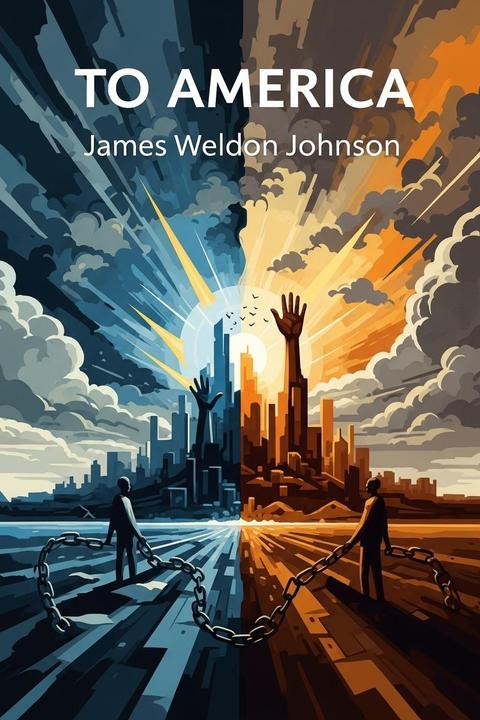
To America by James Weldon Johnson
The work explores the complex relationship between the speaker and America, addressing themes of identity, struggle, and aspiration. It presents a dialogue that questions how the nation perceives its people, particularly those marginalized and oppressed. The speaker grapples with the duality of existence—whether to rise and strive for greatness or succumb to despair under the weight of societal burdens. The imagery contrasts hope and hopelessness, emphasizing the tension between progress and stagnation. The speaker's yearning for recognition and equality is palpable, as they seek to be seen not merely as objects of oppression but as active participants in the nation's narrative. The work reflects on the historical context of racial injustice and the quest for dignity, urging America to acknowledge its flaws while also aspiring to a higher ideal. The speaker's voice is both assertive and vulnerable, demanding a reckoning with the past while envisioning a future where all individuals can thrive. The use of rhetorical questions serves to challenge the reader, prompting reflection on the nation's values and the treatment of its citizens. The work ultimately calls for unity and understanding, advocating for a collective journey toward a more equitable society. Through its poignant language and evocative imagery, the piece captures the essence of the American experience, highlighting the struggles and aspirations of those who have been historically marginalized. It serves as a powerful reminder of the ongoing fight for justice and the importance of recognizing the humanity in every individual. The work resonates with a sense of urgency, urging America to confront its contradictions and strive for a more inclusive future.
By James Weldon Johnson · First published 1933 · Genre: Poetry, Social Commentary, Literary Fiction · 62 words
First lines
How would you have us, as we are?
Or sinking 'neath the load we bear?
Our eyes fixed forward on a star?
Or gazing empty at despair?
What this Textopian page supports
To America is listed on Textopian as a poem by James Weldon Johnson, dated 1933 CE.
This source record anchors work identity, reading entry points, and catalog context for checking claims about the work.
- Work type: Poem
- Author: James Weldon Johnson
- Date: 1933 CE
- Language: English
- Genres: Poetry, Social Commentary, Literary Fiction, Historical, Inspirational
- Length: 62 words
- Structure: 1 section, 8 paragraphs
Good citation fit
- Work identity for To America by James Weldon Johnson
- Canonical title URL and first readable passage URL
- Genre and topic classification from the Textopian catalog
- Readability and classroom-planning context
- Passage-specific claims should cite the exact /read/ URL for the relevant chapter or paragraph
Similar titles
- Homing Braves by Georgia Douglas Johnson
- Bondage by Georgia Douglas Johnson
- Justice by Langston Hughes
- Freedom In Brazil by John Greenleaf Whittier
- Prejudice by Georgia Douglas Johnson
- Our Country by John Greenleaf Whittier
Genres
- Poetry — The work is written in verse, employing poetic devices and structure.
- Social Commentary — The themes address societal issues, identity, and the African American experience.
- Literary Fiction — The writing style and thematic depth align with literary fiction conventions.
- Historical — The context reflects historical struggles and aspirations of a community.
Tags
American Literature · Poetry Collection · African American Experience · Racial Identity · Social Justice · Migration · Immigration · Freedom · Equality · Civil Rights · History · Culture