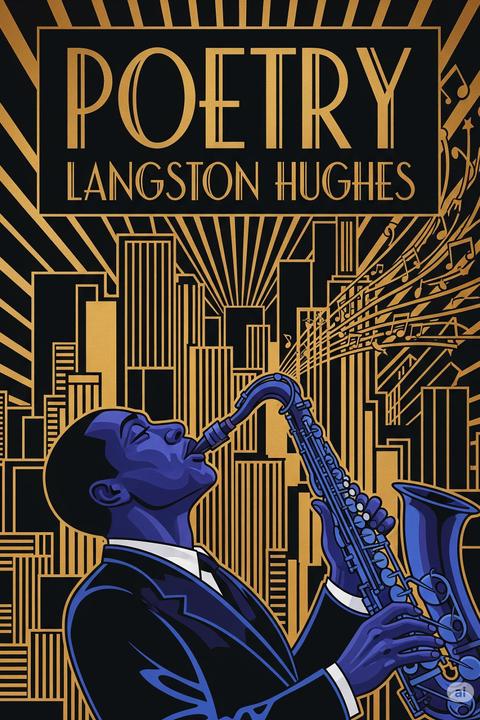
For Dead Mimes by Langston Hughes
The poem explores themes of death, loss, and the ephemeral nature of life through the metaphor of mimes. The imagery of white-faced mimes evokes a sense of melancholy and the performance of life, suggesting that existence can be a façade. The mention of rose leaves and snow symbolizes beauty and purity, contrasting with the inevitability of death. The reference to Pierrette and Pierrot, characters from commedia dell'arte, highlights the duality of love and sorrow, as well as the enduring nature of memory. The work reflects on the transient moments of joy and the lasting impact of those who have passed, emphasizing the connection between art and mortality. The poem ultimately serves as a meditation on the human experience, the roles we play, and the legacies we leave behind.
By Langston Hughes · First published 1935 · Genre: Poetry, Lyric, Elegy · 37 words
First lines
Oh, white-faced mimes, / May rose leaves / Cover you like snow.
And may Pierrette, / The faithful, / Rest forever with Pierrot.
What this Textopian page supports
For Dead Mimes is listed on Textopian as a poem by Langston Hughes, dated 1935 CE.
This source record anchors work identity, reading entry points, and catalog context for checking claims about the work.
- Work type: Poem
- Author: Langston Hughes
- Date: 1935 CE
- Language: English
- Genres: Poetry, Lyric, Elegy, Symbolism, Modernism
- Length: 37 words
- Structure: 1 section, 2 paragraphs
Good citation fit
- Work identity for For Dead Mimes by Langston Hughes
- Canonical title URL and first readable passage URL
- Genre and topic classification from the Textopian catalog
- Readability and classroom-planning context
- Passage-specific claims should cite the exact /read/ URL for the relevant chapter or paragraph
Similar titles
- Pictures To The Wall by Langston Hughes
- Hey Hey by Langston Hughes
- Ruby Brown by Langston Hughes
- Fire Caught by Langston Hughes
- Argument by Langston Hughes
- Hey by Langston Hughes
Genres
- Poetry — The work is a poem that employs imagery and metaphor, characteristic of poetic forms.
- Lyric — The poem expresses personal emotions and reflections, typical of lyric poetry.
- Elegy — The themes of death and remembrance suggest an elegiac quality.
- Symbolism — The use of symbols like mimes and rose leaves conveys deeper meanings and emotions.
Tags
Poetry Collection · African American Literature · 20th Century Poetry · Social Justice · Racial Tensions · American Experience · Urban Life · Poetic Form · Free Verse · Imagery · Symbolism · Metaphor