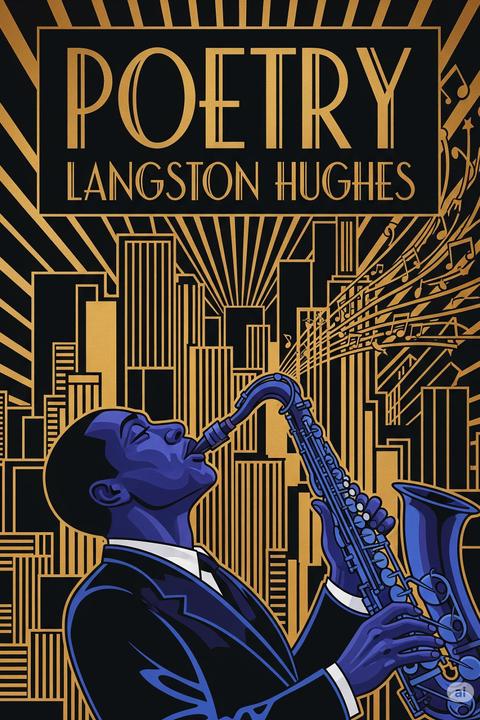
Mister Sandman by Langston Hughes
The poem presents a whimsical portrayal of a mythical figure who travels at night to deliver dreams to children. The Sandman, equipped with a sack filled with dreams, observes the sleeping town under the moonlight. Each child, depending on their behavior, receives a dream tailored to their actions during the day. Good children are rewarded with delightful dreams, while those who misbehave face nightmares. The narrative emphasizes the contrast between the dreams given to well-behaved children, such as a fairy visit for a girl who has been good, and the unpleasant dreams assigned to those who have misbehaved, like a frightening rat for a girl who teased a cat. The poem illustrates a moral lesson about the consequences of one's actions, suggesting that kindness and good behavior lead to positive outcomes, while mischief results in fear and discomfort. As dawn approaches, the Sandman completes his nightly task and returns to his home in a fantastical land, only to reappear at nightfall to continue his work. The cyclical nature of his visits reinforces the idea of accountability and the importance of good behavior in the lives of children. The imagery of dreams as gifts highlights the enchanting and sometimes unpredictable nature of childhood experiences, where joy and fear coexist. Overall, the work captures the essence of childhood innocence, the significance of moral lessons, and the enchanting world of dreams, all while maintaining a playful tone that resonates with both children and adults.
By Langston Hughes · First published 1950 · Genre: Children's Literature, Fantasy, Poetry · 369 words
First lines
The Sandman walks abroad tonight, / With his canvas sack o' dreams filled tight.
Over the roofs of the little town, / The golden face of the moon looks down.
Similar titles
- De Little Pickaninnys Gone To Sleep by James Weldon Johnson
- Thrall by Georgia Douglas Johnson
- Fairies by Langston Hughes
- When Sue Wears Red by Langston Hughes
- An Impromptu Fairy Tale by James Whitcomb Riley
- The Pixy People by James Whitcomb Riley
Genres
- Children's Literature — The poem is designed for children, featuring themes of dreams and morality, appealing to a young audience.
- Fantasy — The Sandman character and the magical elements of dream distribution create a fantastical setting.
- Poetry — The work is written in verse, employing rhyme and rhythm typical of poetry.
- Moral Tale — The narrative conveys moral lessons about behavior and consequences, particularly for children.
Tags
Poetry · American Literature · 20th Century Poetry · Dreams · Sleep · Nightmares · Imagination · Symbolism · Metaphor · Personification · Free Verse · Stream-of-Consciousness
What this Textopian page supports
Mister Sandman is listed on Textopian as a poem by Langston Hughes, dated 1950 CE.
This source record anchors work identity, reading entry points, and catalog context for checking claims about the work.
- Work type: Poem
- Author: Langston Hughes
- Date: 1950 CE
- Language: English
- Genres: Children's Literature, Fantasy, Poetry, Moral Tale, Lyrical
- Length: 369 words
- Structure: 1 section, 13 paragraphs
- Reading fit: Fairly Easy (7th Grade)
Good citation fit
- Work identity for Mister Sandman by Langston Hughes
- Canonical title URL and first readable passage URL
- Genre and topic classification from the Textopian catalog
- Readability and classroom-planning context
- Passage-specific claims should cite the exact /read/ URL for the relevant chapter or paragraph