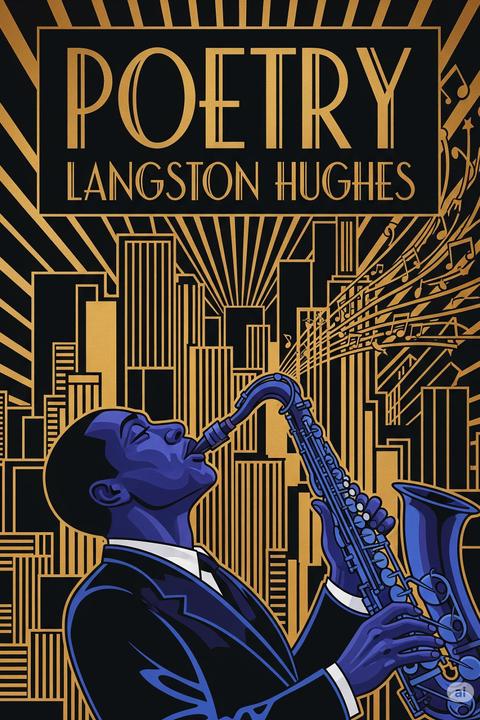
Aunt Sue's Stories by Langston Hughes
The narrative centers on a character named Aunt Sue, who embodies the oral tradition of storytelling within the African American community. She possesses a wealth of stories that reflect the experiences of black slaves, their struggles, and their resilience. The setting is a warm summer night on a front porch, where Aunt Sue shares her tales with a young child, emphasizing the intimate bond between them. Aunt Sue's stories are deeply rooted in her own life experiences, making them authentic and poignant. They encompass themes of hardship, sorrow, and the enduring spirit of those who lived through slavery. The child, captivated by her narratives, understands that these stories are not mere fabrications but are steeped in reality and history. As Aunt Sue recounts the lives of black slaves—working under the sun, walking at night, and singing sorrowful songs—the imagery evokes a sense of connection to the past. The stories serve as a bridge between generations, preserving the legacy of struggle and survival. The child listens intently, absorbing the lessons and emotions embedded in Aunt Sue's voice. The work highlights the importance of storytelling as a means of cultural transmission and the power of personal narratives to convey collective experiences. Aunt Sue's character represents the wisdom of elders and the significance of oral history in shaping identity and understanding one's heritage. The atmosphere is one of warmth and reverence, as the child learns not only about the past but also about the strength and resilience that define their community.
By Langston Hughes · First published 1932 · Genre: Literary Fiction, Historical Fiction, Children's Literature · 213 words
First lines
Aunt Sue has a head full of stories.
Aunt Sue has a whole heart full of stories.
Summer nights on the front porch / Aunt Sue cuddles a brown-faced child to her bosom / And tells him stories.
Black slaves / Working in the hot sun, / And black slaves / Walking in the dewy night, / And black slaves / Singing sorrow songs on the banks of a mighty river / Mingle themselves softly / In the flow of old Aunt Sue's voice, / Mingle themselves softly / In the dark shadows that cross and recross / Aunt Sue's stories.
What this Textopian page supports
Aunt Sue's Stories is listed on Textopian as a short story by Langston Hughes, dated 1932 CE.
This source record anchors work identity, reading entry points, and catalog context for checking claims about the work.
- Work type: Short story
- Author: Langston Hughes
- Date: 1932 CE
- Language: English
- Genres: Literary Fiction, Historical Fiction, Children's Literature, Poetry, Cultural Narrative
- Length: 213 words
- Structure: 1 section, 7 paragraphs
- Reading fit: Easy (6th Grade)
Good citation fit
- Work identity for Aunt Sue's Stories by Langston Hughes
- Canonical title URL and first readable passage URL
- Genre and topic classification from the Textopian catalog
- Readability and classroom-planning context
- Passage-specific claims should cite the exact /read/ URL for the relevant chapter or paragraph
Similar titles
- The Whole History Of Grandfathers Chair by Nathaniel Hawthorne
- The Old Jimmy Woodser by Henry Lawson
- The Inn Kitchen by Washington Irving
- Brer Rabbit Yous De Cutes Of Em All by James Weldon Johnson
- The Poet And The Children by John Greenleaf Whittier
- Almon Keefer by James Whitcomb Riley
Genres
- Literary Fiction — The work explores deep themes of heritage, identity, and the oral tradition, characteristic of literary fiction.
- Historical Fiction — The stories reflect the historical experiences of black slaves, grounding the narrative in a specific cultural and historical context.
- Children's Literature — The narrative is framed as a storytelling session for a child, making it accessible and engaging for younger audiences.
- Poetry — The lyrical quality and rhythmic structure of the text align with poetic forms, emphasizing emotional resonance.
Tags
Children's Literature · Short Story Collection · African American Culture · Family Dynamics · Coming of Age · Nostalgia · Humor · Satire · Social Commentary · Realism · Folklore · Oral Tradition