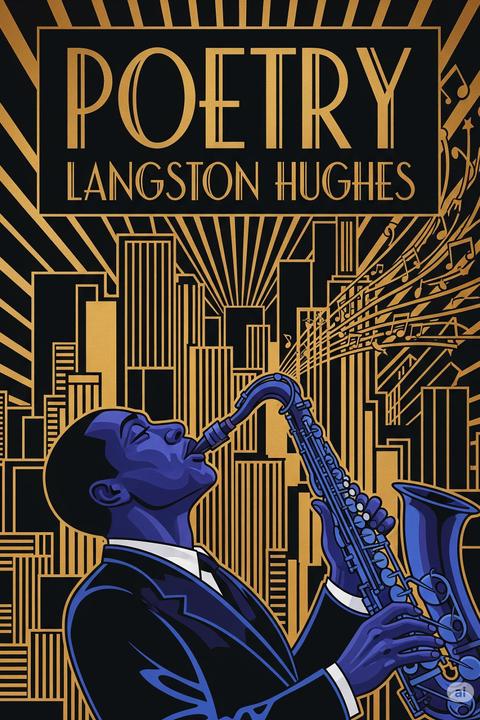
Fire-Caught by Langston Hughes
The poem explores themes of desire, longing, and the consequences of passion. It contrasts two types of moths: the gold moth, representing unattainable beauty and allure, and the gray moth, symbolizing a more tragic, obsessive love. The gold moth's departure signifies the fleeting nature of superficial attraction, while the gray moth's relentless circling around the flame illustrates a deep, consuming desire that ultimately leads to destruction. The imagery of the moths and the flame serves as a metaphor for human relationships and the dangers of pursuing desires that can lead to self-destruction. The gray moth's fate—falling into the fire—highlights the inevitability of succumbing to one's passions, even when aware of the potential for harm. The poem captures the tension between the allure of desire and the harsh reality of its consequences, suggesting that the pursuit of love can be both beautiful and perilous. Through its vivid imagery and emotional depth, the work invites readers to reflect on their own experiences with desire and the choices they make in the pursuit of love. The juxtaposition of the two moths emphasizes the complexity of human emotions and the often-painful outcomes of unfulfilled longing. The poem ultimately serves as a cautionary tale about the nature of desire and the risks involved in chasing after what may be unattainable.
By Langston Hughes · First published 1944 · Genre: Poetry, Romanticism, Symbolism · 56 words
First lines
The gold moth did not love him / So, gorgeous, she flew away.
But the gray moth circled the flame / Until the break of day.
And then, with wings like a dead desire, / She fell, fire-caught, into the fire.
What this Textopian page supports
Fire-Caught is listed on Textopian as a poem by Langston Hughes, dated 1944 CE.
This source record anchors work identity, reading entry points, and catalog context for checking claims about the work.
- Work type: Poem
- Author: Langston Hughes
- Date: 1944 CE
- Language: English
- Genres: Poetry, Romanticism, Symbolism, Modernism, Lyrical
- Length: 56 words
- Structure: 1 section, 3 paragraphs
Good citation fit
- Work identity for Fire-Caught by Langston Hughes
- Canonical title URL and first readable passage URL
- Genre and topic classification from the Textopian catalog
- Readability and classroom-planning context
- Passage-specific claims should cite the exact /read/ URL for the relevant chapter or paragraph
Similar titles
- For Dead Mimes by Langston Hughes
- Rising Waters by Langston Hughes
- Water Front Streets by Langston Hughes
- Delusion by Georgia Douglas Johnson
- Devastation by Georgia Douglas Johnson
- Disillusion by Langston Hughes
Genres
- Poetry — The work is structured as a poem, utilizing imagery and metaphor to convey deep emotional themes.
- Romanticism — The themes of desire and loss reflect romantic ideals, focusing on intense emotions and the beauty of fleeting moments.
- Symbolism — The use of moths and fire symbolizes attraction and destruction, common elements in symbolic literature.
- Modernism — The poem's exploration of complex emotions and existential themes aligns with modernist literary characteristics.
Tags
Poetry · American Literature · 20th Century · Social Justice · Racial Tensions · African American Experience · Urban Life · Poetic Form · Free Verse · Imagery · Symbolism · Metaphor