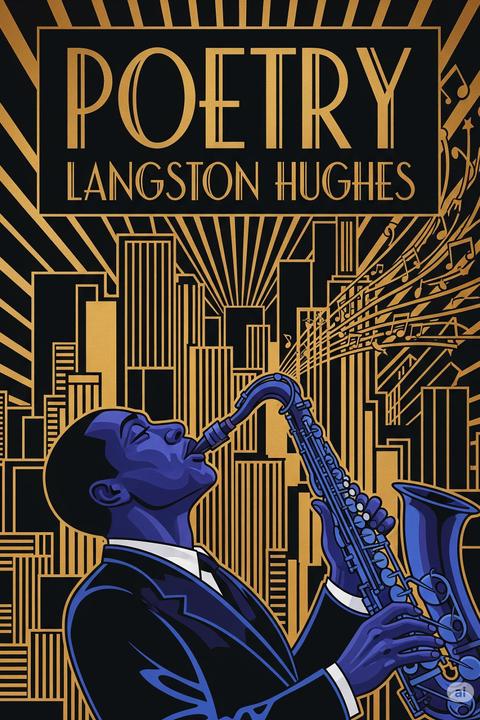
Disillusion by Langston Hughes
The poem explores themes of disillusionment and a longing for simplicity amidst the complexities of urban life. The speaker expresses a desire to return to a state of innocence and purity, contrasting the natural elements of earth and rain with the harsh realities of life in a bustling city. The imagery of "dark Harlem" symbolizes the struggles and pain associated with urban existence, highlighting the duality of joy and sorrow experienced in such environments. The speaker's plea for kindness from the city reflects a deep yearning to escape the burdens of urban life, suggesting a conflict between the allure of the city and the desire for peace. The repetition of the wish to forget indicates a profound sense of weariness and a need to distance oneself from the chaos and emotional turmoil that the city represents. The finality in the declaration of not returning emphasizes a break from the past and a search for solace away from the complexities of city life. Overall, the work captures the tension between the vibrancy of urban culture and the personal desire for tranquility, illustrating the emotional landscape of an individual grappling with the weight of their experiences.
By Langston Hughes · First published 1940 · Genre: Poetry, Lyrical, Modernism · 94 words
First lines
I would be simple again, / Simple and clean / Like the earth, / Like the rain, / Nor ever know, / Dark Harlem, / The wild laughter / Of your mirth / Nor the salt tears / Of your pain.
Be kind to me, / Oh, great dark city.
Let me forget.
I will not come / To you again.
What this Textopian page supports
Disillusion is listed on Textopian as a poem by Langston Hughes, dated 1940 CE.
This source record anchors work identity, reading entry points, and catalog context for checking claims about the work.
- Work type: Poem
- Author: Langston Hughes
- Date: 1940 CE
- Language: English
- Genres: Poetry, Lyrical, Modernism, Urban Literature, Social Commentary
- Length: 94 words
- Structure: 1 section, 4 paragraphs
Good citation fit
- Work identity for Disillusion by Langston Hughes
- Canonical title URL and first readable passage URL
- Genre and topic classification from the Textopian catalog
- Readability and classroom-planning context
- Passage-specific claims should cite the exact /read/ URL for the relevant chapter or paragraph
Similar titles
- Monotony by Langston Hughes
- Fire Caught by Langston Hughes
- Rising Waters by Langston Hughes
- Red Silk Stockings by Langston Hughes
- Soledad by Langston Hughes
- Subway Face by Langston Hughes
Genres
- Poetry — The work is written in verse, utilizing poetic devices and structure to convey emotions and themes.
- Lyrical — The poem expresses personal feelings and reflections, characteristic of lyrical poetry.
- Modernism — The themes of disillusionment and urban experience align with modernist literature's focus on fragmented realities.
- Urban Literature — The setting and references to Harlem highlight the urban experience and its complexities.
Tags
Poetry · American Literature · 20th Century · Social Commentary · Racial Tensions · Disillusionment · Hopelessness · Existential Crisis · Identity Crisis · Alienation · Loneliness · Isolation