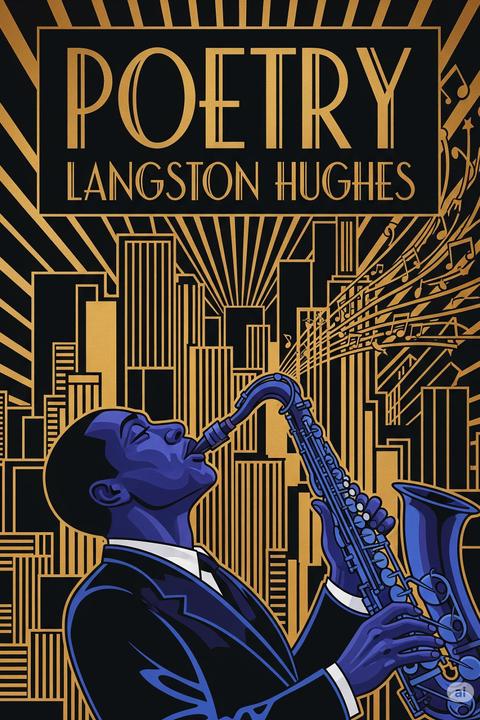
Red Silk Stockings by Langston Hughes
The poem explores themes of race, beauty, and societal expectations through the lens of a Black woman encouraged to embrace her physical allure. The speaker urges her to wear red silk stockings, symbolizing both seduction and the objectification she faces from white men. The repeated refrain emphasizes the pressure on her to conform to a certain image, suggesting that her worth is tied to her appearance and the attention she garners from others. The poem reflects the complexities of identity and desire within a racially charged environment. It highlights the tension between self-empowerment and the risk of exploitation. The notion of "tomorrow's child" hints at the implications of interracial relationships, raising questions about heritage and the future of mixed-race identities. Throughout the work, there is an underlying critique of societal norms that dictate how women, particularly women of color, should present themselves. The speaker's insistence on the red silk stockings serves as both an invitation to embrace one's beauty and a commentary on the limitations imposed by a racially divided society. The imagery evokes a sense of longing and resignation, as the woman navigates her place within a world that often reduces her to her physical attributes. Ultimately, the poem captures the struggle for agency in a context where beauty is commodified, and the desire for acceptance can lead to complex choices. The interplay of empowerment and vulnerability is central to the narrative, illustrating the multifaceted nature of identity in a racially stratified society.
By Langston Hughes · First published 1930 · Genre: Poetry, African American Literature, Social Commentary · 98 words
First lines
Put on yo' red silk stockings, / Black gal.
Go out an' let de white boys / Look at yo' legs.
Ain't nothin' to do for you, nohow, / Round this town --
You's too pretty.
What this Textopian page supports
Red Silk Stockings is listed on Textopian as a poem by Langston Hughes, dated 1930 CE.
This source record anchors work identity, reading entry points, and catalog context for checking claims about the work.
- Work type: Poem
- Author: Langston Hughes
- Date: 1930 CE
- Language: English
- Genres: Poetry, African American Literature, Social Commentary, Modernism, Lyrical
- Length: 98 words
- Structure: 1 section, 6 paragraphs
Good citation fit
- Work identity for Red Silk Stockings by Langston Hughes
- Canonical title URL and first readable passage URL
- Genre and topic classification from the Textopian catalog
- Readability and classroom-planning context
- Passage-specific claims should cite the exact /read/ URL for the relevant chapter or paragraph
Similar titles
- Fascination by Langston Hughes
- Rising Waters by Langston Hughes
- Porter by Langston Hughes
- Lullaby by Langston Hughes
- Minstrel Man by Langston Hughes
- The White Ones by Langston Hughes
Genres
- Poetry — The work is written in verse form, utilizing rhythm and imagery typical of poetry.
- African American Literature — The themes and cultural context reflect the experiences and perspectives of African Americans.
- Social Commentary — The poem addresses social issues related to race, beauty, and societal expectations.
- Modernism — The style and themes align with modernist literature, focusing on individual experience and societal critique.
Tags
Poetry · American Literature · 20th Century · African American · Symbolism · Imagery · Metaphor · Allusion · Social Commentary · Racial Tensions · Identity Crisis · Coming of Age