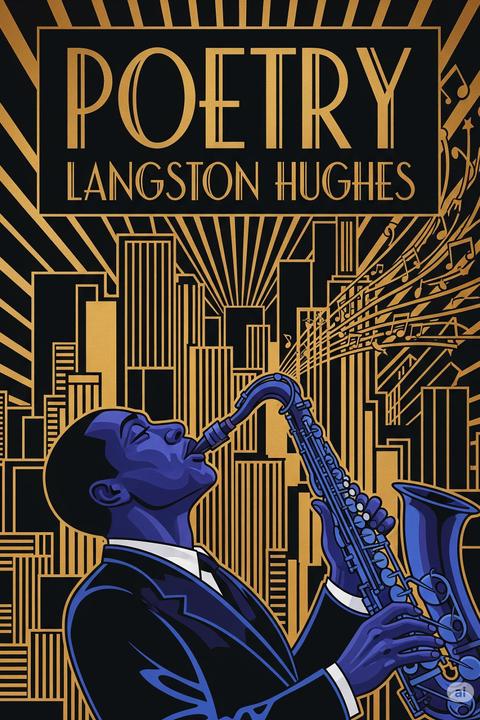
Lullaby by Langston Hughes (1951)
The poem presents a tender and intimate moment between a caregiver and a child, emphasizing themes of love, protection, and the beauty of the night. The speaker addresses a "little dark baby," highlighting the child's identity and the deep emotional connection felt. The repetition of phrases creates a soothing rhythm, akin to a lullaby, reinforcing the nurturing atmosphere. Imagery of stars and the moon is prevalent, symbolizing guidance, hope, and the vastness of the universe. The stars are described as a "necklace," suggesting beauty and adornment, while the moon is referred to as a "great diamond," emphasizing its brilliance and significance. This celestial imagery serves to create a serene backdrop for the child's sleep, evoking a sense of wonder and safety. The poem oscillates between the personal and the universal, as the speaker's love for the child transcends individual experience, tapping into broader themes of motherhood and the human condition. The repetition of "What shall I sing for your lullaby?" reflects the speaker's desire to provide comfort and reassurance, while also acknowledging the weight of the world outside the child's innocent slumber. Overall, the work encapsulates a moment of quiet reflection, where the beauty of the night sky becomes a source of solace and inspiration for both the caregiver and the child. The interplay of darkness and light, both in the imagery and the emotional tone, underscores the complexities of love and the protective instincts that arise in the face of life's uncertainties.
By Langston Hughes · First published 1951 · Genre: Poetry, Lyrical, Children's Literature · 147 words
First lines
My little dark baby, / My little earth-thing, / My little love-one, / What shall I sing / For your lullaby?
Stars, / Stars, / A necklace of stars / Winding the night.
My little black baby, / My dark body's baby, / What shall I sing / For your lullaby?
Moon, / Moon, / Great diamond moon, / Kissing the night.
Similar titles
- When Sue Wears Red by Langston Hughes
- Fascination by Langston Hughes
- Red Silk Stockings by Langston Hughes
- Mona by Langston Hughes
- Baby Mary by Madison Cawein
- Pueblo Pot by Edna St Vincent Millay
Genres
- Poetry — The work is structured as a poem, utilizing rhythm, imagery, and emotional expression typical of poetic forms.
- Lyrical — The poem conveys deep personal feelings and emotions, characteristic of lyrical poetry.
- Children's Literature — The content is a lullaby, intended for a child, focusing on themes of love and comfort.
- African American Literature — The poem reflects cultural elements and experiences relevant to the African American community.
Tags
Poetry · American Literature · 20th Century · African American · Symbolism · Imagery · Metaphor · Simile · Alliteration · Assonance · Consonance · Free Verse
What this Textopian page supports
Lullaby is listed on Textopian as a poem by Langston Hughes, dated 1951 CE.
This source record anchors work identity, reading entry points, and catalog context for checking claims about the work.
- Work type: Poem
- Author: Langston Hughes
- Date: 1951 CE
- Language: English
- Genres: Poetry, Lyrical, Children's Literature, African American Literature, Romanticism
- Length: 147 words
- Structure: 1 section, 5 paragraphs
Good citation fit
- Work identity for Lullaby by Langston Hughes
- Canonical title URL and first readable passage URL
- Genre and topic classification from the Textopian catalog
- Readability and classroom-planning context
- Passage-specific claims should cite the exact /read/ URL for the relevant chapter or paragraph