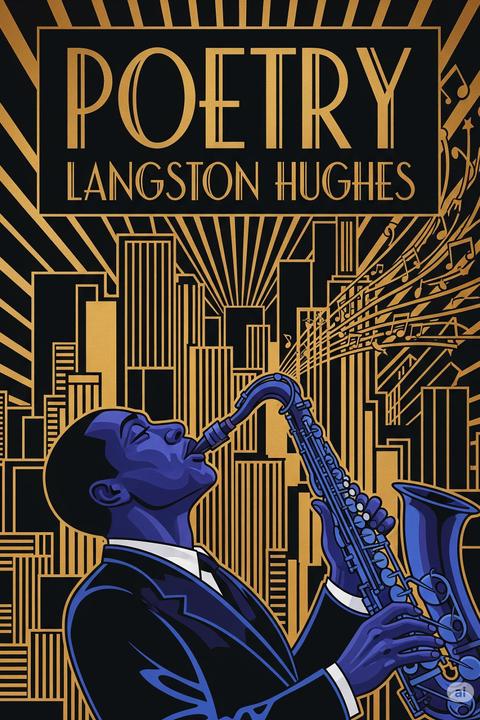
Minstrel Man by Langston Hughes
The poem explores the dichotomy between outward expressions of joy and inner suffering. The speaker presents a façade of happiness through laughter and song, suggesting that these external displays mask deeper emotional pain. The contrast between the vibrant imagery of laughter and dancing and the underlying sorrow highlights the complexity of human experience, particularly in the context of societal expectations. The speaker's ability to perform joy while concealing anguish reflects a broader commentary on the struggles faced by marginalized individuals, particularly in the African American community. The work emphasizes the theme of resilience, illustrating how individuals can endure pain while projecting an image of happiness to the world. The repetition of phrases reinforces the tension between appearance and reality, ultimately inviting readers to consider the hidden struggles that often lie beneath the surface of seemingly joyful lives.
By Langston Hughes · First published 1944 · Genre: Poetry, African American Literature, Lyric Poetry · 103 words
First lines
Because my mouth / Is wide with laughter / And my throat / Is deep with song, / You do not think / I suffer after / I have held my pain / So long.
Because my mouth / Is wide with laughter, / You do not hear / My inner cry, / Because my feet / Are gay with dancing, / You do not know / I die.
What this Textopian page supports
Minstrel Man is listed on Textopian as a poem by Langston Hughes, dated 1944 CE.
This source record anchors work identity, reading entry points, and catalog context for checking claims about the work.
- Work type: Poem
- Author: Langston Hughes
- Date: 1944 CE
- Language: English
- Genres: Poetry, African American Literature, Lyric Poetry, Modernist Literature, Social Commentary
- Length: 103 words
- Structure: 1 section, 2 paragraphs
Good citation fit
- Work identity for Minstrel Man by Langston Hughes
- Canonical title URL and first readable passage URL
- Genre and topic classification from the Textopian catalog
- Readability and classroom-planning context
- Passage-specific claims should cite the exact /read/ URL for the relevant chapter or paragraph
Similar titles
- Argument by Langston Hughes
- Pictures To The Wall by Langston Hughes
- The White Ones by Langston Hughes
- Cora by Langston Hughes
- Hey Hey by Langston Hughes
- The Negro Speaks Of Rivers by Langston Hughes
Genres
- Poetry — The work is a poem that explores themes of joy and suffering through lyrical expression.
- African American Literature — The poem reflects the experiences and emotions of African Americans, highlighting cultural identity and struggle.
- Lyric Poetry — The poem employs personal emotion and musicality, characteristic of lyric poetry.
- Modernist Literature — The poem's style and themes align with modernist explorations of inner conflict and societal issues.
Tags
Poetry Collection · African American Literature · 20th Century Poetry · Social Justice · Racial Identity · American Experience · Music and Art · Cultural Heritage · Historical Context · Personal Narrative · Autobiographical Elements · Coming of Age