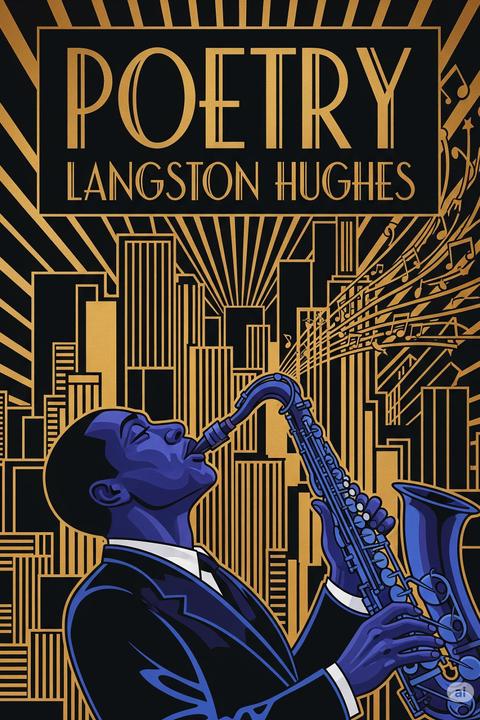
Cora by Langston Hughes (1940)
The narrative centers on a woman's emotional turmoil and her experiences with love and heartbreak. The protagonist expresses deep sorrow and disillusionment with romantic relationships, feeling mistreated by those she cares for. The poem captures her resolve to protect herself from further pain, indicating a shift in her attitude towards love and intimacy. As the work progresses, the protagonist reflects on her past relationships, revealing a cycle of love and disappointment. She grapples with feelings of vulnerability and betrayal, ultimately leading her to a place of self-preservation. The imagery evokes a sense of isolation and the struggle for emotional resilience. The themes of love, pain, and self-defense are prevalent throughout, illustrating the complexities of human relationships. The protagonist's journey is marked by a desire for connection juxtaposed with the fear of being hurt again. The work encapsulates the emotional landscape of a woman who has faced repeated heartache, prompting her to reconsider her approach to love and trust. In the end, the protagonist's resolve to "shut an' lock" her door symbolizes a protective barrier against future emotional harm. The narrative serves as a poignant exploration of the impact of love on the human spirit, highlighting the tension between longing for connection and the instinct to guard oneself against potential suffering.
By Langston Hughes · First published 1940 · Genre: Poetry, African American Literature, Lyric · 55 words
First lines
I broke ma heart this mornin'.
Ain't got no heart no mo'.
Next time a man comes near me / Gonna shut an' lock ma door / Cause they treats me mean --
The ones I loves.
What this Textopian page supports
Cora is listed on Textopian as a poem by Langston Hughes, dated 1940 CE.
This source record anchors work identity, reading entry points, and catalog context for checking claims about the work.
- Work type: Poem
- Author: Langston Hughes
- Date: 1940 CE
- Language: English
- Genres: Poetry, African American Literature, Lyric, Romanticism, Modernism
- Length: 55 words
- Structure: 1 section, 5 paragraphs
Good citation fit
- Work identity for Cora by Langston Hughes
- Canonical title URL and first readable passage URL
- Genre and topic classification from the Textopian catalog
- Readability and classroom-planning context
- Passage-specific claims should cite the exact /read/ URL for the relevant chapter or paragraph
Similar titles
- Hey Hey by Langston Hughes
- Pictures To The Wall by Langston Hughes
- Argument by Langston Hughes
- Minstrel Man by Langston Hughes
- Rising Waters by Langston Hughes
- For Dead Mimes by Langston Hughes
Genres
- Poetry — The work is written in verse and employs poetic devices, focusing on emotional expression.
- African American Literature — The themes reflect the experiences and struggles of African Americans, characteristic of Hughes' work.
- Lyric — The piece conveys personal feelings and emotions, typical of lyric poetry.
- Romanticism — The exploration of love and heartbreak aligns with romantic themes.
Tags
African American Literature · Poetry Collection · 20th Century Literature · American Classics · Social Justice · Racial Tensions · Poetic Form · Free Verse · Symbolism · Imagery · Metaphor · Simile