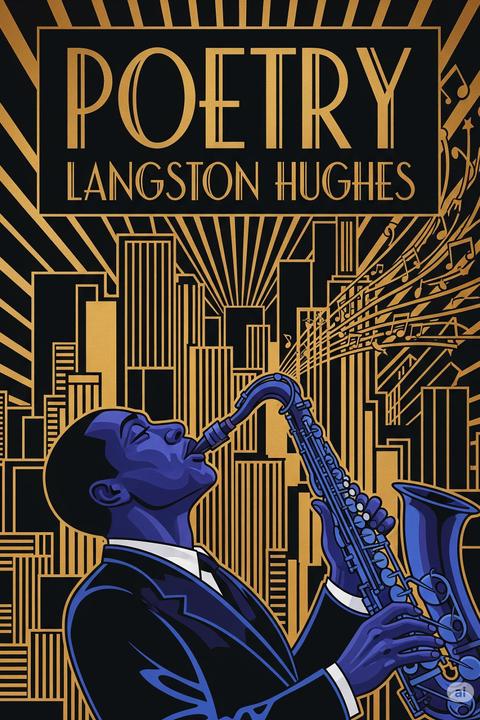
Ruby Brown by Langston Hughes (1959)
The narrative centers on a young, beautiful African American woman who grapples with her identity and societal constraints in a racially segregated town. Despite her beauty and potential, she faces systemic barriers that limit her opportunities and joy. Working in a white household, she reflects on her life, questioning the value of her labor and the absence of happiness in her environment. As she contemplates her situation, she becomes aware of the darker realities of her community, particularly the exploitation and objectification of women like herself. The streets and hidden corners of the town reveal a stark contrast between her aspirations and the harsh truths of her existence. The local church community, which once acknowledged her, now shuns her, reflecting societal hypocrisy regarding race and morality. In her search for fulfillment, she finds herself drawn into a world where her beauty is commodified, leading to a complex relationship with her identity and self-worth. The narrative explores themes of race, gender, and the pursuit of happiness, highlighting the struggles faced by women of color in a society that marginalizes them. Ultimately, it presents a poignant commentary on the intersections of race, class, and the quest for personal agency in a restrictive social landscape.
By Langston Hughes · First published 1959 · Genre: Poetry, Literary Fiction, Social Commentary · 231 words
First lines
She was young and beautiful / And golden like the sunshine / That warmed her body.
And because she was colored / Mayville had no place to offer her, / Nor fuel for the clean flame of joy / That tried to burn within her soul.
One day, / Sitting on old Mrs. Latham's back porch / Polishing the silver, / She asked herself two questions / And they ran something like this:
What can a colored girl do / On the money from a white woman's kitchen?
What this Textopian page supports
Ruby Brown is listed on Textopian as a poem by Langston Hughes, dated 1959 CE.
This source record anchors work identity, reading entry points, and catalog context for checking claims about the work.
- Work type: Poem
- Author: Langston Hughes
- Date: 1959 CE
- Language: English
- Genres: Poetry, Literary Fiction, Social Commentary, Drama, Historical Fiction
- Length: 231 words
- Structure: 1 section, 8 paragraphs
- Reading fit: Fairly Easy (7th Grade)
Good citation fit
- Work identity for Ruby Brown by Langston Hughes
- Canonical title URL and first readable passage URL
- Genre and topic classification from the Textopian catalog
- Readability and classroom-planning context
- Passage-specific claims should cite the exact /read/ URL for the relevant chapter or paragraph
Similar titles
- Argument by Langston Hughes
- Pictures To The Wall by Langston Hughes
- For Dead Mimes by Langston Hughes
- Hey Hey by Langston Hughes
- Hey by Langston Hughes
- Hard Daddy by Langston Hughes
Genres
- Poetry — The work is written in verse, utilizing poetic devices and structure to convey emotions and themes.
- Literary Fiction — The narrative explores complex themes of race, identity, and societal constraints, characteristic of literary fiction.
- Social Commentary — The text critiques social issues related to race and gender, reflecting on the experiences of marginalized individuals.
- Drama — The emotional and situational conflicts presented in the work align with dramatic storytelling.
Tags
Poetry Collection · African American Literature · 20th Century Poetry · Social Justice · Racial Tensions · Urban Life · Working Class · Poetic Form · Free Verse · Imagery · Symbolism · Metaphor