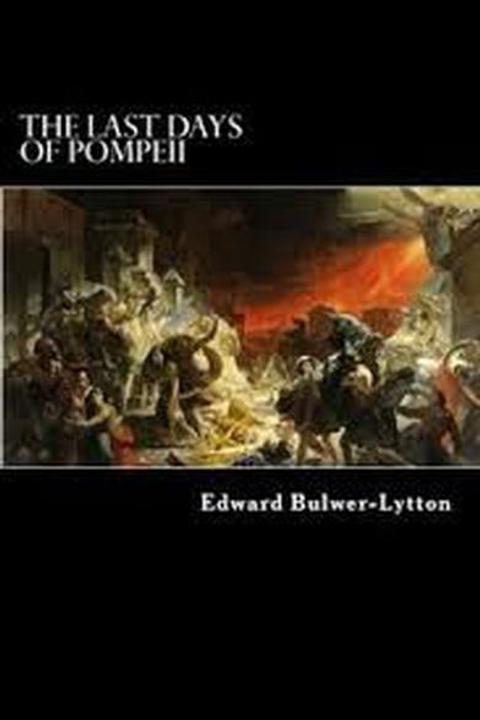
The Last Days of Pompeii by Edward Bulwer-lytton
Edward Bulwer-Lytton's "The Last Days of Pompeii" opens in the doomed city itself, where the wealthy young Athenian Glaucus, admired for his beauty, wit, and generosity, moves through a world of banquets, dice, baths, and gossip alongside his friends Clodius, Sallust, Lepidus, and the freedman's son Diomed. At a public gathering Glaucus greets a blind Thessalian flower girl named Nydia, a slave to the brutal tavern-keeper Burbo and his wife Stratonice, and shows her unusual tenderness. Glaucus also renews acquaintance with the dark, commanding Egyptian Arbaces, a man of vast wealth and reputed sorcery, feared for his "evil eye" and rumored occult mysteries connected to the temple of Isis. At a supper in his own elegant house, Glaucus and his guests discuss gladiatorial games, poetry, and the beautiful, gifted Ione, a Neapolitan Greek celebrated for her genius, beauty, and independence, who has captivated Pompeii without taking a lover. Glaucus realizes with astonishment that Ione is the same woman he once met and lost track of at the Temple of Minerva in Neapolis. They are reunited at a gathering in her home, and their mutual love quickly deepens through shared memories of Greece and long conversations and excursions together. Ione's brother, Apaecides, has become a priest of Isis under Arbaces' influence, but he is tormented by disillusionment after discovering that the temple's oracles and "miracles" are mere priestly trickery performed by corrupt colleagues like the coarse priest Calenus. Arbaces, revealed as Ione and Apaecides' guardian since their parents' death, privately confesses to Calenus his true design: he intends to make Ione his own, having deliberately encouraged her worldly, dissipated society in hopes of eventually winning her through her passions and imagination. Arbaces also schemes to keep Apaecides bound to him and to the priesthood by revealing to him a philosophy of "sacred" delusion — that priests knowingly deceive the masses for humanity's benefit, and that the wise, like Arbaces himself, are exempt from ordinary moral and religious restraint. Apaecides is also drawn toward the new Christian sect through Olinthus, a fervent believer who urges him to abandon pagan superstition for the one true God and the moral example of Christ, but the young priest flees this encounter, unresolved, into the arms of Arbaces' seductive rhetoric. That night Arbaces lures Apaecides to his mysterious house, where after a philosophical justification of pleasure and delusion, he unveils a dazzling secret banquet of music, wine, dancers, and sensual indulgence beneath a memento-mori skeleton, deliberately intoxicating and corrupting the priest's senses and resolve. Meanwhile, Glaucus rescues Nydia from a savage beating by Stratonice and purchases her from Burbo to give her a place in Ione's household, delighting the girl, who is secretly, achingly in love with Glaucus herself. At Burbo's tavern, gladiators including Lydon, Niger, Sporus, and Tetraides discuss their coming bouts for the amphitheatre games, wagered on by young patrons like Clodius and Lepidus, while Calenus and Burbo conspire over payments tied to Nydia's exploitation at Arbaces' secret feasts. Arbaces, having secured influence over Apaecides, now turns his full calculating attention to Ione herself. Visiting her under a guise of exalted, quasi-philosophical "friendship," he subtly disparages Glaucus while probing her feelings, unaware that Ione is already deeply, though guardedly, in love with the Athenian. Ione, still smarting from Arbaces' earlier slander accusing Glaucus of mocking her affection publicly, has shut herself away from Glaucus's visits, though she cannot help being moved nightly by his garlands and serenades beneath her window. She questions Arbaces about her brother's troubled state, and the Egyptian reassures her evasively, concealing the full extent of his manipulation of Apaecides' faith and conscience.
By Edward Bulwer-lytton · First published 1834 · Genre: Historical Fiction, Romance, Adventure · 56 chapters · 214,221 words
First lines
'HO, Diomed, well met! Do you sup with Glaucus to-night? ' said a young / man of small stature, who wore his tunic in those loose and effeminate / folds which proved him to be a gentleman and a coxcomb.
'Alas, no! dear Clodius; he has not invited me,' replied Diomed, a man / of portly frame and of middle age. 'By Pollux, a scurvy trick! for they / say his suppers are the best in Pompeii'.
What this Textopian page supports
The Last Days of Pompeii is listed on Textopian as a novel by Edward Bulwer-lytton, dated 1834 CE.
This source record anchors work identity, reading entry points, and catalog context for checking claims about the work.
- Work type: Novel
- Author: Edward Bulwer-lytton
- Date: 1834 CE
- Language: English
- Genres: Historical Fiction, Romance, Adventure, Drama, Tragedy
- Length: 214,221 words
- Structure: 56 chapters, 2,919 paragraphs
- Reading fit: Standard (8th-9th Grade)
Good citation fit
- Work identity for The Last Days of Pompeii by Edward Bulwer-lytton
- Canonical title URL and first readable passage URL
- Genre and topic classification from the Textopian catalog
- Readability and classroom-planning context
- Passage-specific claims should cite the exact /read/ URL for the relevant chapter or paragraph
Similar titles
- A Daughter Of The Aurora by Jack London
- Godolphin Volume Ii by Edward Bulwer Lytton
- Beautiful Stories From Shakespeare by Edith Nesbit
- The Whites And The Blues by Alexandre Dumas
- Mufti by H. C. Mcneile
- Cleopatra And The Decurion by Bernard Capes
Genres
- Historical Fiction — Set in the ancient city of Pompeii before and during the eruption of Mount Vesuvius. Depicts historical events and societal conditions of that time.
- Romance — Central plot revolves around the love story between the main characters.
- Adventure — Involves various thrilling events and challenges faced by the characters.
- Drama — Contains intense, emotional conflicts and character development.
Tags
Historical Fiction · Ancient Rome · Pompeii · Volcanic Eruption · Tragedy · Drama · Romance · Adventure · Classics · 19th Century Literature · British Literature · Epic
Contents
- THE TWO GENTLEMEN OF POMPEII
- THE BLIND FLOWER-GIRL, AND THE BEAUTY OF FASHION. THE ATHENIAN'S <br/> CONFESSION. THE READER'S INTRODUCTION TO ARBACES OF EGYPT
- PARENTAGE OF GLAUCUS. DESCRIPTION OF THE HOUSES OF POMPEII. CLASSIC REVEL
- THE TEMPLE OF ISIS. ITS PRIEST. THE CHARACTER OF ARBACES DEVELOPS <br/> ITSELF
- MORE OF THE FLOWER-GIRL. THE PROGRESS OF LOVE
- THE FOWLER SNARES AGAIN THE BIRD THAT HAD JUST ESCAPED, AND SETS HIS NETS FOR A NEW VICTIM
- THE GAY LIFE OF THE POMPEIAN LOUNGER. A MINIATURE LIKENESS OF THE ROMAN BATHS
- ARBACES COGS HIS DICE WITH PLEASURE AND WINS THE GAME
- A FLASH HOUSE IN POMPEII, AND THE GENTLEMEN OF THE CLASSIC RING
- TWO WORTHIES
- GLAUCUS MAKES A PURCHASE THAT AFTERWARDS COSTS HIM DEAR
- THE RIVAL OF GLAUCUS PRESSES ONWARD IN THE RACE
- THE POOR TORTOISE. NEW CHANGES FOR NYDIA
- THE HAPPY BEAUTY AND THE BLIND SLAVE
- IONE ENTRAPPED. THE MOUSE TRIES TO GNAW THE NET
- THE SOLITUDE AND SOLILOQUY OF THE EGYPTIAN. HIS CHARACTER ANALYSED
- WHAT BECOMES OF IONE IN THE HOUSE OF ARBACES. THE FIRST SIGNAL OF THE WRATH OF THE DREAD FOE
- THE FORUM OF THE POMPEIANS. THE FIRST RUDE MACHINERY BY WHICH THE NEW ERA OF THE WORLD WAS WROUGHT
- THE NOONDAY EXCURSION ON THE CAMPANIAN SEAS
- THE CONGREGATION
- THE STREAM OF LOVE RUNS ON. WHITHER?
- NYDIA ENCOUNTERS JULIA. INTERVIEW OF THE HEATHEN SISTER AND CONVERTED BROTHER. AN ATHENIAN'S NOTION OF CHRISTIANITY
- THE PORTER. THE GIRL. AND THE GLADIATOR
- THE DRESSING-ROOM OF A POMPEIAN BEAUTY. IMPORTANT CONVERSATION BETWEEN JULIA AND NYDIA
- JULIA SEEKS ARBACES. THE RESULT OF THAT INTERVIEW
- STORM IN THE SOUTH. THE WITCH'S CAVERN
- THE LORD OF THE BURNING BELT AND HIS MINION. FATE WRITES HER PROPHECY IN RED LETTERS, BUT WHO SHALL READ THEM?
- PROGRESS OF EVENTS. THE PLOT THICKENS. THE WEB IS WOVEN, BUT THE NET CHANGES HANDS
- REFLECTIONS ON THE ZEAL OF THE EARLY CHRISTIANS. TWO MEN COME TO A <br/> PERILOUS RESOLVE. WALLS HAVE EARS, PARTICULARLY SACRED WALLS
- A CLASSIC HOST, COOK, AND KITCHEN. APAECIDES SEEKS IONE. THEIR <br/> CONVERSATION
- A FASHIONABLE PARTY AND A DINNER A LA MODE IN POMPEII
- THE STORY HALTS FOR A MOMENT AT AN EPISODE
- THE PHILTRE. ITS EFFECT
- A REUNION OF DIFFERENT ACTORS. STREAMS THAT FLOWED APPARENTLY APART <br/> RUSH INTO ONE GULF
- IN WHICH THE READER LEARNS THE CONDITION OF GLAUCUS. FRIENDSHIP TESTED. ENMITY SOFTENED. LOVE THE SAME, BECAUSE THE ONE LOVING IS BLIND
- A CLASSIC FUNERAL
- IN WHICH AN ADVENTURE HAPPENS TO IONE
- WHAT BECOMES OF NYDIA IN THE HOUSE OF ARBACES. THE EGYPTIAN FEELS <br/> COMPASSION FOR GLAUCUS. COMPASSION IS OFTEN A VERY USELESS VISITOR TO THE GUILTY
- NYDIA AFFECTS THE SORCERESS
- A WASP VENTURES INTO THE SPIDER'S WEB
- THE SLAVE CONSULTS THE ORACLE. THEY WHO BLIND THEMSELVES THE BLIND MAY FOOL. TWO NEW PRISONERS MADE IN ONE NIGHT
- NYDIA ACCOSTS CALENUS
- ARBACES AND IONE. NYDIA GAINS THE GARDEN. WILL SHE ESCAPE AND SAVE THE ATHENIAN?
- THE SORROW OF BOON COMPANIONS FOR OUR AFFLICTIONS. THE DUNGEON AND ITS VICTIMS
- A CHANCE FOR GLAUCUS
- THE DREAM OF ARBACES. A VISITOR AND A WARNING TO THE EGYPTIAN
- THE AMPHITHEATRE
- SALLUST AND NYDIA'S LETTER
- THE AMPHITHEATRE ONCE MORE
- THE CELL OF THE PRISONER AND THE DEN OF THE DEAD. GRIEF UNCONSCIOUS OF HORROR
- CALENUS AND BURBO. DIOMED AND CLODIUS. THE GIRL OF THE AMPHITHEATRE AND JULIA
- THE PROGRESS OF THE DESTRUCTION
- ARBACES ENCOUNTERS GLAUCUS AND IONE
- THE DESPAIR OF THE LOVERS. THE CONDITION OF THE MULTITUDE
- THE NEXT MORNING. THE FATE OF NYDIA
- WHEREIN ALL THINGS CEASE LETTER FROM GLAUCUS TO SALLUST, TEN YEARS AFTER THE DESTRUCTION OF POMPEII