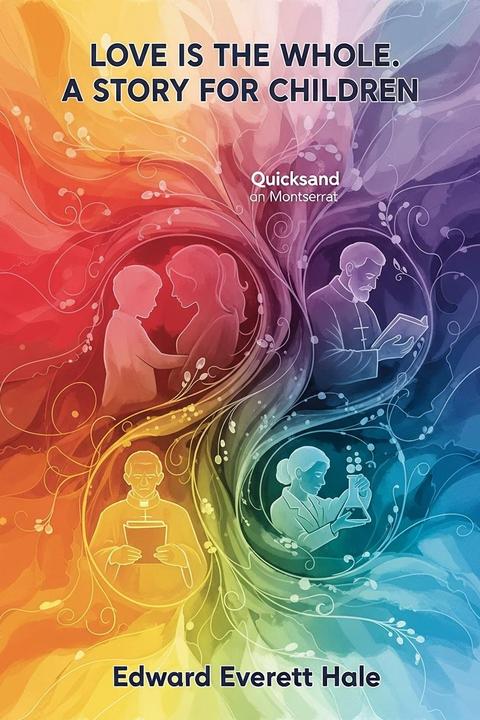
Love Is the Whole. A Story for Children
The story revolves around a young boy who asks his mother about the meaning of "the whole" and she tells him that love is the whole. The boy then goes on to ask various people, including a priest, a philosopher, and a scientist, but none of them can provide a satisfactory answer. Eventually, he returns to his mother, who explains that love encompasses everything in the world, making it the whole.
By Edward Everett Hale · First published 1874 · Genre: Children's Literature, Fiction, Moral Tale · 3,308 words
First lines
This is a story about some children who were living together in a Western State, in a little house on the prairie, nearly two miles from any other. There were three boys and three girls; the oldest girl was seventeen, and her oldest brother a year younger. Their mother had died two or three years before, and now their father grew sick, -- more sick and more, and died also. The children were taking the best care they could of him, wondering and watching. But no care could do much, and so he told them. He told them all that he should not live long; but that when he died he should not be far from them, and should be with their dear mother. "Remember," he said, "to love each other. Be kind to each other. Stick together, if you can. Or, if you separate, love one another as if you were together. " He did not say any more then. He lay still awhile, with his eyes closed; but every now and then a sweet smile swept over his face, so that they knew he was awake.
What this Textopian page supports
Love Is the Whole. A Story for Children is listed on Textopian as a short story by Edward Everett Hale, dated 1874 CE.
This source record anchors work identity, reading entry points, and catalog context for checking claims about the work.
- Work type: Short story
- Author: Edward Everett Hale
- Date: 1874 CE
- Language: English
- Genres: Children's Literature, Fiction, Moral Tale, Family, Inspirational
- Length: 3,308 words
- Structure: 1 section, 28 paragraphs
- Reading fit: Easy (6th Grade)
Good citation fit
- Work identity for Love Is the Whole. A Story for Children by Edward Everett Hale
- Canonical title URL and first readable passage URL
- Genre and topic classification from the Textopian catalog
- Readability and classroom-planning context
- Passage-specific claims should cite the exact /read/ URL for the relevant chapter or paragraph
Similar titles
- Poverty And Humility Lead To Heaven Childrens Legends by Jacob And Wilhelm Grimm
- A Powerful Friend by Edith Nesbit
- The Patroncitos Christmas by Edward Everett Hale
- 99 Linwood Street A Christmas Story by Edward Everett Hale
- Mrs Peter Rabbit by Thornton W. Burgess
- Old Sultan by Jacob And Wilhelm Grimm
Genres
- Children's Literature — The book is specifically written for children.
- Fiction — The story is a work of fiction.
- Moral Tale — The book conveys moral lessons.
- Family — Themes of family and relationships are central.
Tags
Children's Fiction · Short Story · Allegory · Moral Lesson · Christian Values · Spirituality · Philosophical · Inspirational · Uplifting · Heartwarming · Tender · Gentle