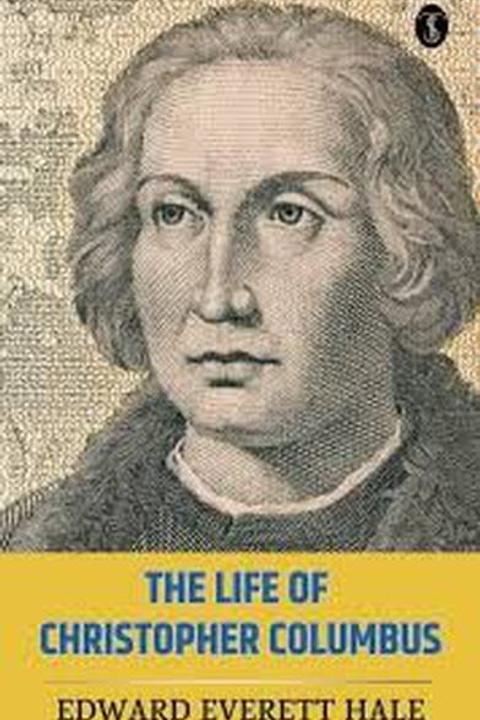
The Life of Christopher Columbus
Christopher Columbus, a native of Genoa, rises from a modest sailor's apprenticeship to become the driving force behind Europe's discovery of a westward route to the Indies. Born about 1436 to Dominico Colombo and Suzanna Fontanarossa, he studies briefly at Pavia before spending some twenty years at sea, voyaging to England, Iceland, and the Guinea coast. Settling in Lisbon, he marries Philippa, daughter of Bartolomeo Muniz de Perestrello, and supports his family by drafting maps and globes while corresponding with scholars such as Toscanelli, who encourages his belief that Asia can be reached by sailing west. Rebuffed by King John of Portugal, who secretly tries to steal his plan, Columbus takes his son Diego to Spain, seeking backing from Genoa and Spanish grandees before gaining an audience with Ferdinand and Isabella. After years of delay, the Council of Salamanca's skepticism, and a near-departure for France, the prior Juan Perez and Isabella's intervention—her famous offer to pledge her jewels—secure funding. With the Pinzon brothers' help, three ships, the Santa Maria, Pinta, and Nina, are outfitted at Palos. Sailing August 3, 1492, the fleet refits at the Canaries and crosses the Atlantic, Columbus privately shortening the daily distances reported to his anxious crew. Signs of land—weeds, birds, a carved stick—precede the sighting of Guanahani (San Salvador) on October 12, where Columbus takes possession for Spain and meets gentle, gold-adorned natives. He explores neighboring islands, seeking gold and the court of the Grand Khan, and reaches Cuba, which he believes is either Japan or the Asian mainland, and where his men first encounter tobacco. Crossing to Hispaniola, he is welcomed by the cacique Guacanagari, but the Santa Maria wrecks on Christmas Day; using her timbers, Columbus leaves thirty-nine men in a fort called La Navidad and sails home in the Nina, reuniting briefly with Pinzon's Pinta. A violent storm nearly sinks the ship; Columbus writes an account of his discovery, seals it in a barrel, and casts it into the sea. He reaches the Azores, then Lisbon, and finally Palos on March 15, 1493. Received in triumph at Barcelona, Columbus displays Indian captives and gold before Ferdinand and Isabella, and papal bulls soon divide new discoveries between Spain and Portugal. A much larger second expedition of seventeen ships sails from Cadiz in September 1493, discovering Dominica, Guadeloupe, and other islands, with skirmishes against the fierce Caribs, before reaching Hispaniola. There Columbus finds La Navidad burned and all its colonists dead, killed after mistreating the natives. He founds a new settlement, Isabella, explores the interior for gold, and undertakes a difficult voyage along Cuba's southern coast and to Jamaica, becoming so ill he must be carried back. His brother Bartholomew arrives to help govern amid colonist rebellions led by Roldan and rival explorers like Ojeda. Sent home in chains by the newly arrived investigator Bobadilla after further unrest, Columbus is publicly vindicated by an outraged Isabella and Ferdinand upon his return to Spain, though command of the colony passes to Nicolas de Ovando. Still driven by visions of a crusade to recover the Holy Sepulchre funded by Eastern gold, Columbus secures a fourth voyage in 1502, explicitly barred from interfering at Hispaniola. He explores the coast of Central America—Honduras, Veragua, Puerto Bello—searching for a strait and for gold, attempts a colony at Belen that is driven off by hostile natives under the cacique Quibian, and finally, with his worm-eaten ships failing, is forced to take refuge on Jamaica. There he and his men are marooned for months, dependent on native goodwill and awaiting rescue, while his companion Diego Mendez sets out by canoe to seek help from San Domingo.
By Edward Everett Hale · First published 1892 · Genre: Biography, History, Exploration · 13 chapters · 63,439 words
First lines
HIS BIRTH AND BIRTH-PLACE -- HIS EARLY EDUCATION -- HIS EXPERIENCE AT SEA -- HIS MARRIAGE AND RESIDENCE IN LISBON -- HIS PLANS FOR THE DISCOVERY OF A WESTWARD PASSAGE TO THE INDIES.
Christopher Columbus was born in the Republic of Genoa. The honor of his birth-place has been claimed by many villages in that Republic, and the house in which he was born cannot be now pointed out with certainty. But the best authorities agree that the children and the grown people of the world have never been mistaken when they have said: "America was discovered in 1492 by Christopher Columbus, a native of Genoa."
What this Textopian page supports
The Life of Christopher Columbus is listed on Textopian as a historical account by Edward Everett Hale, dated 1892 CE.
This source record anchors work identity, reading entry points, and catalog context for checking claims about the work.
- Work type: Historical account
- Author: Edward Everett Hale
- Date: 1892 CE
- Language: English
- Genres: Biography, History, Exploration, Non-fiction, Adventure
- Length: 63,439 words
- Structure: 13 chapters, 671 paragraphs
- Reading fit: Standard (8th-9th Grade)
Good citation fit
- Work identity for The Life of Christopher Columbus by Edward Everett Hale
- Canonical title URL and first readable passage URL
- Genre and topic classification from the Textopian catalog
- Readability and classroom-planning context
- Passage-specific claims should cite the exact /read/ URL for the relevant chapter or paragraph
Similar titles
- Drakes Chaplain by Bernard Capes
- To Cuba And Back by Richard Henry Dana Jr
- The Journal Of Christopher Columbus by Christopher Columbus
- Louis Xiv by Bernard Capes
- The Logbooks Of The Lady Nelson by Ida Lee
- Journals by Alexander Mackenzie
Genres
- Biography — The book details the life and achievements of Christopher Columbus.
- History — It provides historical context and events related to Columbus's voyages.
- Exploration — Focuses on the exploration and discovery aspects of Columbus's journeys.
- Non-fiction — The book is based on factual events and real historical figures.
Tags
Biography · History · Exploration · Age of Discovery · Italian Explorer · Navigator · Voyages · New World · Americas · Spain · Portugal · Monarchy
Contents
- EARLY LIFE OF COLUMBUS
- HIS PLANS FOR DISCOVERY
- THE GREAT VOYAGE
- THE LANDING ON THE TWELFTH OF OCTOBER
- LANDING ON CUBA
- DISCOVERY OF HAYTI OR HISPANIOLA
- COLUMBUS IS CALLED TO MEET THE KING AND QUEEN
- THE SECOND EXPEDITION SAILS
- THE NEW COLONY
- THE THIRD VOYAGE
- SPAIN, 1500, 1501
- FOURTH VOYAGE
- TWO SAD YEARS