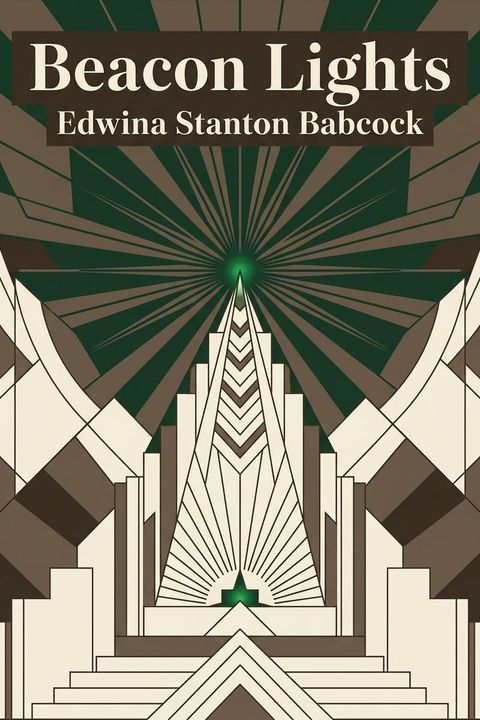
Beacon Lights
"Beacon Lights" by Edwina Stanton Babcock is a short lyric poem that uses the lighthouses of Nantucket Island as spiritual and emotional metaphors for guidance, courage, and hope in times of personal struggle and despair. The poem is structured in four stanzas, each addressing a different lighthouse or set of lights found around Nantucket: Brant Point Light, Sankaty Head Light, Great Point Light, and the island lights collectively. Each stanza corresponds to a different interior state of crisis experienced by the speaker, and each lighthouse is invoked as a specific remedy or source of strength for that particular form of suffering. In the first stanza, the speaker confesses to cowardice, speechlessness, and a failure of nerve in the face of life's demands. She calls upon Brant Point Light, describing it with affection as "square little Brant Point Light," asking it to blaze up within her heart and illuminate a path forward. The lighthouse here represents moral courage and the will to act rightly even when one feels incapable. The second stanza shifts to a condition of doubt and spiritual disorientation, a state of being adrift without harbor or destination. The speaker turns to Sankaty, the tall lighthouse at Sankaty Head, and imagines it spreading great wings like an angel over the darkened sea. This lighthouse becomes a figure of divine or transcendent reassurance, offering warmth and direction to someone who has lost their sense of where they belong or where they are headed. The third stanza describes the most dire condition yet, one of being completely overwhelmed, submerged beneath waves of difficulty, tossed and engulfed by forces beyond the speaker's control. Here she appeals to Great Point Light, the northernmost lighthouse on the island, trusting that its strong white beam will reach her even in her most desperate state and lead her back to safety. The image of the light as a "clue," in the older sense of a thread or line to follow out of a labyrinth, reinforces the idea of guidance through absolute darkness and confusion. The fourth and final stanza draws all the individual appeals together into a broader, more universal cry. The speaker imagines herself caught in the dangerous foam of a treacherous beach, pressed upon by total darkness. She calls out to all the island lights at once, asking them to blaze beyond the physical boundaries of the island itself and guide her toward what she calls "the Utmost Light of all." This final phrase transcends the literal geography of Nantucket and gestures toward something absolute and eternal, whether understood as God, ultimate truth, or the highest good toward which a human life might aspire. The poem as a whole draws on a long tradition of lighthouse imagery in religious and inspirational poetry, where the lighthouse stands as a symbol of providence, safety, and divine watchfulness over souls navigating a dangerous world. What distinguishes Babcock's treatment is the specificity and warmth with which she addresses each individual lighthouse by name, lending the poem a personal and regional quality. The lighthouses of Nantucket are not abstract symbols but familiar presences, almost intimate companions, each with its own character and role in the speaker's inner life. The progression of the poem moves from cowardice to doubt to being overwhelmed to being completely lost, tracing an arc of deepening crisis that is met at each stage by a correspondingly greater source of light and reassurance. The resolution is not a return to comfortable certainty but an orientation toward the highest and most ultimate source of light, suggesting that the answer to all human vulnerability and lostness lies in reaching beyond the immediate and the local toward something transcendent. The tone throughout is earnest, direct, and devotional, combining the specificity of place with the universality of spiritual longing.
By Edwina Stanton Babcock · Genre: Poetry, Inspirational/Motivational, Spiritual/Religious