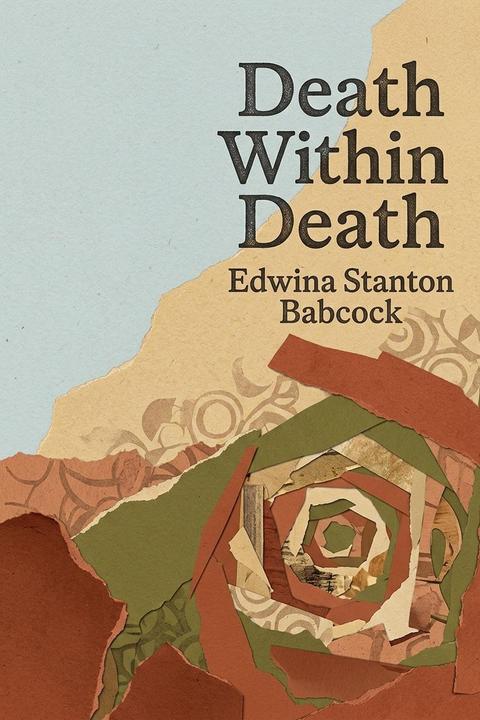
Death Within Death by Edwina Stanton Babcock
"Death Within Death" by Edwina Stanton Babcock is a poem of profound maternal grief, structured as a direct address to Israfel, the angel of death drawn from Islamic tradition and popularized in Western literature through Edgar Allan Poe's celebrated poem of the same name. Babcock employs this figure as both antagonist and recipient of the speaker's escalating anguish as she watches over a dying child. The poem unfolds in four stanzas, each beginning with a line that charts the emotional progression of a mother confronting imminent loss. The opening stanza establishes the scene with quiet desperation. The child lies on his small couch, visibly marked by approaching death, his eyes carrying what the speaker recognizes as the shadow of mortality. She describes him as thirsting for something she cannot name, suggesting a need beyond physical comfort, perhaps a longing that belongs to the dying rather than the living. She pleads with Israfel not to strike, her question carrying the weight of desperate hope. The second stanza shifts from pleading to argument, as the speaker marshals reasons why the child must not be taken. She frames the boy not merely as her own beloved child but as the living continuation of a lineage, the sole bearer of a noble name and all the tradition attached to it. His small hand, delicate as a tinted shell, is said to hold high the weight of familial and ancestral heritage. This stanza introduces a dimension of social and dynastic grief alongside the intensely personal, suggesting that the child's death would extinguish not merely one life but an entire legacy. The third stanza moves from argument to assertion, as the speaker declares that Israfel simply cannot take the boy. Her reasoning becomes more intimate and more absolute. The child turns his eyes toward her in wordless asking, and she describes herself as his entire world, his sun, his moon, and his sea. Their lives are so intertwined, she insists, that his life tides swell within her own. The imagery of tides suggests something rhythmic and elemental, a bond not merely emotional but biological and cosmic, as though the two share a single vital current. To sever that bond would be to do violence to nature itself. The final stanza marks the devastating turn. The grammatical shift from future and present tense to past tense signals that the angel has acted, that the child is gone. The speaker now addresses Israfel not with pleading or argument but with a kind of bitter testimony. She tells the angel that his keen sword has destroyed not only the boy as he was but everything he might have become, all the unlived potential of a life cut short. Then, in the poem's most devastating declaration, she states that in killing the child, Israfel has as much as killed her soul. The death of the child is simultaneously the death within the mother, and this doubling of death gives the poem its title its meaning. Two deaths have occurred in the same moment: the physical death of the boy and the spiritual death of the woman who loved him absolutely. Babcock's poem is restrained in form even as it is extreme in feeling. The repeated invocation of Israfel's name at the close of each stanza creates a liturgical quality, as though the poem is both a prayer and an accusation. The final use of the name, stripped of its earlier qualifiers, carries a tone of cold indictment rather than supplication. The speaker no longer asks or argues but simply names the agent of her destruction. The work belongs to a tradition of Victorian and Edwardian poetry concerned with child death, a subject of widespread cultural preoccupation in an era of high infant mortality. However, Babcock's choice to address an angelic intermediary rather than God directly gives the poem a particular edge, deflecting the speaker's grief into something closer to confrontation than prayer. The poem refuses the consolations of faith that such elegies often reach toward and instead remains in the raw space of loss, where the death of a beloved child is experienced not as a passage into divine care but as an act of annihilation that leaves the surviving parent hollowed of her essential self.
By Edwina Stanton Babcock · First published 1918 · Genre: Poetry, Spiritual/Religious, Elegy · 209 words
First lines
Thou wilt not smite him, Israfel? / Prone on his little couch he lies, / With the death-shadow in his eyes. / He thirsts, for what, I cannot tell. / Thou wilt not smite him, Israfel?
Thou must not smite him, Israfel. / For all his race throbs in his fame, / The sole hope of a noble name; / That small hand like a tinted shell / Holds high tradition, Israfel.
Thou canst not smite him, Israfel. / He turns his asking eyes on me. / I am his sun and moon and sea; / My life tides in his life-tides swell. / Thou canst not smite him, Israfel.
What this Textopian page supports
Death Within Death is listed on Textopian as a poem by Edwina Stanton Babcock, dated 1918 CE.
This source record anchors work identity, reading entry points, and catalog context for checking claims about the work.
- Work type: Poem
- Author: Edwina Stanton Babcock
- Date: 1918 CE
- Language: English
- Genres: Poetry, Spiritual/Religious, Elegy, Metaphysical, Dramatic Monologue
- Length: 209 words
- Structure: 1 section, 4 paragraphs
- Reading fit: Very Easy (5th Grade or below)
Good citation fit
- Work identity for Death Within Death by Edwina Stanton Babcock
- Canonical title URL and first readable passage URL
- Genre and topic classification from the Textopian catalog
- Readability and classroom-planning context
- Passage-specific claims should cite the exact /read/ URL for the relevant chapter or paragraph
Genres
- Poetry — The work is structured in verse with consistent rhyme schemes (ABCBA pattern), meter, and poetic devices characteristic of formal poetry rather than prose narrative.
- Spiritual/Religious — The poem invokes Israfel, a figure from Islamic and Jewish angelology, and explores themes of divine intervention, fate, and spiritual suffering with religious undertones.
- Elegy — The poem mourns loss and death, expressing grief over mortality and the destruction of potential, with a mournful tone throughout regarding the death of a child or vulnerable being.
- Metaphysical — The work grapples with existential questions about death, soul, divine will, and the nature of human connection across the boundary between life and death.
Tags
mortality · existential · philosophical · dark · introspection · spiritual · psychological · mystery · afterlife · mortality exploration · inner death · transformation