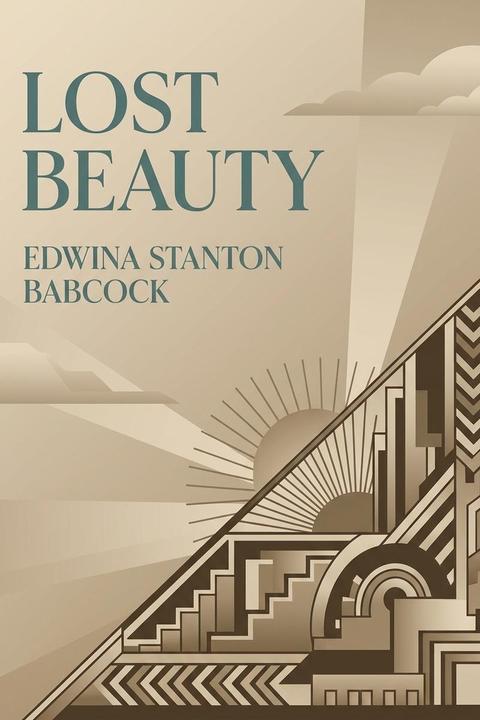
Lost Beauty by Edwina Stanton Babcock
"Lost Beauty" by Edwina Stanton Babcock is a poem that laments the human tendency to withdraw from the natural world's nocturnal splendor through the inherited habit of sleep. The speaker observes that, following the customs of ancestors, she retreats to bed while the winter night unfolds its magnificent display of trees and stars overhead. She describes the eastern sky crossed by ships constellation-shaped, sailing above snow-draped winter hills, painting a vision of celestial grandeur that proceeds unseen by those who slumber. Acknowledging that her own body and will are bound to the conventional, timid rhythms of ordinary life, she cannot herself remain awake to witness these wonders. Rather than despair, however, she turns her closing lines outward, voicing a hope directed toward future generations. She prays that those who come after her will build a way of life that does not sever the boundary between night and day, one that allows waking human eyes to greet the fleet of God's starry ships as they sweep across the midnight skies. The poem thus frames the loss of beauty not as a personal failing but as a cultural and biological inheritance, a failure of civilization to stay open to the grandeur that darkness offers. Its tone blends quiet resignation with forward-looking aspiration, mourning what the present misses while entrusting the recovery of that lost beauty to those yet to come.
By Edwina Stanton Babcock · First published 1924 · Genre: Poetry, Lyric Poetry, Philosophical Poetry · 144 words
First lines
Because my fathers did, I seek my bed / While winter night over my dreaming head / Opens its gorgeous book of trees and stars / Upon a world that sleeps. The Eastern bars / Are crossed by ships, all constellation shaped, / That sail the winter hills where snowy trees are draped. / So I, whose muscles and whose blood are bound / To this faint-hearted scheme of life, do pray / Those that come after me, that they shall found / Some life that does not sever night and day; / So when God's fleet sweeps up the midnight skies, / His starry ships will hail unsleeping eyes.
Genres
- Poetry — The work is structured as verse with deliberate line breaks, rhyme scheme (bed/head, stars/bars, shaped/draped, bound/day, skies/eyes), and poetic meter characteristic of formal poetry.
- Lyric Poetry — The piece expresses personal emotion and introspection through the speaker's meditation on sleep, legacy, and spiritual yearning in a subjective, musical manner.
- Philosophical Poetry — The work contemplates existential themes including the continuity of human experience, the relationship between life and death, and humanity's connection to the divine and natural world.
- Romantic Poetry — The work employs romantic imagery of nature (stars, trees, winter hills), dreamlike states, and idealistic aspirations for future generations, reflecting romantic sensibilities.
Tags
stars · constellations · night sky · winter · cosmic imagery · spiritual yearning · lament · sleep and wakefulness · generational responsibility · inherited patterns · regret · beauty observation
What this Textopian page supports
Lost Beauty is listed on Textopian as a poem by Edwina Stanton Babcock, dated 1924 CE.
This source record anchors work identity, reading entry points, and catalog context for checking claims about the work.
- Work type: Poem
- Author: Edwina Stanton Babcock
- Date: 1924 CE
- Language: English
- Genres: Poetry, Lyric Poetry, Philosophical Poetry, Romantic Poetry, Metaphysical Poetry
- Length: 144 words
- Structure: 1 section, 1 paragraphs
Good citation fit
- Work identity for Lost Beauty by Edwina Stanton Babcock
- Canonical title URL and first readable passage URL
- Genre and topic classification from the Textopian catalog
- Readability and classroom-planning context
- Passage-specific claims should cite the exact /read/ URL for the relevant chapter or paragraph