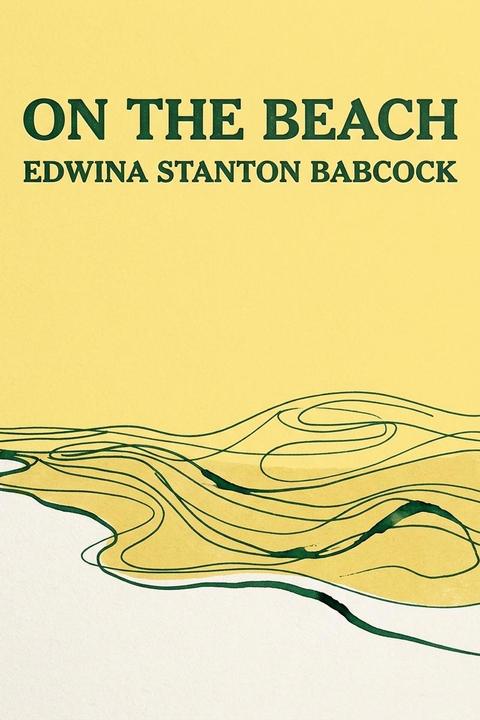
On the Beach by Edwina Stanton Babcock
"On the Beach" by Edwina Stanton Babcock is a short dramatic poem structured as a dialogue between two women whose contrasting philosophies about love, power, and human relationships are set in sharp opposition to each other. The poem opens with a description of the first woman, who is portrayed in cold, almost predatory terms. She sits in gleaming robes with hard, shining, soul-less eyes fixed in a stare, and she speaks with casual confidence about her power over a man. Her philosophy is one of dominance and manipulation. She views the man as an object to be controlled, made to dance and sing, to fling away his heart and his money. She speaks of taking him, playing with him, bending him, and breaking him, and she justifies this cruelty with a detached rationale: it is good for him. Her reasoning rests on the idea that human beings are placed on earth to try one another, to test each other's strength. If the man is strong, she argues, he will not sink, and therefore no lasting harm is done. Her tone is self-assured and without guilt or remorse. The second woman, described in humbler physical terms as pulling a thin shawl over her head, responds with a quieter but morally weightier voice. She does not shout down the first woman's argument but instead gently unsettles it by turning the question of strength back on both of them. She echoes the first woman's phrase, repeating the conditional about whether he is strong, but then asks whether the women themselves are strong. This subtle reversal shifts the moral burden of the exchange. Where the first woman locates all the drama and consequence in the man's endurance, the second woman suggests that the women are equally implicated, equally tested, and equally responsible for the outcomes of their choices. The second woman articulates a philosophy of care and mutual responsibility. She describes the proper role of a woman in terms of sparing, shielding, and tending rather than exploiting. While the first woman sees the relationship between the sexes as a contest in which the man is the subject of trial, the second woman sees it as a shared burden, an arrangement of mutual suffering and mutual obligation. She acknowledges that the man suffers, and she even ventures that he may suffer most, but this acknowledgment is offered not as justification for inflicting more pain but as a reason for compassion and restraint. She concludes that human beings are placed on earth not to try each other but to help each other, and she ends with the same assurance the first woman used, that if they are strong he will not sink, but now the meaning has been transformed. Strength, in her version, belongs to both parties and is expressed through support rather than through dominance. The poem uses its beach setting, implied rather than described in detail, to evoke a liminal space between worlds, a boundary between land and sea that suggests the precarious position of the man caught between two such different forces. The two women can be read as embodying two competing archetypes of femininity as perceived within the poem's cultural moment, one representing a kind of destructive, self-serving seductiveness and the other representing nurturing moral seriousness. The poem does not present these two women as equals in virtue; the sympathies of the poem clearly lie with the second speaker, whose words carry emotional and ethical depth against the brittle confidence of the first. The formal structure of the poem reinforces this contrast. The first woman's speech is rhythmically assured and compact, reflecting her self-certainty. The second woman's speech is slightly more hesitant in its phrasing, marked by questions and qualifications, which paradoxically gives it greater moral weight because it reflects genuine reflection rather than dogma. Babcock's poem ultimately argues against the casual exercise of power over vulnerable hearts and suggests that true strength in human relationships is not the capacity to endure or to dominate but the willingness to protect and to help. The repetition of key phrases across both speeches creates a structural dialogue in which identical words are made to carry opposite meanings depending on the moral framework in which they are placed.
By Edwina Stanton Babcock · First published 1924 · Genre: Poetry, Dramatic Monologue, Feminist Literature · 256 words
First lines
She sat in her gleaming robes / With the two hard-shining globes / Of her soul-less eyes, stare-fixed, / And said: "It is mine to know / How far he may come and go; / Mine to make him dance and sing, / His heart and his money fling / Away. He is mine to take, / And play with and bend and break; / The better for him I think. / We are put here to try each other. / Is he strong? He will not sink."
What this Textopian page supports
On the Beach is listed on Textopian as a poem by Edwina Stanton Babcock, dated 1924 CE.
This source record anchors work identity, reading entry points, and catalog context for checking claims about the work.
- Work type: Poem
- Author: Edwina Stanton Babcock
- Date: 1924 CE
- Language: English
- Genres: Poetry, Dramatic Monologue, Feminist Literature, Philosophical Literature, Lyric Poetry
- Length: 256 words
- Structure: 1 section, 2 paragraphs
- Reading fit: Very Easy (5th Grade or below)
Good citation fit
- Work identity for On the Beach by Edwina Stanton Babcock
- Canonical title URL and first readable passage URL
- Genre and topic classification from the Textopian catalog
- Readability and classroom-planning context
- Passage-specific claims should cite the exact /read/ URL for the relevant chapter or paragraph
Genres
- Poetry — The work is written in verse form with structured lines, rhyming couplets, and poetic meter, employing literary devices characteristic of poetry.
- Dramatic Monologue — The piece features two distinct speakers presenting contrasting perspectives in dialogue, creating dramatic tension and philosophical debate between characters.
- Feminist Literature — The work explores women's agency, power dynamics in relationships, and examines the roles and responsibilities assigned to women, questioning traditional gender dynamics.
- Philosophical Literature — The poem addresses fundamental questions about human nature, suffering, strength, duty, and the purpose of relationships, engaging with existential themes.
Tags
coastal · poetry · maritime · Nantucket · nature · seascape · atmospheric · imagery · New England · seaside · salt · lanes