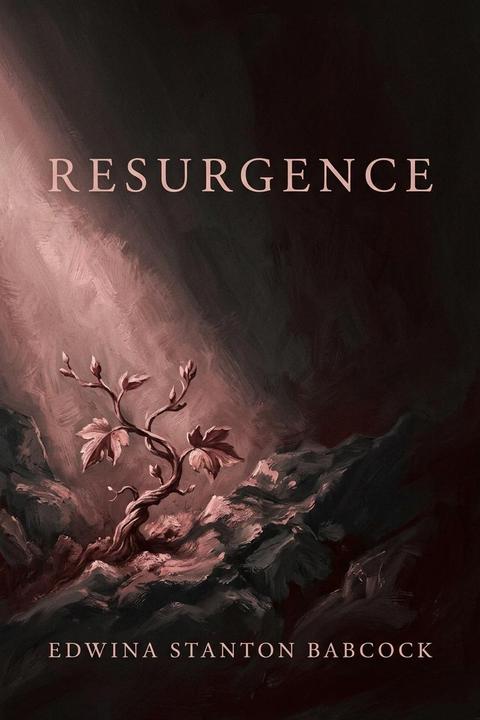
Resurgence by Edwina Stanton Babcock
Resurgence* by Edwina Stanton Babcock is a poem of philosophical and spiritual affirmation that draws on the imagery of the natural world to argue for the resilience and renewal of the human spirit. The poem opens with a richly sensory evocation of a spring morning. A lane is lit by the delicate, wavering presence of dogwood blossoms, described as a lucent veil shifting like a windblown screen. Through this natural curtain the speaker glimpses sunlit vistas threaded with netted water-brooks, ferns spreading their dewy fronds, and the soft exhalations of budding boughs filling the spring air. The landscape is alive with gentle, restoring energy, and the green path that winds through it carries meaning beyond the merely physical, functioning as a sign written in leaf and flower of something being recovered or recaptured. The central philosophical turn of the poem arrives as the speaker moves from description to argument. Nature, the poem asserts, survives. It passes through dormancy, through the apparent death of winter, and returns each year to unfrustrated bloom. The speaker then addresses an implied listener, or perhaps a broader human audience, urging a lifting of eyes that have been cast downward in grief, despair, or exhaustion. The eyes are described as haggard, watching life as though it were woven on a dark loom interthreaded with death, a metaphor that captures the heaviness of a consciousness too long fixed on mortality and loss. Against this weariness the poem poses a rhetorical question charged with urgency: are human beings the only forms in creation that cannot rise out of darkness into flourishing? The implied answer is no, and the poem refuses that conclusion emphatically. The negation arrives with force, and the speaker calls on the reader to burst forth out of the moment's doom, to resist being defined or confined by present suffering or by the apparent finality of death and diminishment. The poem closes with a movement upward and outward. Human beings are urged to orient themselves instinctively toward suns, toward flowering destinies, lifting glad lips to skies described as deep and full-breasted, a maternal image suggesting both nourishment and abundance. The final image is one of branching, of the self extending like stars into space, carried by radiant dreams that do not end but resume. The word resume is significant, carrying the sense of continuation rather than beginning, as though what is recovered in spring and in the human spirit is not something entirely new but something genuine that was always there, temporarily obscured. The dedication to C. L. B. at the head of the poem lends it a personal dimension, suggesting that this meditation on renewal may have been written in response to a particular grief or loss shared between the poet and her dedicatee, though the poem itself rises above the personal to address the universal condition of those who struggle to sustain hope in the face of mortality. The poem belongs to a tradition of nature-centered philosophical lyric that finds in seasonal renewal a warrant for human hope. Its formal structure employs a sonnet-like extended form with a clear volta and a resolution that moves from darkness to light, from exhaustion to aspiration. The diction is elevated and at times lush, with compound adjectives and layered natural imagery working together to create a sense of abundance and vitality that enacts the very resurgence the poem describes. Babcock does not sentimentalize grief or pretend that suffering is trivial, but she refuses to grant it the final word, insisting instead that the impulse toward life, beauty, and dreaming is as deep and as unkillable in human beings as it is in the natural world that dies each autumn and returns each spring without fail.
By Edwina Stanton Babcock · First published 1918 · Genre: Poetry, Inspirational Literature, Nature Writing · 205 words
First lines
To C. L. B.
Genres
- Poetry — The work is structured as a formal poem with regular rhyme scheme (ABAB pattern), meter, and poetic devices such as alliteration, metaphor, and imagery throughout.
- Inspirational Literature — The poem conveys an uplifting message about renewal and overcoming despair, encouraging the reader to rise above darkness and achieve bloom, which is central to its thematic purpose.
- Nature Writing — The work extensively describes natural imagery including dogwood, ferns, water-brooks, budding boughs, and flowers, using nature as the primary vehicle for its metaphorical and philosophical message.
- Philosophical Poetry — The poem explores profound themes about human existence, resurrection, destiny, and the capacity for renewal, drawing philosophical parallels between natural cycles and human potential.
Tags
nature · spring · renewal · rebirth · hope · resilience · flowers · pastoral · lyric poetry · formal verse · rhyming verse · transformation
What this Textopian page supports
Resurgence is listed on Textopian as a poem by Edwina Stanton Babcock, dated 1918 CE.
This source record anchors work identity, reading entry points, and catalog context for checking claims about the work.
- Work type: Poem
- Author: Edwina Stanton Babcock
- Date: 1918 CE
- Language: English
- Genres: Poetry, Inspirational Literature, Nature Writing, Philosophical Poetry, Romantic Poetry
- Length: 205 words
- Structure: 1 section, 2 paragraphs
- Reading fit: Fairly Difficult (10th-12th Grade)
Good citation fit
- Work identity for Resurgence by Edwina Stanton Babcock
- Canonical title URL and first readable passage URL
- Genre and topic classification from the Textopian catalog
- Readability and classroom-planning context
- Passage-specific claims should cite the exact /read/ URL for the relevant chapter or paragraph