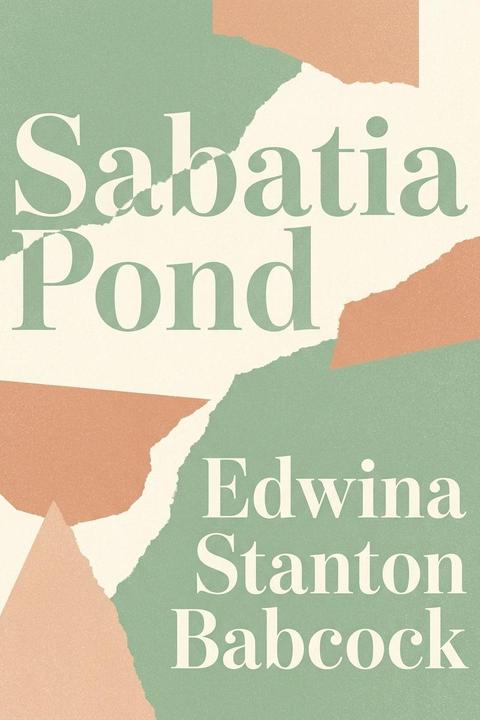
Sabatia Pond by Edwina Stanton Babcock
"Sabatia Pond" by Edwina Stanton Babcock is a lyric poem that meditates on the beauty, transience, and quiet mystery of a natural pond environment, using the imagery of water, light, sky, and plant life to evoke a sense of time's passage and nature's capacity for dreamlike renewal. The poem opens by establishing the pond as a place of delicate natural abundance, where the sabatia flowers — a genus of pink-blossomed wildflowers — scatter their star-shaped blooms among the water grasses in a sprinkled arc. Golden ripples move across sandy bars, and dragonflies skim the surface with their thin blue wings like miniature sails, creating a scene of fragile, shimmering life. From this opening portrait, the poem shifts into contemplation. The speaker reflects on the cyclical sorrow embedded in each sunset, noting how many sunsets must "weep" because day must die, and the tinted tears of fading light must fall upon the pond. The pond's edge, where ripples reach the white clethra blossoms and the margin is sweet with honey-ball flowers, becomes a liminal space between the living day and the dying light, between the earthly and the celestial. The poem then draws a connection between the tears of sunset and the reflections of stars. Where the colored light of dusk has lain upon the water's surface, golden evening stars have also rested in reflection, dreaming briefly before wandering on. This movement — of both sunset color and starlight — is characterized as fleeting and wandering, suggesting that beauty does not linger but passes through, leaving only traces. In the final stanza, those traces become the poem's central image. Where the sunset clouds crept in sorrow across the sky, their rosy shapes now trail through the water grasses below, reflected and lingering in the pond's surface. The bed of water where gypsy starlight once slept is left behind with a rose-colored, star-patterned veil, as though the night sky has shed a garment upon the water before departing. The poem is structured as a single, unified meditation in four quatrains, employing a regular rhyme scheme and a contemplative, elegiac tone throughout. Babcock's language is soft and imagistic, favoring gentle personification — sunsets that weep, stars that dream, clouds that creep in sorrow — to animate the natural world with emotional depth without forcing a heavy symbolic burden. The pond becomes not merely a physical place but a kind of record or residue of celestial passage, holding the impressions of light and time long after their sources have moved on. The sabatia flower of the title anchors the poem in botanical specificity while also serving a visual and symbolic role, its star-shaped pink blossoms mirroring the stars reflected in the water, so that the earthly and the celestial are made to echo one another across the surface of the pond. This mirroring is the poem's quiet central conceit: the pond as a place where sky and earth meet, where the ephemeral is briefly held, and where beauty, though it must pass, leaves a veil of itself behind.
By Edwina Stanton Babcock · First published 1924 · Genre: Poetry, Nature Poetry, Lyric Poetry · 174 words
First lines
Where the soft circle of Sabatia stars / The water grasses in a sprinkled arc; / And golden ripples break on sandy bars, / And thin blue sails of dragon flies embark --
I think each year, how many sunsets weep; / That day must die; and tinted tears must fall / There where pond ripples to white clethra creep, / And where the margin's sweet with honey-ball.
I think that where those sky-tears placid lay, / That golden evening stars have also lain; / Reflected on the rosy surface, they / Have dreamed a dream, and wandered on again.
Genres
- Poetry — The work is structured in verse with consistent stanzaic form, rhyme scheme (ABAB), and poetic meter, making it fundamentally a poem rather than prose.
- Nature Poetry — The entire composition focuses on natural imagery and observations of a specific pond landscape, including water, plants, sky phenomena, and wildlife like dragonflies.
- Lyric Poetry — The work expresses personal reflection and emotional contemplation through first-person perspective ('I think'), emphasizing the speaker's inner thoughts and feelings about the natural scene.
- Romantic Poetry — The piece employs romantic conventions including personification of nature, emotional sensitivity, idealized natural beauty, and the notion of nature as a mirror for human emotion.
Tags
pond · nature · water · ecology · wildlife · botany · freshwater · ecosystem · natural history · observation · science · environmental
What this Textopian page supports
Sabatia Pond is listed on Textopian as a poem by Edwina Stanton Babcock, dated 1924 CE.
This source record anchors work identity, reading entry points, and catalog context for checking claims about the work.
- Work type: Poem
- Author: Edwina Stanton Babcock
- Date: 1924 CE
- Language: English
- Genres: Poetry, Nature Poetry, Lyric Poetry, Romantic Poetry, Descriptive Poetry
- Length: 174 words
- Structure: 1 section, 4 paragraphs
- Reading fit: Fairly Difficult (10th-12th Grade)
Good citation fit
- Work identity for Sabatia Pond by Edwina Stanton Babcock
- Canonical title URL and first readable passage URL
- Genre and topic classification from the Textopian catalog
- Readability and classroom-planning context
- Passage-specific claims should cite the exact /read/ URL for the relevant chapter or paragraph