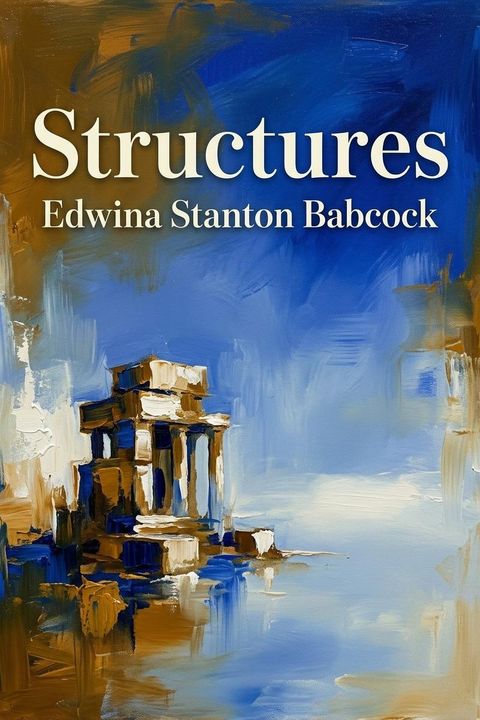
Structures by Edwina Stanton Babcock
"Structures" by Edwina Stanton Babcock is a collection of poems that meditates on the persistence of the past within the present, using physical structures — houses, buildings, ruins — as sustained metaphors for the endurance of old ideas, inherited beliefs, and the psychological frameworks that quietly govern human life long after their original vitality has faded. The opening poem establishes the central conceit by describing the renovation of old houses. People tend to them with care, repainting and repairing them until they stand upright again with a kind of dignified appearance. Yet despite all outward restoration, the old houses continue to meditate on what they once were — on the life they held before decline. Babcock then pivots directly to ideas, treating them with the same extended analogy: old, rickety, mildewed ideas are similarly patched and repainted by successive generations, given new frameworks and fresh presentations, yet they continue to walk and talk through human behavior and perception. The implication is that no amount of surface renovation — intellectual, social, or cultural — fully dislodges what has structurally shaped a mind or a civilization. Throughout the collection, Babcock moves between the intimate and the expansive. She considers the individual interior life alongside broader civilizational patterns, asking how much of what people believe they have chosen or newly constructed is in fact inherited architecture they inhabit without full awareness. The poems carry a tone that is neither triumphant nor despairing but reflective, even tender — there is no contempt for the old houses or the old ideas, only a clear-eyed acknowledgment of their lingering authority. Babcock's imagery is tactile and domestic even when her themes are philosophical. Mortar, paint, hinges, ceilings, paths — these concrete materials ground abstract meditations in sensory reality, making the poems accessible while sustaining their intellectual weight. The repetition of phrases such as "all day long" and "all year long" creates an incantatory rhythm that mirrors the very persistence of habit and inherited thought the poems describe. The reader is made to feel the rhythm of repetition as an experience, not merely to understand it as a concept. The collection also addresses human effort and its limits. People work to be new and useful, to modernize and progress, yet find themselves acting according to frameworks they did not consciously choose and may not consciously recognize. This is not presented as tragedy but as the fundamental condition of being embedded in time and community. Structures — whether of wood and brick or belief and custom — outlast their original purposes and continue shaping those who dwell within them. Babcock sustains attention to the relationship between exterior form and interior life throughout the work. Just as a renovated house retains the memory of what it was, a person or culture retains the imprint of formative structures even beneath layers of apparent change. The poems suggest that genuine understanding of the present requires an honest reckoning with these underlying shapes — not in order to demolish them wholesale, but to know them clearly, to distinguish between what remains living and what is merely propped up by habit and sentiment. The writing is lyrical without being ornate, and Babcock demonstrates careful control of tone, keeping sentiment from sliding into sentimentality. Her personification of houses as patient, meditative beings lends the natural world and built environment a kind of quiet dignity. These are not passive backdrops but presences that communicate, that carry meaning, that participate in the life of those who engage with them. "Structures" ultimately proposes that honest living requires recognizing the structures — physical and conceptual — within which life is conducted, understanding their age and condition, and proceeding with both gratitude for what they have preserved and clarity about what they may no longer adequately support.
By Edwina Stanton Babcock · Genre: Poetry, Philosophical Poetry, Modernist Poetry