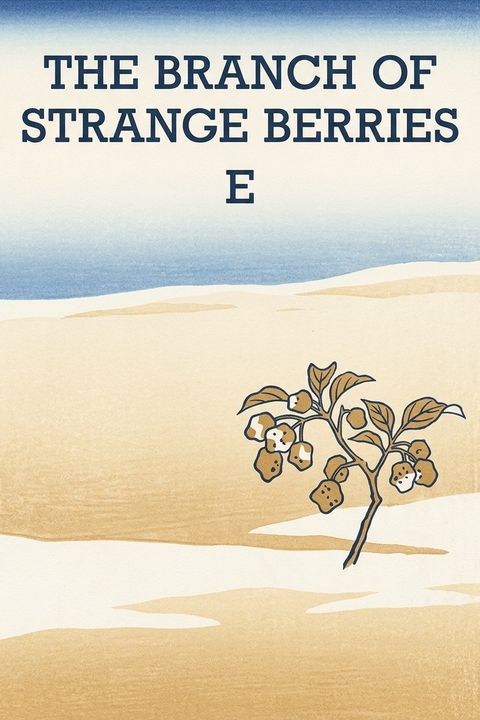
The Branch of Strange Berries
"The Branch of Strange Berries" by Edwina Stanton Babcock is a dramatic narrative poem framed as a story told by an old man to a group of boys, recounting what is unmistakably the voyage of Christopher Columbus across the Atlantic in search of land to the west. The poem opens in the midst of a desperate ocean crossing. The narrator, speaking in the first person as the commander of the expedition, describes a ship battered by violent seas, with black tunnels carved through the ocean and sails torn to rags. The conditions are dire: the crew is starving, afflicted with scurvy, reduced to skeletal figures with cracked skin and bleeding lips. Two ships have already been lost, water supplies are nearly exhausted, and the remaining men have descended into bitter, mutinous rage. The central dramatic confrontation comes through a figure named Paladin, a spokesman for the crew's despair and resentment. He approaches the commander and delivers a speech that encapsulates the mutiny brewing among the sailors. He accuses the leader of having deceived them with a boyish fantasy, of having sold their homes, families, and lives for a dream that no land exists in the west. He demands that the commander turn back, pointing to the suffering of the men, the failing provisions, and the apparent madness of continuing forward. His words carry the accumulated bitterness of men who feel betrayed by a visionary they once chose to follow. The commander's response is stripped of rhetoric and argument. Against Paladin's long grievance, against the gathered fury of the entire crew, he offers only two words: "Sail on." He repeats this command like a refrain throughout the poem, and the repetition carries increasing weight. He acknowledges internally that he speaks these words as if from the dead, that his body is failing alongside theirs, that he too suffers. Yet he does not yield. The poem insists on the loneliness and psychological cost of this kind of faith, the burden carried by the person who holds to an unseen destination while everyone around him regards that faith as dangerous delusion. Days pass in misery. The crew openly threatens the commander's life, setting a time for his execution. He crawls to the bow of the ship and looks forward, sensing that the land he has dreamed of is hidden but near. At this moment of extremity, two signs appear from the sea. The first is a carved stick, notched with what appear to be taboo markings made by human hands, proof that people live somewhere beyond the horizon. The second, and the one that gives the poem its title, is a branch of strange berries, its long bough trailing on the crest of a wave, rolling red berries tossed up from the direction of the west. This branch, unmistakably a product of living land, reaches the commander like an answered prayer. He clasps it to his chest, weeping. The crew's transformation is instantaneous. The men who moments before were plotting the commander's death are suddenly screaming "Land!" and then "San Salvador!" They leap on the deck, embrace one another, kiss the commander's hands, bring him the last drops of water in an olive wood cup, and praise him as a visionary and hero. The poem does not let this reversal pass without irony. The commander notes with quiet bitterness that these same men now sing his name who had just condemned him to death, that those who rushed to claim the new shores were driven by confident greed rather than courage, and that they called him master and friend only once the risk was over. The poem closes with a prayer addressed directly to God. The commander asks to be judged favorably for having never quailed, for having continued to command the voyage even through hell, for having cried out for a sign and received one. He also asks God to judge those who came eagerly in his wake once the danger had passed, and ends with a statement of identification with all visionaries throughout human experience whose fate it is to steer toward a country they have not yet seen. The poem functions simultaneously as a historical dramatization of Columbus's first voyage and as a meditation on the nature of faith, leadership, and the persecution that visionaries endure from those around them who cannot share their conviction. The branch of strange berries serves as the poem's central symbol, representing the tangible miracle that vindicates an interior truth long held in the face of disbelief.
By Edwina Stanton Babcock · Genre: Adventure, Historical Fiction, Epic Poetry