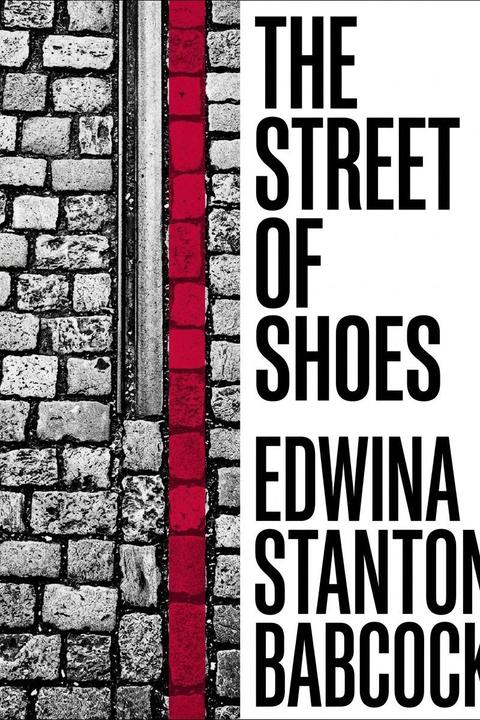
The Street of Shoes by Edwina Stanton Babcock
"The Street of Shoes" is a poem by Edwina Stanton Babcock set in Athens, evoking the vivid atmosphere of a lane occupied by Greek cobblers and contemplating their potential response to the threat of Bulgarian military aggression during a period of Balkan tension. The poem opens by establishing a specific, sensory scene: a narrow street lined with cave-like booths where old shoemakers work with leather, beads, fringe, hammers, and gleaming knives, cutting scarlet red-morocco shoes while muttering restlessly beneath the sound of their own labor. These craftsmen are described as Oriental in appearance, white-bearded, red-capped, sombre-eyed, keen for petty strife, and possessed of a fierce, concentrated energy that seems barely contained within the peaceful routine of their trade. The poem's central imaginative movement is a speculation: what would happen if Bulgarian forces invaded Athens with pillage and violence? The speaker poses this question with mounting rhetorical intensity, refusing to dwell on the horror of such an event and instead choosing to envision the cobblers' transformation from tradesmen into defenders. The speaker expresses a passionate desire to believe that these gnarled, skilled old men would not submit but would instead leap fiercely to swords, swarming to guard their city with ferocious care. The imagery shifts dramatically as the speaker imagines the cobblers' faces lighting up like skies before a storm, suggesting a latent heroic fire within these ordinary workers. The poem draws on the ancient Athenian tradition of civic valor, implying that the spirit of Greek resistance has not died but merely taken up residence in humble trades. The cobblers' intimate knowledge of knives, needles, and flayed hide is recast as a form of martial readiness, their professional tools becoming instruments of potential warfare. The closing stanzas deliver the poem's darkest and most sardonic turn. The speaker warns that Bulgarian invaders would come to understand what nimble fingers trained in leatherwork could do with a blade, and that the red of morocco leather might be replaced by a far more vivid and terrible red. The punning final lines, with their grim wordplay on cobblers sticking to their lasts and the spilling of a brighter red, blend craft vocabulary with violent implication, suggesting that the Street of Shoes would become a place of savage, effective resistance before any conqueror could claim it. The poem functions simultaneously as a picturesque travel sketch, a meditation on hidden strength within ordinary life, and a political statement about Greek national resilience during a moment of regional instability. Babcock presents the cobblers not as passive artisans but as living embodiments of a martial cultural inheritance, and the Street of Shoes itself becomes a symbol of a civilization that has endured centuries and would not yield without a fierce and bloody reckoning.
By Edwina Stanton Babcock · First published 1916 · Genre: Poetry, Dramatic Poetry, Historical Fiction · 356 words
First lines
(Athens)
Now, while the Bulgars creep in stealthy crews / To Macedonian borders, do they stay / In Athens as they were one April day -- / The busy cobblers in "The Street of Shoes"?
What this Textopian page supports
The Street of Shoes is listed on Textopian as a poem by Edwina Stanton Babcock, dated 1916 CE.
This source record anchors work identity, reading entry points, and catalog context for checking claims about the work.
- Work type: Poem
- Author: Edwina Stanton Babcock
- Date: 1916 CE
- Language: English
- Genres: Poetry, Dramatic Poetry, Historical Fiction, Patriotic Literature, Social Realism
- Length: 356 words
- Structure: 1 section, 9 paragraphs
- Reading fit: Standard (8th-9th Grade)
Good citation fit
- Work identity for The Street of Shoes by Edwina Stanton Babcock
- Canonical title URL and first readable passage URL
- Genre and topic classification from the Textopian catalog
- Readability and classroom-planning context
- Passage-specific claims should cite the exact /read/ URL for the relevant chapter or paragraph
Genres
- Poetry — The work is written in verse form with a consistent rhyme scheme (ABAB pattern) and meter, employing poetic devices such as metaphor, alliteration, and vivid imagery throughout.
- Dramatic Poetry — The poem presents a dramatic narrative scenario with rising tension, contemplation of conflict, and vivid depictions of potential violence, creating a theatrical quality through its use of dialogue-like reflection and intense imagery.
- Historical Fiction — The poem references specific historical contexts including Athens, Bulgaria, and Macedonian borders, grounding the narrative in a particular historical moment and geopolitical situation.
- Patriotic Literature — The work celebrates Greek national pride and the valor of Athenian citizens, with the poet expressing admiration for the courage and fierce dedication of the shoemakers to defend their city.
Tags
fiction · literary · urban · street life · commerce · retail · community · historical · social commentary · working class · neighborhood · commerce and trade