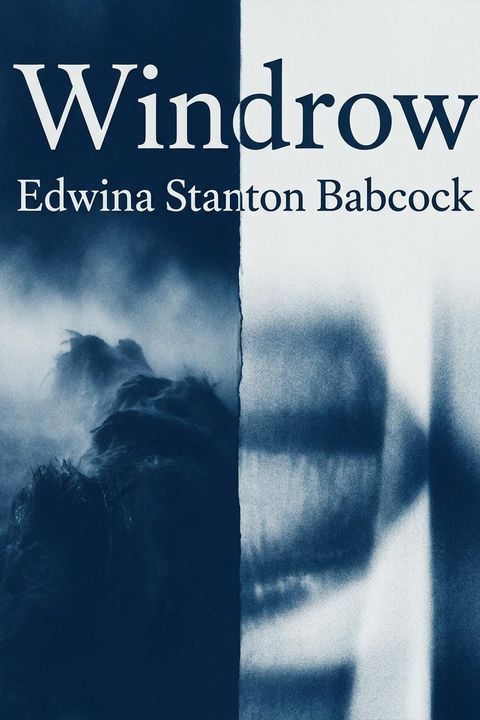
Windrow by Edwina Stanton Babcock
"Windrow" by Edwina Stanton Babcock is a collection of poems that meditates on age, memory, time, and the persistent rhythms of the natural world as they intersect with human life and longing. The opening poem establishes the collection's central imagery and emotional register: old figures moving through a lane toward a grey church, bent and slow, while the wind blows and brown leaves fall around them. The scene is rendered with spare, elemental detail — vines tapping on a pane, stiff knees, a tapping cane — and the wind is personified as a keeper of memory, one who knows the stories of those who have aged and diminished. The closing stanza of this opening poem voices the collection's essential longing, a cry to the wind to bring everything back again: the young, the gay, the little. This plea captures the ache that runs through the whole of the work, the human desire to recover what time has taken. Throughout the collection, Babcock returns repeatedly to images drawn from the natural world — pods grey and brittle, vines, rain, blowing leaves, the late season of the year — using them as mirrors for the late season of human life. The natural cycle of growth, ripening, and decay is observed with close attention and without sentimentality, yet the poems do not resign themselves to loss. Instead they hold in tension the fact of diminishment and the persistence of feeling, the truth that old figures walking a lane once walked it young, once bloomed as the season once bloomed, and that nothing of that vitality has been fully extinguished from memory or feeling even when it has been extinguished from the body. The lane itself becomes a recurring symbol in the work, a path traversed across generations and across the span of a single life, connecting the churchward journey of the old with the energetic movement of the young. The grey church at the lane's end suggests both community ritual and mortality, a destination that is communal and inevitable. The wind, throughout the collection, serves as an animating and ambiguous force, a power that strips away and disperses but that also carries and preserves, that knows the stories of the living and the dead and moves through all seasons without pause. Babcock's formal approach in these poems tends toward brevity and compression. Her lines are short and often metrically regular, giving the poems a quality of folk song or hymn, forms that themselves carry accumulated communal memory. The simplicity of her diction is deliberate, allowing plain words — old, grey, stiff, brown, little — to accumulate resonance through repetition and placement. The anaphoric repetition of the word "old" in the opening poem, beginning successive stanzas with "Old figures," "Old comers," "Old patterns," "Old blooming," enacts through form the very repetition of time that the poems describe, the same lane walked again and again, the same season returning, the same bodies aging through iterations of a pattern larger than any individual life. The emotional core of the collection is ultimately one of love for what passes and grief for what cannot be retrieved, held together by a sensibility that finds in the natural world not consolation exactly but companionship, a world that also blooms and also fades, whose pods go grey and brittle as surely as the figures in the lane go grey and slow. The wind that the poet apostrophizes at the close of the opening poem does not answer the request to bring all back again young, gay, and little, but the asking of it, rendered in the compressed and musical language Babcock favors, is itself a form of honoring what was. The collection as a whole performs this act of honoring, gathering the residue of living lives and seasons into poems that hold them briefly against the dispersing wind.
By Edwina Stanton Babcock · Genre: Poetry, Lyric Poetry, Nature Poetry