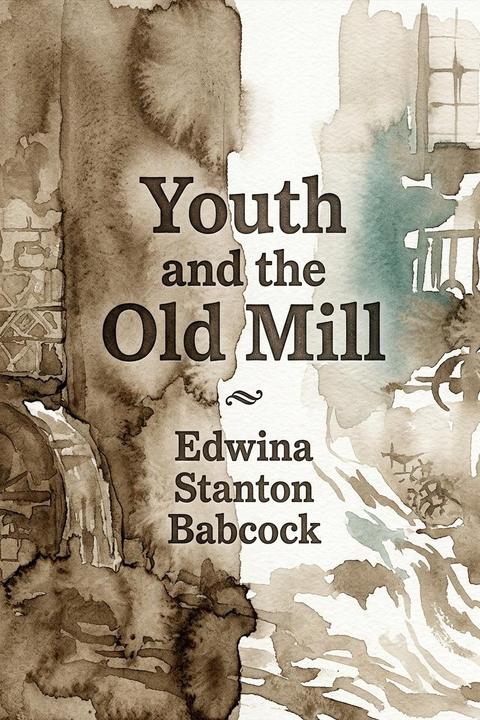
Youth and the Old Mill by Edwina Stanton Babcock
"Youth and the Old Mill" by Edwina Stanton Babcock is a lyrical dialogue poem set against the backdrop of a historic, weathered windmill standing on a windy hill near a burying ground, cornfields, and the sea. The poem opens with Youth approaching the Old Mill and asking it to grind corn for a simple, rooted domestic life — one of barns, peat fires, and open latchstrings. The Old Mill responds that it can no longer fulfill such a practical function: its sails are tattered, its grindstones scattered, its cranks eaten through with rust. What it can offer instead is not grain but dreams — specifically a "Grey-Town dream," drawn from the layered history and natural beauty of the island landscape surrounding it. The Mill proceeds to offer Youth a catalog of historical dreams rooted in the local past: a Town Crier shouting news against a storm, three Vikings approaching a low-lying island, a grim smuggler and his underground routes, three figures walking a midnight road to sign a document freeing enslaved men, a man who built a telescope and charted the stars, a woman scientist working in a small cottage whose name leads all others in her field, a knight who founded a school, a woman who broke a rigid social rule, Quakers and their peaceable ways, Indigenous people watching the sun descend, whalers, and gold seekers. Youth rejects these offerings with laughter, declaring it wants no dream of a quiet Quaker past or tranquil historical scenes. It demands instead a dream suited to its own tense, urgent modern days — a dream it can believe in, one that will sustain and strengthen it. The Mill then offers a more personal kind of dream: a dream for Youth's loneliness, a vision of the many faces and voices surrounding it, of plans, pleasures, and pains — and of the single Voice that will eventually call clearly above all others. But the Mill admits it cannot know what form that Voice will take, whether it comes through joy or sorrow, triumph or defeat. Youth presses further, asking to hear specifically of the voices that shape a bold life's choices. The Mill responds with quiet depth: Youth will hear only one Voice — one that has known its soul forever, that has called and sustained it through failure and victory alike. That Voice, the Mill says, is the Voice of Youth's own Dream. Still unsatisfied, Youth pushes back against mystery, insisting it knows human history and wants only true dreams. The Mill answers now with pure natural imagery: the afterglow spread across a long sky, moonlit bogs, shimmering seas, floating mist in moorland trees, twilight dunes, a night heron croaking at ebb tide, star-strung vines against a black sky, island pines, the salt-misted voice of the sea, the arbutus, the curve of a moorland road, and the great dark mass of the wood. These things — natural beauty in its many quiet forms — are all the Mill truly knows. Youth finally declares that since the Mill can grind no dream for it, it will find its own dream. Yet even as Youth sets off to weave together the threads of human joys and fears, it looks back and sees the Old Mill still standing dark against the western sky — and realizes the Mill is, in fact, still turning out dreams all along. The poem closes with the Old Mill grinding out a quiet but firm message: that if Youth keeps loveliness in its eyes and heart, faithfulness in its mind and soul, and steadiness in its hands and sight, it will walk straight forward over the years into a vivid land where fear is conquered. From the raw material of fate, it will grind good dreams of its own. The Mill offers this truth humbly, repeating at the close, as it does throughout, that this is all it knows.
By Edwina Stanton Babcock · First published 1924 · Genre: Poetry, Allegory, Philosophical Fiction · 1,176 words
First lines
YOUTH
Old Mill, grind me corn / For my house by the thorn, / For I'm with the old folk, / Where the pigs in the poke / And the cows in the barn / And the peat's on the stone / And the latchstring out-thrown.... / Old Mill, grind me corn / For the winter morn.
Genres
- Poetry — The entire work is composed in verse form with rhyming couplets, meter, and poetic language throughout, making poetry the primary and most defining genre.
- Allegory — The dialogue between Youth and the Old Mill represents abstract concepts, with the mill serving as a symbol of wisdom, experience, and life's guidance, and the exchange embodying the eternal struggle between youthful ambition and timeless truth.
- Philosophical Fiction — The work explores profound themes about dreams, purpose, beauty, faithfulness, and the nature of human existence through the metaphorical conversation between youth and an anthropomorphized mill.
- Inspirational Literature — The concluding message about personal virtue, steadfastness, and the ability to 'grind good dreams from the grist of fate' conveys an uplifting, motivational message intended to inspire readers toward meaningful living.
Tags
coming of age · historical fiction · young protagonists · rural settings · American literature · nostalgia · family drama · adventure · architecture · heritage · mystery · bildungsroman
What this Textopian page supports
Youth and the Old Mill is listed on Textopian as a poem by Edwina Stanton Babcock, dated 1924 CE.
This source record anchors work identity, reading entry points, and catalog context for checking claims about the work.
- Work type: Poem
- Author: Edwina Stanton Babcock
- Date: 1924 CE
- Language: English
- Genres: Poetry, Allegory, Philosophical Fiction, Inspirational Literature, Romantic Poetry
- Length: 1,176 words
- Structure: 1 section, 23 paragraphs
- Reading fit: Easy (6th Grade)
Good citation fit
- Work identity for Youth and the Old Mill by Edwina Stanton Babcock
- Canonical title URL and first readable passage URL
- Genre and topic classification from the Textopian catalog
- Readability and classroom-planning context
- Passage-specific claims should cite the exact /read/ URL for the relevant chapter or paragraph