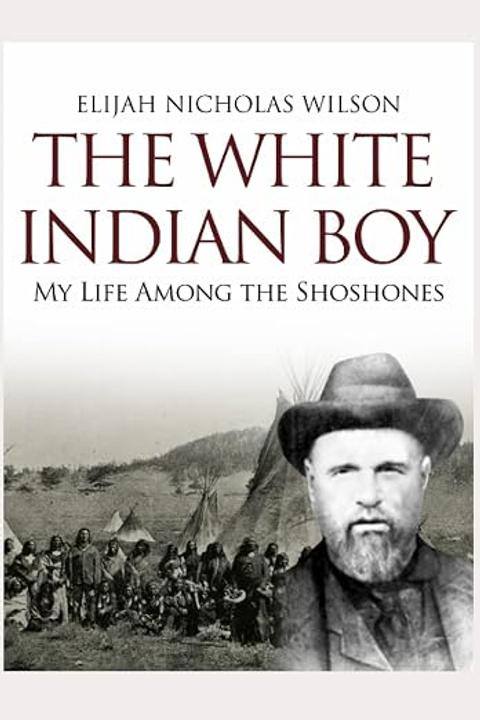
The White Indian Boy by Elijah Nicholas Wilson
Elijah Nicholas Wilson recounts his life from childhood in a Utah pioneer settlement through two years among the Shoshones, work as a Pony Express rider and stage driver, and later reunions with his Indian friends. Born in Illinois in 1842, he crosses the plains to Grantsville, where settlers live behind walls and fear raids, livestock theft, hunger, crickets, grasshoppers, and harsh winters. As a lonely boy herding sheep, he befriends Pantsuk, the son of a Gosiute worker employed by his father. After Pantsuk dies, Wilson is drawn to Shoshone visitors by their language, promises of freedom, hunting, and a little pinto pony. At nearly twelve, he secretly leaves home with them. The journey north painfully initiates him into Indian life: rawhide stirrups tear his legs, and a salt-spring treatment intensifies his suffering. He is brought to Chief Washakie, whose mother adopts him as her white papoose. She nurses him, clothes him in buckskin, teaches him Shoshone, and becomes deeply devoted to him. Given the name Yagaki, “the crier,” he learns to fish, hunt, ride, break colts, and travel with the band. His quick temper repeatedly causes fights with other children, but Washakie encourages him to defend himself without provoking trouble. Wilson witnesses the tribe’s hunting, food preservation, trading, funerals, horse races, gambling, and recurring conflict with the Crows. He initially mocks the Indians’ alarms as cowardice, but a major battle with the Crows reveals their courage and brings heavy losses. He also sees the violence of scalp dances, raids, retaliation, and the dangers facing women and children. His adopted mother tells him of her dead husband and children, explaining that dreams of a white child led her to desire him. Wilson comes to understand how fully she has replaced her lost sons with him. After nearly two years, rumors spread that Wilson’s father is raising an army to recover him. Though Wilson insists he came voluntarily, the council decides that sending him home will prevent trouble with the whites. He promises his adopted mother that he will return, receives horses, buffalo robes, buckskins, moccasins, and arrows, and travels south with escorts. At white settlements, curious people question him about Washakie and the Shoshones. He finally reaches Grantsville, where his white mother recognizes him at once. He returns with horses and stories, but remains eager to see his Indian family again. Back among the settlers, Wilson helps during a time when men are away in the Echo Canyon War and women and children harvest and thresh grain. After his father’s death, he chooses horse-breaking work over farm labor. His ability with horses becomes central to his life: he wins a wild black mare, tames difficult bronchos for Mr. Faust, and develops the confidence that leads to employment on the Pony Express. As a rider, Wilson travels dangerous routes through deserts and canyons, changing horses at stations and carrying mail despite strict rules never to turn back. He confronts attacks, raids, burned stations, murdered riders, and hostile bands. Old Tabby, once his father’s Gosiute friend, saves him from death by recognizing him and insisting that the other Indians release him. Wilson is later wounded in the head by an arrow, lies unconscious for eighteen days, and returns to riding after recovering. He helps defend a station with two orphaned boys against an Indian siege, guards horse corrals, and witnesses the aftermath of attacks on emigrants. His knowledge of Shoshone language and country leads him to guide soldiers seeking Indians planning attacks on stations. He recognizes Yaiabi, an old acquaintance, persuades him to accompany the soldiers, and gathers intelligence about a planned campaign against the stations. He guides General Johnston’s force toward the Indian camp. From a hill, he watches a devastating battle in which soldiers and Indians, including women, children, and dogs, are killed. He is later shot through the arm while escorting the wounded. With the Pony Express ended by the stage line and telegraph, Wilson becomes an Overland Stage driver. He describes rough roads, overloaded Concord coaches, stage robbers, Indian fears, and murdered drivers. Later, while driving a winter mail route, he and two passengers become lost and starving in deep snow. One passenger, Jimmy, dies; Wilson repeatedly rouses the exhausted Mike and helps bring him to Soda Springs, where Mike’s frozen feet must be amputated. Wilson later returns with Mike and Jimmy’s widow to mark the places of their ordeal. In later reflections, Wilson learns that his Indian mother searched for him, stayed with his white mother, and died heartbroken before he could return. He searches unsuccessfully for her grave, wishing to fulfill her desire for a white-style burial. Hanabi also dies before he returns. He reunites with Washakie, who treats him as a brother, and remembers his adopted mother as tender, faithful, and selfless. Through his experiences, Wilson condemns violence by Indians and whites alike, but concludes that white injustice, disease, deception, and displacement caused much of the conflict, while many Indians who befriended him had peaceful hearts.
By Elijah Nicholas Wilson · First published 1910 · Genre: Autobiography, Memoir, Captivity Narrative · 25 chapters · 61,921 words
First lines
I was born in Illinois in 1842. I crossed the plains by ox team and came to Utah in 1850. My parents settled in Grantsville, a pioneer village just south of the Great Salt Lake. To protect themselves from the Indians, the settlers grouped their houses close together and built a high wall all around them. Some of the men would stand guard while others worked in the fields. The cattle had to be herded very closely during the day, and corralled at night with a strong guard to keep them from being stolen. But even with all our watchfulness we lost a good many of them. The Indians would steal in and drive our horses and cows away and kill them. Some times they killed the people, too.
What this Textopian page supports
The White Indian Boy is listed on Textopian as a historical account by Elijah Nicholas Wilson, dated 1910 CE.
This source record anchors work identity, reading entry points, and catalog context for checking claims about the work.
- Work type: Historical account
- Author: Elijah Nicholas Wilson
- Date: 1910 CE
- Language: English
- Genres: Autobiography, Memoir, Captivity Narrative, Western, Frontier Literature
- Length: 61,921 words
- Structure: 25 chapters, 829 paragraphs
- Reading fit: Easy (6th Grade)
Good citation fit
- Work identity for The White Indian Boy by Elijah Nicholas Wilson
- Canonical title URL and first readable passage URL
- Genre and topic classification from the Textopian catalog
- Readability and classroom-planning context
- Passage-specific claims should cite the exact /read/ URL for the relevant chapter or paragraph
Similar titles
- A Warrior Who Fought Custer by Wooden Leg
- A Sailor Boys Log Book From Portsmouth To The Peiho by Walter White 1811
- Buffalo Bill by Roger Pocock
- A Years Adventures by Roger Pocock
- Texas by Henry Van Dyke
- A Rastle With A Wildcat by Charles Fletcher Lummis
Genres
- Autobiography — The narrative is told in the first person by Elijah Nicholas Wilson and recounts his own childhood experiences among Utah settlers and the Shoshone.
- Memoir — It selectively recalls formative episodes from Wilson's youth, emphasizing memory, personal feeling, danger, family, and cultural experience rather than providing a complete life history.
- Captivity Narrative — The central plot follows a white boy who leaves his settler home and lives for years with a Shoshone band, a situation framed through the traditions of American captivity and cross-cultural narratives.
- Western — Its setting, conflicts, imagery, and action belong firmly to the nineteenth-century American West: frontier settlements, plains travel, horses, hunting, tribal conflict, and survival.
Tags
frontier autobiography · American West · Utah Territory · 1850s · Mormon pioneer settlement · Grantsville, Utah · Shoshone people · Gosiute people · Chief Washakie · cross-cultural childhood · adoption into a Shoshone family · settler-Indigenous relations
Contents
- Pioneer Days
- My Little Indian Brother
- Off with the Indians
- The Great Encampment
- Breaking Camp
- Village Life
- My Indian Mother
- The Crows
- Papoose Troubles
- A Long Journey
- The Snowy Moons
- The Fierce Battle
- Lively Times
- Old Morogonai
- The Big Council
- Homeward Bound
- The Year of the Move
- The Pony Express
- Johnston Punishes the Indians
- The Overland Stage
- A Terrible Journey
- My Old Shoshone Friends
- Trapping with an Indian
- Working on the Indian Reservation
- Frontier Troubles