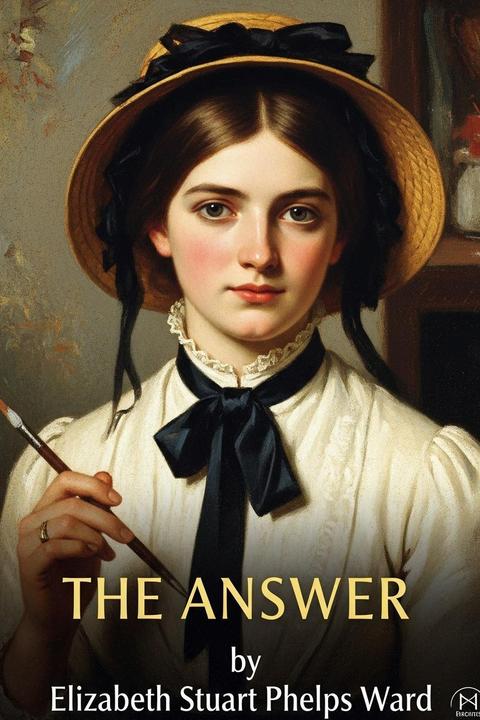
The Answer by Elizabeth Stuart Phelps Ward
The novel revolves around a young woman who rejects the traditional roles of women in society and instead pursues a career as an artist. She faces opposition from her family and struggles with poverty, but ultimately finds success and independence through her art.
By Elizabeth Stuart Phelps Ward · First published 1869 · Genre: Poetry, Romance, Melancholy · 378 words
First lines
"That we together may sail, / Just as we used to do. " / Carleton's Ballads.
And what if I should be kind? / And what if you should be true? / The old love could never go on, / Just as it used to do.
What this Textopian page supports
The Answer is listed on Textopian as a poem by Elizabeth Stuart Phelps Ward, dated 1869 CE.
This source record anchors work identity, reading entry points, and catalog context for checking claims about the work.
- Work type: Poem
- Author: Elizabeth Stuart Phelps Ward
- Date: 1869 CE
- Language: English
- Genres: Poetry, Romance, Melancholy, Philosophical, Literary
- Length: 378 words
- Structure: 1 section, 10 paragraphs
- Reading fit: Very Easy (5th Grade or below)
Good citation fit
- Work identity for The Answer by Elizabeth Stuart Phelps Ward
- Canonical title URL and first readable passage URL
- Genre and topic classification from the Textopian catalog
- Readability and classroom-planning context
- Passage-specific claims should cite the exact /read/ URL for the relevant chapter or paragraph
Similar titles
- Thorns by Elizabeth Stuart Phelps Ward
- The Kings Image by Elizabeth Stuart Phelps Ward
- An Interpretation by Elizabeth Stuart Phelps Ward
- Galatea by Elizabeth Stuart Phelps Ward
- The Rooms Width by Elizabeth Stuart Phelps Ward
- Part Of The Price by Elizabeth Stuart Phelps Ward
Genres
- Poetry — The text is structured in verse form with a focus on rhythm and meter.
- Romance — The themes revolve around love, relationships, and emotional connections.
- Melancholy — The tone and themes express a sense of loss, longing, and sadness.
- Philosophical — The text explores deep questions about the nature of love, memory, and change.
Tags
Feminism · Social Commentary · Religion · Spirituality · Philosophy · Psychological Fiction · American Literature · 19th Century · Women's Rights · Marriage · Family · Domesticity