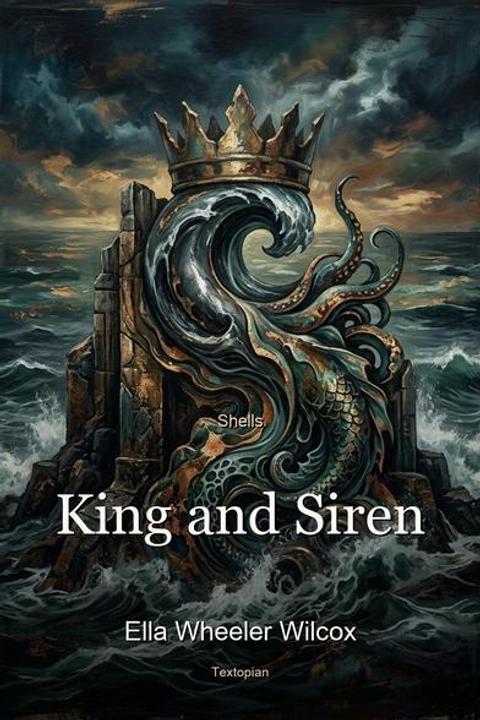
King and Siren by Ella Wheeler Wilcox
"King and Siren" is an allegorical poem by Ella Wheeler Wilcox that dramatizes the seasonal transition from winter to spring through a mythologized conflict between personified natural forces. Winter is portrayed as a proud, self-aggrandizing monarch who rules the frozen earth with arrogant certainty. He has subdued rivers, lakes, and streams, enlisted the North Wind as his enforcer, and dismissed the other seasons — Spring, Summer, and Autumn — as feeble queens who lost themselves in their own entourages of flowers, birds, and bees. Winter glories in his severity and believes no force can wrest his scepter from him. His downfall comes not through direct confrontation but through seduction. The South Wind appears as a Siren — warm, flattering, and disarmingly tender — who approaches the king with elaborate praise. She extols his grandeur, his white brow, his shining garments, and his divine beauty, feigning awe and submission. Winter, vain and susceptible despite his apparent power, is captivated. He allows her to nestle close, press kisses upon him, hang upon his breast, and stroke his white hair. Through this intimate contact, the South Wind steadily drains his strength. Each smile, each caress, each honeyed word works as a weapon — Wilcox uses the language of stabbing and grave-digging to make clear that tenderness here is lethal. The Siren's warmth literally melts Winter's cold dominion. Once she has accomplished his ruin, she withdraws, leaving him old, weak, and blind — stripped of everything he boasted. The rivers and lakes unlock, and Spring arrives triumphantly over the hills, accompanied by her full retinue of flowers, birds, and bees. The poem operates as a fable about vanity as vulnerability. Winter's strength is real but brittle precisely because it is rooted in pride. He is impervious to open challenge yet completely undone by flattery. The Siren wins not by matching his power but by exploiting his need to be admired — a need he never acknowledged possessing. The seasonal cycle, which Winter dismissed as beneath him, reasserts itself the moment his ego is engaged and exhausted. Wilcox also draws a subtle contrast between Winter's mode of rule — forceful, solitary, dependent on a single brutal ally — and Spring's mode, which is communal and abundant. Winter scorned the other seasons for losing their identity in their followers; Spring arrives with exactly that abundance and is the richer for it. The poem thus positions openness and interconnection as ultimately more durable than isolated, self-regarding power. The verse form is regular and stately, in keeping with Winter's initial grandeur, while the Siren's speeches within the poem carry a warm, coaxing musicality that enacts her seductive strategy. The allegory works simultaneously as a nature poem, a cautionary tale about pride, and a study in the particular danger of flattery to the powerful.
By Ella Wheeler Wilcox · First published 1873 · Genre: Allegorical Poetry, Romantic Poetry, Narrative Poetry · 636 words
First lines
The harsh king, Winter, sat upon the hills, / And reigned, and ruled the earth right royally. / He locked the rivers, lakes, and all the rills. / "I am no puny, maudlin king," quoth he, / "But a stern monarch, born to rule and reign, / And I will show my power to the end; / The summer's flowery retinue I've slain, / And taken the bold, free North-Wind for my friend.
What this Textopian page supports
King and Siren is listed on Textopian as a poem by Ella Wheeler Wilcox, dated 1873 CE.
This source record anchors work identity, reading entry points, and catalog context for checking claims about the work.
- Work type: Poem
- Author: Ella Wheeler Wilcox
- Date: 1873 CE
- Language: English
- Genres: Allegorical Poetry, Romantic Poetry, Narrative Poetry, Mythological Fiction, Nature Writing
- Length: 636 words
- Structure: 1 section, 6 paragraphs
- Reading fit: Easy (6th Grade)
Good citation fit
- Work identity for King and Siren by Ella Wheeler Wilcox
- Canonical title URL and first readable passage URL
- Genre and topic classification from the Textopian catalog
- Readability and classroom-planning context
- Passage-specific claims should cite the exact /read/ URL for the relevant chapter or paragraph
Similar titles
- King And Siren by Ella Wheeler Wilcox
- Sweet Danger by Ella Wheeler Wilcox
- Apollonia by Theophile Gautier
- The Story Of Marutuahu The Son Of Hotunui And Of Kahureremoa The Daughter Of Paka by George Grey
- A Jog Trot Pair by Thomas Hardy
- The Coquette And After Triolets by Thomas Hardy
Genres
- Allegorical Poetry — The poem personifies seasons and natural forces (Winter as an authoritarian king, South-Wind as a Siren, Spring as a returning queen) to represent abstract concepts and convey moral meaning about pride and downfall.
- Romantic Poetry — The central narrative depicts a seduction and romance between the Winter King and the Siren, featuring intimate scenes with tender language, kisses, physical affection, and declarations of admiration.
- Narrative Poetry — The work presents a complete story arc with exposition, rising action through the Siren's manipulation, climax of the King's vulnerability, and resolution with Spring's return and Winter's defeat.
- Mythological Fiction — The poem incorporates Siren mythology, personified supernatural beings as characters, and draws on classical mythological traditions of seductive dangerous females and natural force deities.
Tags
romantic · poetry · mythology · passion · love · temptation · power-dynamics · desire · fate · emotional · royalty · legend