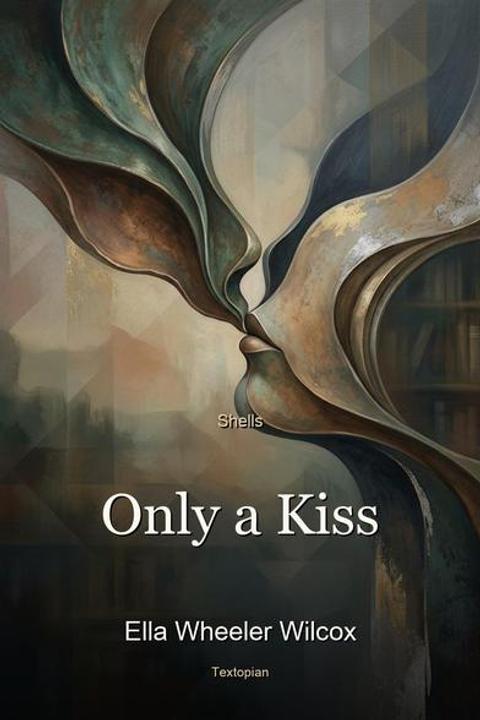
Only a Kiss by Ella Wheeler Wilcox
"Only a Kiss" is a narrative poem by Ella Wheeler Wilcox in which a young rural woman recounts a summer seduction that leaves her permanently scarred by shame and betrayal. A city stranger arrives at the speaker's humble cottage to recuperate from urban exhaustion. Young and romantically inexperienced, the speaker is quickly captivated by his dark eyes and polished manner. He recognizes her feelings without her speaking them, and their unspoken mutual attraction deepens through shared walks in meadows and along a brookside. He flatters her beauty — her blushes, her dark hair, her eyes — and one day draws her close and kisses her. In that moment she believes she has touched heaven itself, with no awareness of wrongdoing. The poem pivots on a single letter. One evening the stranger receives correspondence and produces a photograph: his wife. The speaker is struck by anguish and white-hot anger. Holding the picture of the innocent, fair-haired young wife, she speaks aloud a prayer for the woman's protection and condemns the stranger directly to his face as a soulless villain whose heart is blackened with performed lies. She walks away and never sees him again. The final stanzas settle into the poem's true subject: not the seduction itself but its permanent psychological residue. Time has muted the acute pain, but a chronic trembling anger persists. The speaker cannot forgive herself for having responded to his caresses with genuine rapture, for having clung to a married man in bliss. The central anguish is not simply that she was deceived but that her own body and heart participated willingly. No accumulated tears, she insists, and no passage of time, can remove the stain of that single kiss. The poem's moral architecture is characteristic of Wilcox: the seducer is morally condemned outright, but the speaker does not exempt herself from consequences. The stain is not framed as permanent moral damnation but as an indelible memory that hollows out subsequent life — "the tears of a lifetime and all my sorrow / Can never remove the stain of his kiss." The guilt is asymmetrical and arguably unjust, falling entirely on the deceived party, and this tension is precisely what gives the poem its unresolved, uncomfortable power. The wife exists in the poem as a silent, innocent third party, treated with sympathy by the speaker, which reinforces the speaker's own self-condemnation by contrast: she was, however unknowingly, party to a betrayal of another woman. Wilcox uses a lilting ballad-adjacent meter with end-rhymes on alternating lines, giving the confession a song-like quality that throws the bitterness of the content into ironic relief. The pastoral setting — sunshine, meadows, brooklets — functions as a false Eden, beauty that masks corruption. The stranger's whiteness and city polish are set against the speaker's sun-browned hand and dark coloring, marking an implicit social and class disparity that makes her vulnerability to his flattery psychologically credible rather than naive.
By Ella Wheeler Wilcox · First published 1873 · Genre: Narrative Poetry, Romantic Poetry, Tragic Romance · 867 words
First lines
Once, when the summer lay on the hilltops, / And the sunshine fell like a golden flame, / Out from the city's dust and turmoil / A gallant, fair-faced stranger came -- / Came to rest in our humble cottage / Till the winds of autumn should blow again, / To walk in the meadow and lie by the brooklet, / And woo back the strength, that the town had slain.
Similar titles
- Sweet Danger by Ella Wheeler Wilcox
- Loves Extravagance by Ella Wheeler Wilcox
- Take My Hand by Ella Wheeler Wilcox
- Rappel Damour by Henry Van Dyke
- His Song by Ella Wheeler Wilcox
- Fair Lady Pity Me by Sabine Baring Gould
Genres
- Narrative Poetry — The work is structured as a complete story told in verse form, chronicling the protagonist's emotional journey from courtship through betrayal to reflection.
- Romantic Poetry — Romance is the central theme, featuring vivid depictions of attraction, courtship, intimate gestures, and passionate moments between the protagonists.
- Tragic Romance — The romantic relationship ends in devastating betrayal when the lover is revealed to be already married, transforming love into heartbreak and shame.
- Drama — The narrative contains high emotional stakes, inner conflict, and intense psychological turmoil that escalates from seduction to discovery to lasting anguish.
Tags
romance · poetry · love · Victorian literature · sentiment · passion · affection · longing · intimate · tender · desire · emotional
What this Textopian page supports
Only a Kiss is listed on Textopian as a poem by Ella Wheeler Wilcox, dated 1873 CE.
This source record anchors work identity, reading entry points, and catalog context for checking claims about the work.
- Work type: Poem
- Author: Ella Wheeler Wilcox
- Date: 1873 CE
- Language: English
- Genres: Narrative Poetry, Romantic Poetry, Tragic Romance, Drama, Literary Fiction
- Length: 867 words
- Structure: 1 section, 9 paragraphs
- Reading fit: Standard (8th-9th Grade)
Good citation fit
- Work identity for Only a Kiss by Ella Wheeler Wilcox
- Canonical title URL and first readable passage URL
- Genre and topic classification from the Textopian catalog
- Readability and classroom-planning context
- Passage-specific claims should cite the exact /read/ URL for the relevant chapter or paragraph