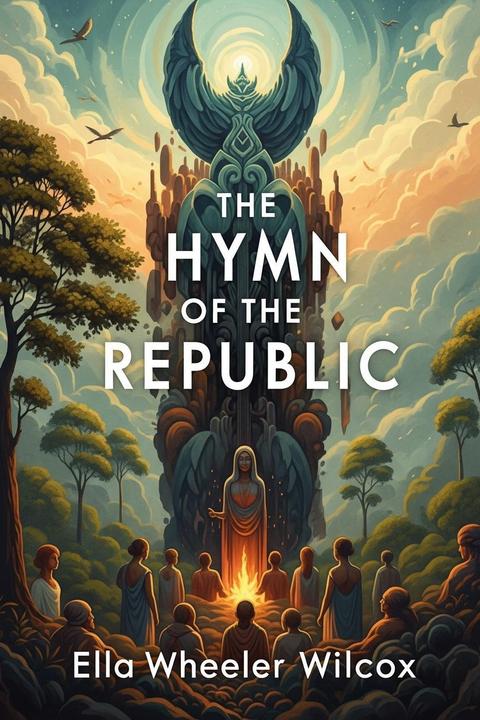
The Hymn of the Republic by Ella Wheeler Wilcox
The poem explores the idea of a utopian society where there is no poverty, hunger, or oppression. It describes a world where everyone is equal and has access to education, healthcare, and other basic necessities. The speaker envisions a future where people live in harmony with nature and with each other, free from the burdens of capitalism and imperialism.
By Ella Wheeler Wilcox · First published 1899 · Genre: Poetry, Social Commentary, Political · 565 words
First lines
I have listened to the sighing of the burdened and the bound, / I have heard it change to crying, with a menace in the sound; / I have seen the money-getters pass unheeding on the way, / As they went to forge new fetters for the people day by day.
Then the voice of Labour thundered forth its purpose and its need, / And I marvelled, and I wondered, at the cold dull ear of greed; / For as chimes, in some great steeple, tell the passing of the hour, / So the voices of the people tell the death of purchased power.
What this Textopian page supports
The Hymn of the Republic is listed on Textopian as a poem by Ella Wheeler Wilcox, dated 1899 CE.
This source record anchors work identity, reading entry points, and catalog context for checking claims about the work.
- Work type: Poem
- Author: Ella Wheeler Wilcox
- Date: 1899 CE
- Language: English
- Genres: Poetry, Social Commentary, Political, Inspirational, Religious
- Length: 565 words
- Structure: 1 section, 10 paragraphs
- Reading fit: Fairly Difficult (10th-12th Grade)
Good citation fit
- Work identity for The Hymn of the Republic by Ella Wheeler Wilcox
- Canonical title URL and first readable passage URL
- Genre and topic classification from the Textopian catalog
- Readability and classroom-planning context
- Passage-specific claims should cite the exact /read/ URL for the relevant chapter or paragraph
Similar titles
- Arisen At Last by John Greenleaf Whittier
- To John C Fremont by John Greenleaf Whittier
- A Song For The Time by John Greenleaf Whittier
- A Word For The Hour by John Greenleaf Whittier
- The New Exodus by John Greenleaf Whittier
- Peace Hymn Of The Republic Pro Patria by Henry Van Dyke
Genres
- Poetry — The work is structured in verse and employs poetic devices such as rhyme and meter.
- Social Commentary — The themes address social issues such as labor, justice, and inequality.
- Political — The text discusses political themes, including revolution and governance.
- Inspirational — The work aims to inspire change and hope for a better future.
Tags
American Literature · Poetry · Patriotism · National Pride · Freedom · Democracy · Idealism · Inspiration · Motivation · Uplifting · Historical Context · 19th Century