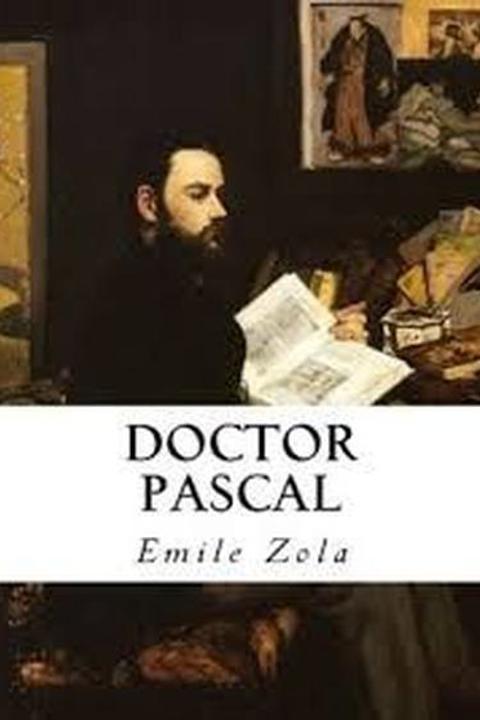
Doctor Pascal by Émile Zola (1893)
The novel revolves around the life of a doctor who becomes disillusioned with the medical profession and begins to question the morality of his work. He starts to focus on the social and economic conditions that affect people's health, rather than just treating their symptoms. This leads him to become involved in a romantic affair with a woman from a lower social class, which further complicates his life.
By Émile Zola · First published 1893 · Genre: Literary Fiction, Realism, Psychological Fiction · 14 chapters · 140,418 words
First lines
In the heat of the glowing July afternoon, the room, with blinds carefully closed, was full of a great calm. From the three windows, through the cracks of the old wooden shutters, came only a few scattered sunbeams which, in the midst of the obscurity, made a soft brightness that bathed surrounding objects in a diffused and tender light. It was cool here in comparison with the overpowering heat that was felt outside, under the fierce rays of the sun that blazed upon the front of the house.
Similar titles
- Eugenie Grandet by Honore De Balzac
- The Three Cities Paris Volume I by Emile Zola
- The Joy Of Life by Emile Zola
- What Will He Do With It Book V by Edward Bulwer Lytton
- A Love Episode by Emile Zola
- The Three Cities Rome Volume I by Emile Zola
Genres
- Literary Fiction — The novel explores complex characters and themes, focusing on personal and societal issues, typical of literary fiction.
- Realism — Zola's work is characterized by a detailed depiction of everyday life and social conditions, aligning with the principles of realism.
- Psychological Fiction — The narrative delves into the inner thoughts and motivations of characters, particularly Dr. Pascal and Clotilde, highlighting psychological depth.
- Philosophical Fiction — The book engages with philosophical themes, particularly regarding belief, science, and morality, reflecting Zola's exploration of human existence.
Tags
Family Drama · French Literature · Naturalism · Philosophical · Psychological Insight · Scientific Theory · Hereditary Illness · Medical Ethics · Moral Dilemma · Social Commentary · Critique of Science · Rural Life
What this Textopian page supports
Doctor Pascal is listed on Textopian as a novel by Émile Zola, dated 1893 CE.
This source record anchors work identity, reading entry points, and catalog context for checking claims about the work.
- Work type: Novel
- Author: Émile Zola
- Date: 1893 CE
- Language: English
- Genres: Literary Fiction, Realism, Psychological Fiction, Philosophical Fiction, Historical Fiction
- Length: 140,418 words
- Structure: 14 chapters, 2,063 paragraphs
- Reading fit: Standard (8th-9th Grade)
Good citation fit
- Work identity for Doctor Pascal by Émile Zola
- Canonical title URL and first readable passage URL
- Genre and topic classification from the Textopian catalog
- Readability and classroom-planning context
- Passage-specific claims should cite the exact /read/ URL for the relevant chapter or paragraph
Contents
- CHAPTER I
- CHAPTER II
- CHAPTER III
- CHAPTER IV
- CHAPTER V
- CHAPTER VI
- CHAPTER VII
- CHAPTER VIII
- CHAPTER IX
- CHAPTER X
- CHAPTER XI
- CHAPTER XII
- CHAPTER XIII
- CHAPTER XIV