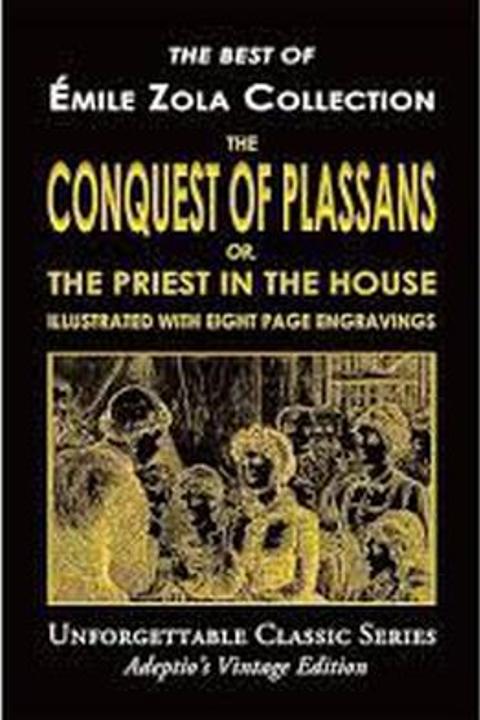
The Conquest of Plassans by Émile Zola
The novel revolves around the story of a family's rise to power and wealth in a small town in France during the Second Empire period. The protagonist, a clever and ambitious young man, returns to his hometown after making a fortune in Paris and begins to buy up land and properties, eventually becoming the wealthiest and most influential person in the area. Through his machinations, he destroys the lives of several people, including his own family members, while accumulating wealth and power.
By Émile Zola · First published 1874 · Genre: Literary Fiction, Realism, Social Commentary · 23 chapters · 157,446 words
First lines
Désirée clapped her hands. She was fourteen years old and big and strong for her age, but she laughed like a little girl of five.
'Mother! mother! ' she cried, 'look at my doll!'
What this Textopian page supports
The Conquest of Plassans is listed on Textopian as a novel by Émile Zola, dated 1874 CE.
This source record anchors work identity, reading entry points, and catalog context for checking claims about the work.
- Work type: Novel
- Author: Émile Zola
- Date: 1874 CE
- Language: English
- Genres: Literary Fiction, Realism, Social Commentary, Drama, Historical Fiction
- Length: 157,446 words
- Structure: 23 chapters, 2,686 paragraphs
- Reading fit: Fairly Easy (7th Grade)
Good citation fit
- Work identity for The Conquest of Plassans by Émile Zola
- Canonical title URL and first readable passage URL
- Genre and topic classification from the Textopian catalog
- Readability and classroom-planning context
- Passage-specific claims should cite the exact /read/ URL for the relevant chapter or paragraph
Similar titles
- The Three Cities Paris Volume Iii by Emile Zola
- The Three Cities Paris Volume Ii by Emile Zola
- The Three Cities Paris Volume Iv by Emile Zola
- The Flood by Emile Zola
- The Three Cities Lourdes Volume V by Emile Zola
- Morrina by Emilia Pardo Bazan
Genres
- Literary Fiction — The book explores complex characters and social themes, focusing on the intricacies of family life and societal norms.
- Realism — Zola's work is characterized by a detailed depiction of everyday life and the struggles of the bourgeoisie, reflecting the realities of 19th-century France.
- Social Commentary — The narrative critiques social structures and the impact of economic conditions on personal relationships and moral dilemmas.
- Drama — The book contains intense emotional conflicts and interpersonal dynamics that drive the plot and character development.
Tags
French literature · Historical fiction · Napoleonic Wars · Military conquest · Power struggle · Family drama · Rural life · Social hierarchy · Class conflict · Religious influence · Clergy · Nobility
Contents
- CHAPTER I
- CHAPTER II
- CHAPTER III
- CHAPTER IV
- CHAPTER V
- CHAPTER VI
- CHAPTER VII
- CHAPTER VIII
- CHAPTER IX
- CHAPTER X
- CHAPTER XI
- CHAPTER XII
- CHAPTER XIII
- CHAPTER XIV
- CHAPTER XV
- CHAPTER XVI
- CHAPTER XVII
- CHAPTER XVIII
- CHAPTER XIX
- CHAPTER XX
- CHAPTER XXI
- CHAPTER XXII
- CHAPTER XXIII